Author: Brady Winder

  • Real Estate SEO Made Simple: 6 Easy Wins You Can DIY

    Real Estate SEO Made Simple: 6 Easy Wins You Can DIY

    SEO has a reputation for being hard to DIY. You’ve got checklists, keywords, content to write, and rankings to track — it can feel like a lot.

    The good news is, you don’t need to master everything to see results!

    A few focused actions can dramatically improve your rankings and help you attract more motivated seller leads. A great example is Mark St. Peter’s story, who did his own SEO and ranked #3 in competitive Arizona markets within just 6 months, generating leads daily.

    Table of Contents

    1. Start with Keyword Research
    2. Publish Original, Information‑Rich Content
    3. Nail the Basics of Technical SEO
    4. Build Location‑Targeted Pages
    5. Fix Your Image Alt Text
    6. Use Internal Links the Right Way
    7. Conclusion

    Key Takeaways

    • Don’t dump all keywords into one page. Match them to the right page type (landing page, guide, blog, FAQ).
    • When writing, add local proof: foreclosure stats, median prices, seller stories, neighborhood details.
    • Check your site with Carrot’s Site Audit Tool to fix quick wins like duplicate content, missing meta tags, or broken links.
    • Create city- or county-specific pages with local keywords in the URL (e.g. /sell-my-house-fast-roseburg).
    • Add alt text to images that describes the property or city (e.g. “3-bedroom house in Eugene ready for cash sale”).
    • Drop in internal links with keyword-rich anchor text (“sell your house fast in Portland”) instead of generic “learn more.”

    Real quick before we dive in – why does SEO even matter?!

    Because a tired landlord doesn’t flip through a phone book. Someone facing foreclosure isn’t waiting for postcards. Motivated sellers open their phone and type in exactly what’s on their mind: “stop foreclosure timeline in Oregon” or “sell my house fast in Roseburg.” Every one of those searches is a lead raising their hand. 

    Carrot websites are already built with SEO in mind, giving you a strong foundation out of the box. But if you want to maximize visibility in your market, the tips we’ll cover here will help you go from “just having a site” to actually generating consistent, high-quality leads from search.

    1. Start with Keyword Research

    Keyword research is really just trying to find the exact phrases motivated sellers, buyers, or landlords type when they’re hunting for help (“sell my house fast in Roseburg,” “probate house sale timeline,” “cash offer vs listing fees”). If you publish pages that match those real phrases (and actually answer the intent behind them), Google can put you in front of the right people. 

    If this is brand new to you, we walk through the process in the Real Estate SEO Bible, where you’ll see examples of the most profitable real estate keywords and how to apply them on your site.

    Brainstorm your seed keywords. 

    Start with obvious ones like “sell my house fast,” “cash home buyers,” or “buy houses in .” or you can list 5–10 problems you solve: behind on payments, inherited a house, probate, code violations, divorce, tired landlord, need cash fast, “sell as-is,” These are your starting points.

    You can also put in a competitor’s domain in Carrot’s Keyword Explorer to see what they’re ranking for. 

    Find related keywords

    This is where things get easier. Carrot automatically shows you related keyword ideas, their monthly search volume, and how tough (Difficulty level) it’ll be to rank for them. The low-to-mid difficulty, high-intent phrases are the sweet spot for solo operators.
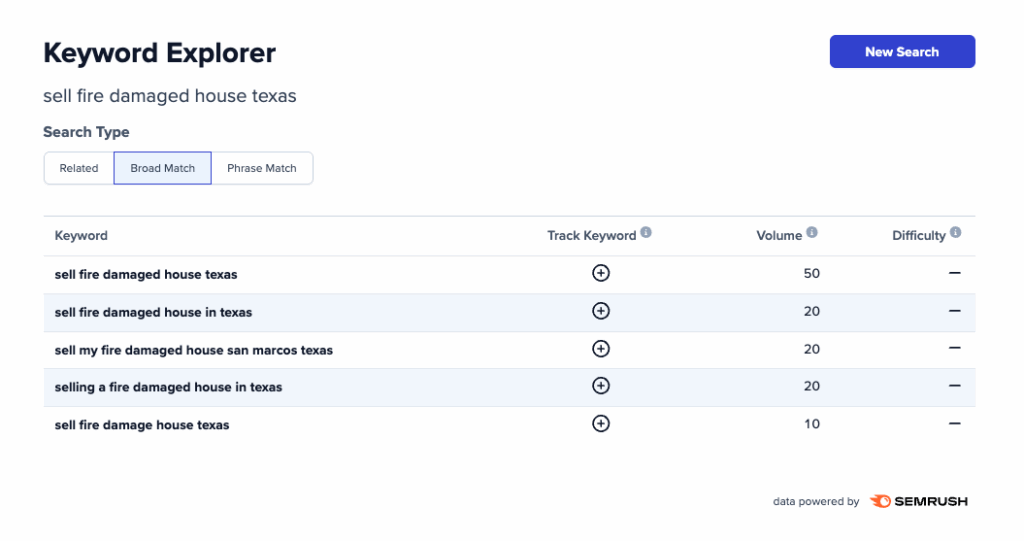
    Choose your list of keywords to write on

    Don’t try to create content on every topic, even if it’s easy to do that with AI tools now. Here’s a simple sniff test that helps you pick winners:

    Relevance: Would a person searching for this hire you if they liked what they read?

    Difficulty: Are the current results beatable with a stronger, more local, more useful page?

    Demand: Enough people search this to be worth an afternoon of writing—even if it’s dozens per month, not thousands.

    Once you have that, 

    Decide what to do with them

    Once you’ve gathered a list of keywords, the next step is deciding what to do with them. A common mistake is treating every keyword the same — cranking out the same type of blog posts for everything, or trying to stuff them all onto your homepage. That’s not how Google works, and it’s not how motivated sellers search.

    Instead, match each keyword to the right kind of page. 

    Some keywords signal that someone is ready to act right now (“sell my house fast Roseburg”) — those belong on high-converting landing pages. Others show that the person is still researching (“stop foreclosure Oregon timeline”) — those are perfect for detailed guides or blog posts where you educate first, then invite them to reach out.

    Keyword ideaIntentPage typeNotes
    sell my house fast RoseburgTransactionalCity landing pagePrimary headline + form; add local proof & neighborhoods
    stop foreclosure Oregon timelineInformationalGuideInclude step-by-step timeline + options + CTA to call
    sell inherited house [county]Informational → TransactionalCounty page or blog + CTACover probate basics, taxes, and local court links
    cash offer vs listing ComparisonBlog/FAQShow math with local fees/days-on-market data

    Once you’ve created a handful of articles, add them to Carrot’s Keyword Rank Tracker so you can watch positions move as you publish. That feedback loop teaches you fast: which angles stick, which need more depth, and where an internal link or two will nudge you onto page one.

    2. Publish Original, Information-Rich Content

    Generic content is dying. With Google’s AI Overviews, searchers can get surface-level answers to broad queries without ever clicking a website. For example, a quick search for “average sale prices of houses in Texas” now produces an AI summary showing the median price ($335,494). That’s fast, neat, and complete enough that most people won’t bother scrolling further.
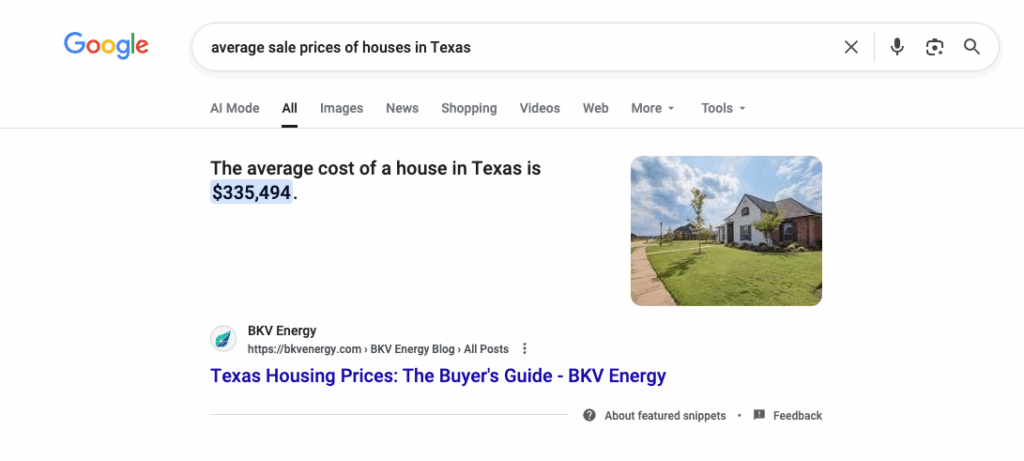
    What wins clicks (and trust) is specific, original information people can’t get anywhere else: local numbers, real timelines, first-hand process details, and outcomes from deals you’ve actually closed

    For example, instead of writing: “Foreclosure rates are high in our area.”

    You can back up with details, data, or real-life examples. That’s what makes your post worth reading, linking to, and trusting: “According to Douglas County court filings, foreclosure starts rose 14% in the past year. That’s one of the highest jumps in Oregon, which means more families here are scrambling to find fast solutions.”

    The first is just a claim. The second proves you know your market.

    Tips to create good content

    Here are a few practical ways investors can create content that gets read: 

    • Use local data. Add stats on median home prices, average days on market, foreclosure rates, or rental vacancy rates in your city or county. Even citing a recent Zillow or MLS report with your commentary makes the piece more valuable.
    • Explain the “why” behind seller pain points. Don’t just say, “Selling through an agent takes too long.” Spell it out: the average listing in [your city] takes 63 days to close, plus repairs and showings can add weeks more.
    • Show real stories. Share anonymized examples of sellers you’ve helped (“A retired couple in Springfield avoided foreclosure when we closed in 14 days”). These details connect emotionally and prove you’ve done it before.
    • Offer your perspective. Add your take on what these numbers or situations mean for homeowners. For example: “Yes, prices are dropping, but that can actually make cash offers more attractive because buyers with financing are pulling back.”

    Writing that kind of content from scratch every week takes hours you probably don’t have.

    That’s where Carrot’s Automated Content Library comes in. Instead of starting with a blank page, you can pull from a collection of expertly written, real estate–focused blogs that are already 90% ready to publish.
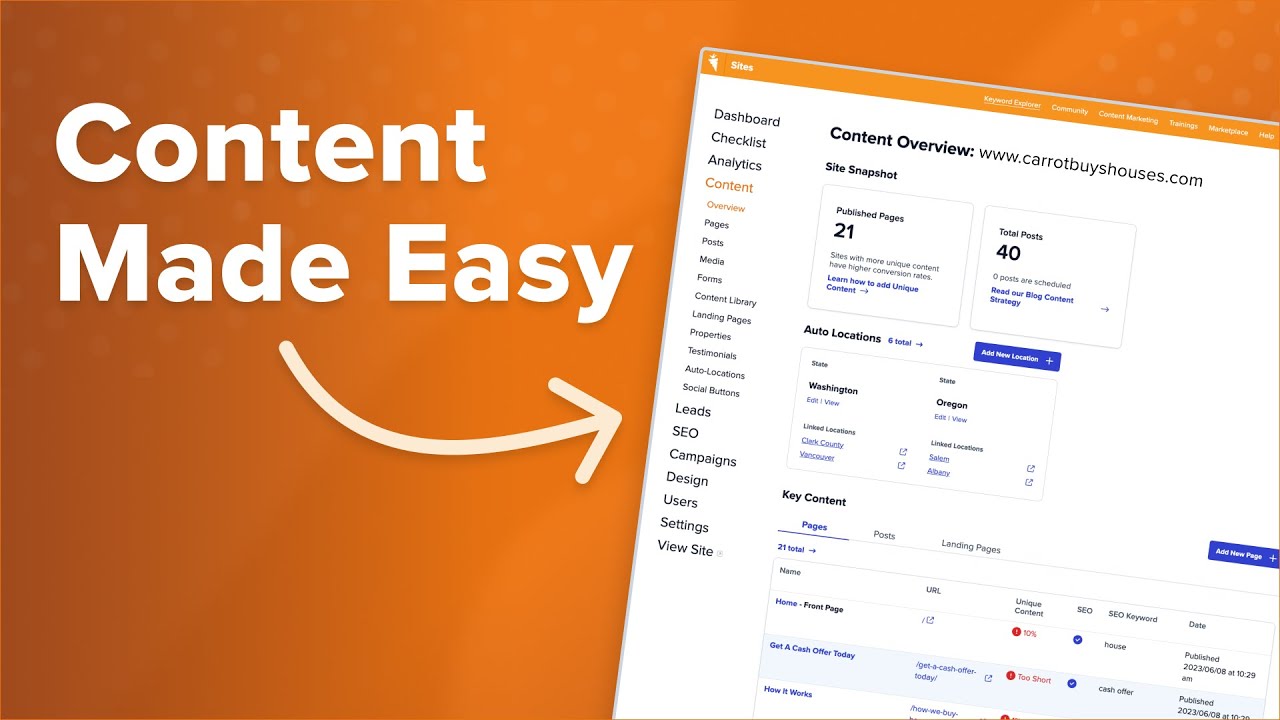
    Content Marketing Made Easier with Carrot's Content Tools

    All you have to do is add your personality, your market insights, or a quick local stat. And you’ll get content that stands out from the generic fluff AI is summarizing.

    3. Nail the Basics of Technical SEO

    Technical SEO sounds complicated, but it’s just about making sure your website is built in a way that search engines (like Google) can easily find, understand, and show it to people.

    Some key parts of technical SEO are:

    • Crawlable: Google’s robots should be able to move around your site and visit all your pages without getting blocked.
    • Indexable: Once robots read the pages, Google should be able to save them in its “library” so they can show up in search results.
    • Speed: Your site should load quickly, because slow sites make visitors (and Google) unhappy.
    • Mobile-friendly: Your site should look and work properly on phones and tablets, not just computers.
    • Clean URLs: Website links should be short and easy to read (like /about-us instead of /page?id=123).
    • Security (HTTPS): It’s when your website shows a padlock 🔒 in the browser, meaning the connection is safe and private. 

    You don’t have to become a tech expert to get it right. Most investors just want their sites to rank and bring in motivated sellers, not spend hours digging through settings or trying to decode SEO jargon. That’s exactly where Carrot helps.

    With the Carrot Site Audit Tool, you can see what’s holding your site back from ranking in search engines. It checks for common issues like broken links, duplicate content, missing alt text, or low word count, and it explains what each issue means in plain English. 

    Every audit comes with step-by-step guidance on how to resolve issues, plus Carrot Support if you get stuck. It’s the same level of insight SEO agencies charge thousands for—without the high price tag.

    4. Build Location-Targeted Pages

    When I searched for “sell my house fast in Queens,” I found one site with a generic landing page that says “Sell Your House Fast For Cash Today” but doesn’t mention any specific city.

    Here’s another site with a Queens-specific page, headline, and all: “Need To Sell Your House Fast In Queens, NY?”
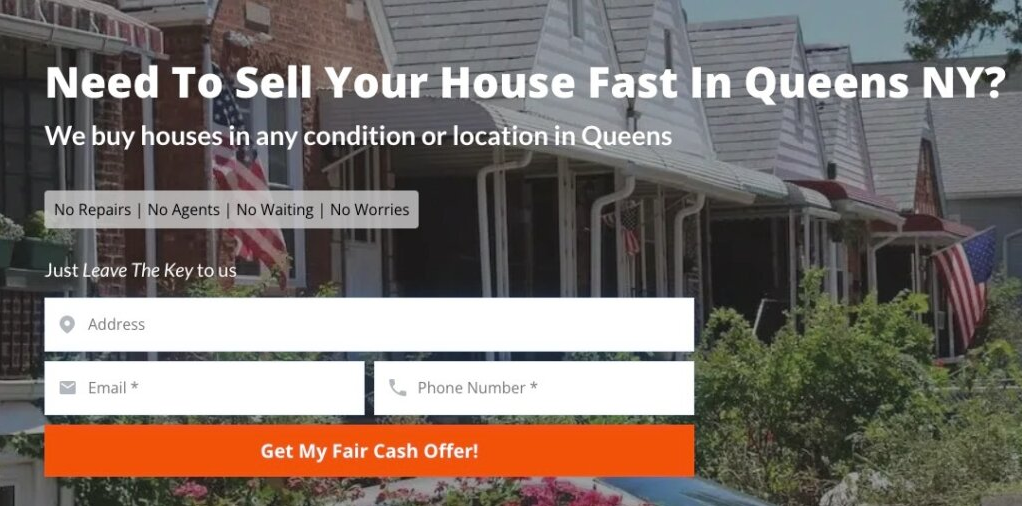
    Which one do you think Google and sellers trust more?

    The answer is obvious. 

    A local page that actually says “Queens” (or Brooklyn, or Roseburg, or wherever you invest) is more likely to rank for that search and more likely to convert the person who lands there. Because Google matches searchers with the page that seems most specific to their intent.

    That’s why, instead of one statewide page, build individual pages for each city or county you invest in.

    A strong location page isn’t just a block of text with the city swapped out. 

    URL of the page matters

    One of the most important elements is the URL itself. Adding local keywords to your URLs is a direct ranking factor. Instead of using something generic like /services/oregon, create URLs such as:

    • /sell-my-house-roseburg
    • /we-buy-houses-eugene

    This signals to Google exactly what the page is about and ties it directly to local keywords sellers are typing in. Pair that with a strong title tag like “Sell Your House Fast in Roseburg | Trusted Local Buyers” and you’ve got a page built to rank.

    From there, make the page feel genuinely local.

    Tips to create location-targeted pages

    • Add local details such as photos of houses in that area, maps of your service region, or even a testimonial from a seller in that market. These cues reassure people that you’re not some out-of-town buyer. 

    For example, the page I found earlier (a Carrot site ranking #1 for “sell my house fast queens) has a local proof—a testimonial video from a New York homeowner who sold to that company.

    That’s exactly the type of content Google wants to see!
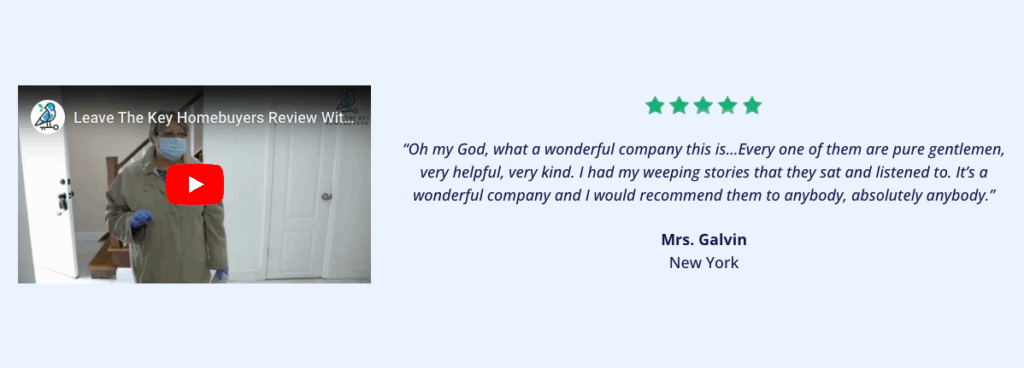
    • Phrases like “We can meet you anywhere in Eugene within 24 hours” or “We close deals in Medford faster than the typical market average” show you’re truly active on the ground.
    • If you sponsor local events, volunteer, or are part of a chamber of commerce, mention it. Sellers want to work with locals, not faceless companies.

    And if you’d rather have the heavy lifting done for you, Carrot’s Investor Concierge Setup Service is built for exactly that. Our team rewrites your content, personalizes your branding, and localizes your site with credibility signals and SEO tweaks that help you show up (and convert) faster. Instead of wrestling with endless checklists, you’ll have a high-performing site up and running in about 30 days, along with a clear strategy for what to do next. 

    5. Fix Your Image Alt Text

    Alt text (short for alternative text) is a short description you add to each image on your site. It helps Google understand what the image is about and how it relates to the page. Even if sellers don’t always search in “Images,” Google still considers those signals when ranking your page in regular search. It’s the simplest way to get optimized for on-page SEO. 

    For example, instead of leaving the alt text blank or using the default name of the image (img_123.png) you can write “3-bedroom property in Phoenix” or “sell my house fast Tucson cash offer.”

    How to write a good alt text for your image

    Here are some simple ways to write an alt text that helps you rank in search engines: 

    • Be specific: describe what’s actually in the photo, e.g., “2-story rental home in Dallas with brick exterior.” 
    • Keep it short: A few words or a short phrase is usually enough.
    • Skip “image of” or “picture of”: Screen readers or search engines already know it’s an image.
    • Leave decorative images blank: If the image doesn’t add value (like a divider or background), use an empty alt tag instead.

    Website builders, like Carrot, make it easy to add or edit alt text without touching code. Just upload your image, look for the “Alt Text” field, and type in your description. 

    Start with your motivated seller page, your cash buyer page, and any blog posts that already bring traffic. Those are the ones most likely to bring in leads.

    Internal links are simply links that connect one page of your website to another. They help visitors move around your site, but they’re also important for search engines. 

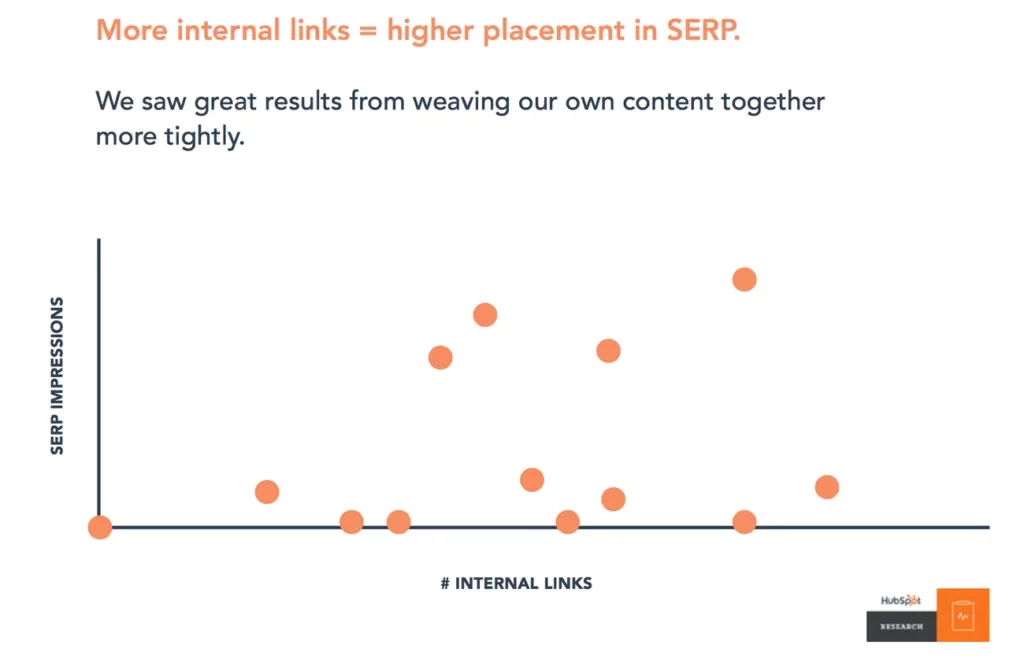
    Google uses them to pass PageRank (authority) from one page to another. If you link often to your motivated seller page, you’re telling Google it’s one of the most important pages on your site. That way it can show that page to visitors for relevant search queries. 

    In the Hubspot study illustrated below, they showed an average higher ranking in search engines based on the number of internal links in their content.
    But the one mistake people often make is not choosing the right anchor text for their internal links. 

    Anchor text is the clickable part of a link, and it gives Google context about the page you’re sending people to.

    Here’s a quick comparison:

    • ❌ Bad: Learn More
    • ✅ Good: Sell your house fast in Portland

    The first tells you nothing. The second clearly signals what the page is about and includes a local keyword. 

    When you’re writing a blog post or adding content, look for natural places to link back to those pages with descriptive anchor text. 

    For example, if you’re writing an article about foreclosure timelines, you could add a link that says “options to sell your house in foreclosure in Dallas” and point it to your Dallas foreclosure page.

    Another key is balance. 

    You don’t want to cram five links into every paragraph. Instead, place links where they make sense for the reader. One or two strong, descriptive links per section of content is enough. 

    Wrapping It Up

    You don’t need a huge team or endless hours to see results from SEO. By focusing on the basics:

    • Optimizing images with alt text
    • Building smart internal links
    • Tightening up your technical SEO
    • Publishing location-focused pages, and 
    • Creating original content

    …you can steadily move the needle. 

    These steps compound over time, and even solo investors can build a site that ranks, attracts motivated sellers, and generates consistent leads.

    👉 Start your Carrot site today and get SEO tools built specifically for real estate investors.

    👉 Prefer to DIY? Check out our SEO guide for step-by-step help on boosting results from SEO.

    👉 Looking for a trusted SEO vendor, specific to real estate investing? Check out our recommendations in the Carrot Marketplace!

    You might also like: https://testcarrot.xyz/blog/link-building-for-real-estate/


    FAQs

    1. Do I really need SEO if I already get leads from postcards, cold calling, or referrals?

    Yes. Offline marketing still works, but SEO captures the sellers who are actively searching for solutions online right now. When someone types “sell my house fast in [your city],” they’re raising their hand and looking for exactly what you offer. That’s why SEO is such a powerful and consistent lead source.

    2. How long does it take to see results from real estate SEO?

    SEO isn’t instant like paid ads—it typically takes 3–6 months to see measurable movement in rankings. However, because real estate searches are highly local, you can sometimes rank faster with well-optimized city or county landing pages. The key is consistency: publish relevant content, optimize your site, and track your progress.

    3. What’s the difference between keywords for landing pages and blog posts?

    Great question. Transactional keywords (like “sell my house fast ”) should go on high-converting landing pages, because the searcher is ready to act. Informational keywords (like “foreclosure timeline in Oregon”) work better as blog posts or guides, where you educate first, then invite them to reach out. Matching keyword intent to the right page type is one of the biggest SEO wins.

    4. Can I do real estate SEO myself, or do I need to hire an agency?

    You absolutely can do it yourself. With tools like Carrot’s Keyword Explorer, Rank Tracker, and Site Audit, most investors can cover the basics without hiring an expensive agency. If you can spare a few hours each month to optimize pages, write local content, and build links between your posts, you’ll see results without the overhead.

    5. How do I know which keywords are worth targeting?

    Start with a simple framework:

    • Relevance – Would someone searching this phrase likely hire you?
    • Difficulty – Can you realistically outrank the current top results with a better, more local page?
    • Demand – Even if it’s just dozens of searches per month, is it worth your time?
      Using this sniff test helps you prioritize keywords that drive leads instead of wasting time chasing high-volume terms that don’t convert.

  • Why More Leads Won’t Fix Your Acquisitions, But Better Leads Will (And How to Find Them) 

    Why More Leads Won’t Fix Your Acquisitions, But Better Leads Will (And How to Find Them) 

    If you’ve been closing real estate deals for a while, you’ve probably noticed a pattern: some sellers show up ready to move forward, while others take months of follow-up and still fizzle out. The difference usually isn’t what you say or how good the deal is. It’s often where the lead came from.

    After working with 6,000+ investors, we’ve seen exactly how top closers separate the noise from the opportunities. They know that the best leads are the ones that make you the most money in the shortest amount of time, with the least amount of energy.

    In this post, we’ll break down which lead sources consistently deliver motivated sellers, how to spot the ones worth prioritizing, and how to tighten up your process so you’re spending less time chasing and more time closing.

    Because in this business, more leads won’t fix your pipeline. Better ones will.

    Table of Contents

    1. The Best and Worst Lead Sources for Motivated Sellers
    2. What Actually Makes a Seller “Motivated”?
    3. How to Track and Prioritize the Leads That Actually Close
    4. How to 10x Your ROI Without Adding Any New Marketing
    5. Wrapping It Up

    Summary: The best real estate leads aren’t just plentiful—they’re motivated. This post breaks down why inbound leads outperform outbound, how to identify true seller motivation, and how tools like Carrot CRM help prioritize leads that actually close. Learn how website optimization and AI lead scoring can dramatically improve your ROI without increasing your marketing spend.

    7 Key Takeaways

    1. Not all leads are equal. The biggest difference in how fast and profitably a deal closes often comes down to the source of the lead, not just how well you pitch.

    2. Outbound = low intent, high effort. Cold calling, texting, or blasting postcards can bring in leads, but most aren’t ready to sell. They require heavy follow-up, burn energy, and usually take months to close.

    3. Inbound = high intent, faster closings. Sellers who search for you (SEO/PPC) or directly fill out a form are already motivated. Investors report these leads close in fewer touches, with less chasing, and on much shorter timelines.

    4. Seller behavior signals motivation.

    Direct call = high urgency

    Website form = strong intent (often after months of consideration)

    Cold call response = curiosity, but more often low urgency

    5. Motivation shifts over time. A seller who sounded “hot” at first may stall when it’s time to act, while a lukewarm one may heat up later. That’s why prioritization has to be ongoing, not a one-time judgment.

    6. Data beats guesswork. Relying on memory, scattered notes, or assumptions (“they called three times, so they must be motivated”) causes missed deals. Tracking lead scores, sources, and engagement data paints the real picture.

    7. Your website is the hub that multiplies ROI. Every channel—direct mail, ads, radio, or referrals—eventually drives people to Google you. If your site is slow, generic, or confusing, you leak deals. Fast, trustworthy, conversion-optimized sites (with testimonials, strong About page, and clear CTAs) turn intent into action.

    The Best and Worst Lead Sources for Motivated Sellers

    If you talk to ten different marketing folks or investors, you’ll hear ten different ‘best’ ways to get deals. 

    Everyone has “the best way”

    The cold-calling coaches say you just need to “dial more numbers.” Direct mail coaches promise your next campaign will work if you just tweak the headline. Ad agencies tell you that if results are flat, it’s your targeting. Each channel has its champions. And when the channel doesn’t deliver, the message is that you did it wrong. And conveniently, the fix is to buy their course or their list.

    So let’s look at the fundamentals of how people actually behave when they’re ready to sell. It’ll help you decide for yourself where you want to spend your time and energy. 

    Outbound leads: High effort, low intent

    Most homeowners don’t want to be interrupted. They’re not hoping for a cold call in the middle of dinner. They’re not excited about seeing your ad when they’re just scrolling on social media, hoping to get away from the real world.  That kind of outbound marketing (where you reach out to people first — whether they asked for it or not) can bring you leads, but the intent is usually low. 

    Sellers aren’t necessarily ready or motivated — they just happened to pick up the phone or glance at a postcard. That’s why outbound leads usually take more follow-up, more conversations, and more time to close.

    Outbound channels like cold calling or TV may take 40–50 leads to close a single deal.

    But with inbound marketing, the math changes. 

    Inbound leads: Sellers who find you

    Let’s compare outbound leads with someone who takes action on their own. 

    They typed “sell my house fast in Dallas” into Google and landed on your website. Or they saved your website after getting a postcard and finally filled out the form when the timing was right. Or they were learning about who the real estate investors in their area were and came across your Google Maps profile. These are inbound leads — the ones who find you. They’re actively looking to sell. 

    The difference shows up in the numbers. Keith Sant shared that when he relied on cold calling, it took 35+ leads to get one deal, and closings stretched out six months or more. “I was burnt out. I was talking to people who weren’t ready to sell, and I felt like I was spinning my wheels,” he said.

    After shifting to inbound SEO leads, he closes one in ~15, often in under 90 days.

    Here’s what that looks like side by side:

    Outbound (Cold Calling)Inbound (SEO + Website)
    Leads per Deal1 in 351 in 15
    Time to Close6–12 months< 90 days
    Seller MindsetOften annoyed or unmotivatedAlready motivated and grateful
    Energy CostHigh — constant chasing and rejectionLow — fewer touches, warmer conversations

    As Keith put it: “I’m not cold-calling or pestering people anymore. Now, when people reach out to me, they’re truly ready to sell.”

    Other investors echo the same. 

    Mike Wall from EZ Sell Homebuyers compared inbound website leads to referrals:

    “There may be a thousand visitors to my site and only one converts, but that one person is hyper motivated. Could you imagine having to cold call a thousand people to get the same result? That’s life-changing because it’s really hard to put a price on your time. Even if you don’t get a ton of traffic, the traffic you do get is hyper motivated.

    Related: Top 5 Ways to Find Off-Market Properties (That Other Investors Miss)

    What Actually Makes a Seller “Motivated”?

    When most people think of a “motivated seller,” they picture a tough life event: foreclosure, probate, divorce, or job transfer. Those factors can create urgency, but they don’t automatically make someone ready to sign a deal with you. 

    What often matters more is how the seller shows up. Their behavior — and where they came from — is the first real signal of motivation.

    If they call you directly. 

    That’s the clearest sign of urgency. People don’t usually pick up the phone unless they’ve already decided to act. A direct call tells you they’re not just exploring; they want help now. These are the leads most likely to turn into a deal quickly.

    If they fill out a form on your website. 

    That’s also a strong sign, because filling out a form requires effort. It means they’ve weighed options, landed on your site, and taken the step to share their details. In many cases, they’ve been thinking about it for months. Maybe they kept your postcard or saw your sign long ago, but when the timing was right, they Googled you and finally hit “submit.” 

    Carrot member Brad Woodall has shared stories where that exact pattern turned into a closed deal. That moment when they seek you out is the clearest sign of motivation.

    If they respond to your cold call or text. 

    That’s weaker motivation. They might just be curious about what their house is worth or willing to chat because you caught them at the right time. But curiosity doesn’t equal urgency, and those leads often fizzle out or take heavy follow-up to convert.

    This is why investors who rely on inbound sources — sellers who find you — consistently see faster closes and stronger profits. The intent is built in.

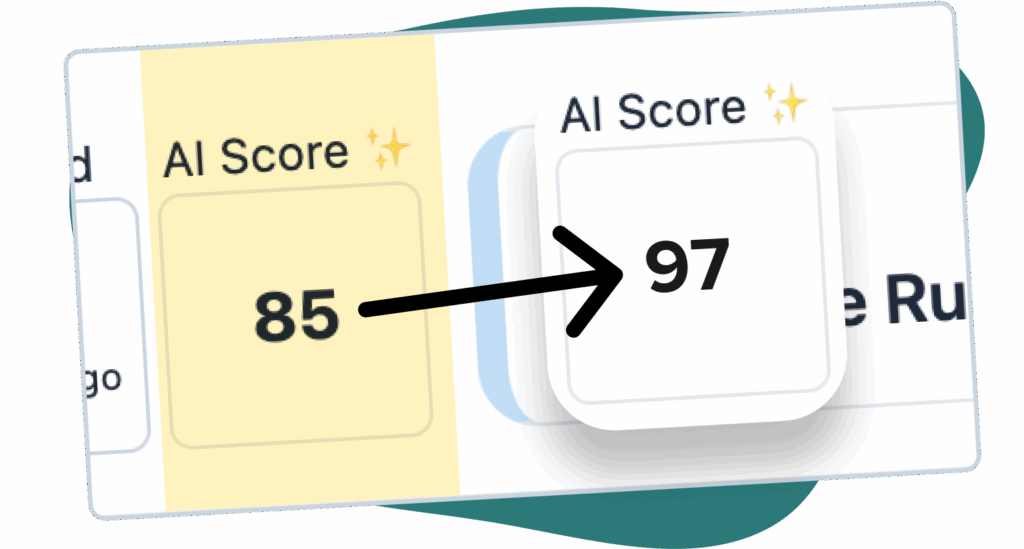
    The challenge is that in the middle of working dozens or hundreds of leads, it’s not always obvious which ones are “truly” motivated. That’s where Carrot CRM’s AI Lead Scoring comes in. 

    Carrot CRM’s AI lead scoring 

    Instead of relying on gut feeling, the system automatically scores every lead based on the criteria you set — including source, engagement level, property details, and more. 

    You can customize the scoring criteria to match what matters most in your business. Whether that’s the lead source, how quickly they respond, how many times they’ve engaged with you, or other factors that signal true motivation.

    As Kyler Peters from Want to Sell Now put it:

    “We have hundreds of leads coming in every single week. Thanks to Carrot CRM, I can see the hottest leads we have. I wouldn’t have identified some of these leads without AI lead scoring.”

    Check out this video to learn about AI Lead Scoring: 

    Focus on the most important leads: AI Lead Scoring & AI Opportunity Summaries

    How to Track and Prioritize the Leads That Actually Close

    You might say that you can track your leads in a spreadsheet or an all-in-one CRM. But the problem you’ll then face is that your scores will be static once you enter them.

    But that’s not the case in real life. 

    Motivation isn’t static. A seller who sounds enthusiastic on your first call might stall out when it’s actually time to sign. Someone who barely seemed interested at first might circle back weeks later, ready to move quickly.

    That’s why you can’t treat every lead the same, every day. If you try to keep track in your head, on paper, or even in a static spreadsheet, you’ll miss the bigger picture:

    • A seller who keeps calling might look “motivated,” but are they asking serious questions — or just kicking the tires?
    • Another who goes quiet might look “cold,” but did they just open your last email twice and spend time on your site?
    • A lead source might look productive because it brings in lots of names, but does it actually lead to contracts?

    Manually piecing all of this together is frustrating and often misleading. Investors burn time chasing the wrong people while the real opportunities slip through the cracks.

    The most successful closers rely on real-time data to guide their next move. Instead of running on gut feeling, they let the numbers show them:

    • Which sellers are moving closer to a decision
    • Which leads are cooling off
    • Which campaigns and sources are actually worth reinvesting in

    That’s where Carrot CRM comes in. It’s built to take the guesswork out of lead prioritization:

    • Track calls from your website and get AI-powered transcripts, summaries, and call ratings.
    • Auto-assigned lead scores show you at a glance who’s most likely to close.
    • Dynamic scoring updates automatically as new conversations or details come in, so you’re never working off stale assumptions.
    • Campaign insights let you see which sources actually produce closed deals (not just leads).
    • Visual pipeline tracking shows where every opportunity stands.
    • Grouping by source makes it simple to see how SEO leads perform versus PPC, direct mail, or cold outreach.
    • Filtering and follow-up tools keep hot leads front and center so nothing slips through the cracks.

    Related: Why Call Tracking is the Most Profitable Real Estate Tool You’re Not Using

    How to 10x Your ROI Without Adding Any New Marketing

    The common way of thinking goes like this: if 1 out of 100 website visitors becomes a lead, then to get more leads, you need more traffic.

    Want three new leads a day? Just drive 300 people instead of 100. 

    That mindset keeps investors chasing more campaigns, more lists, and more ads.

    But there’s another way, and it’s often more powerful. 

    Improving your website

    Instead of only trying to increase traffic, focus on improving how well your website converts the traffic you already have. Conversion is within your control. Algorithms, list quality, and ad costs aren’t. By simply raising the percentage of visitors who actually turn into leads, you can multiply results without spending more on marketing.

    Last month, the average conversion rate across all Carrot member websites combined was 4.5%—nearly double the industry average of 2.5%. How many high-profit deals are you willing to lose to a low-converting website?

    Related: 8 Factors of the 5 Highest-Converting Carrot Websites: ANALYZED w/ Katie Stapko

    Moreover, before anyone makes a decision to contact you, they usually look you up online. A postcard might catch their attention, but the site is where they decide if you’re credible. A radio ad might spark curiosity, but the site is where they can actually reach out. Even when you cold call, many sellers will still Google you afterward before they consider working with you.

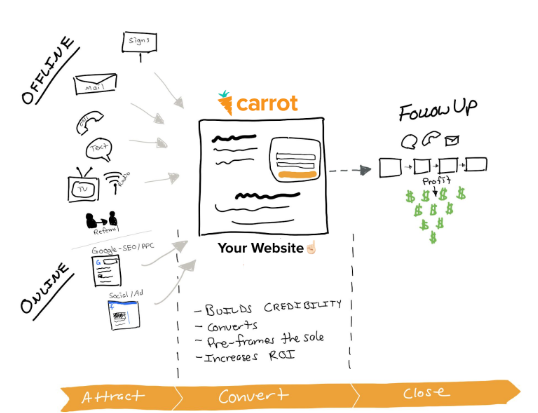
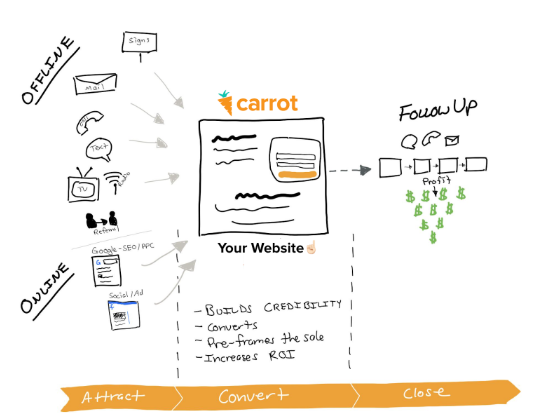
    So you have to think of your website as the one place where all your marketing connects. Every channel — direct mail, PPC, cold calling, radio, even word of mouth — should ultimately point people back to your site. That’s the hub. Like this…

    When a seller lands on your site, they’re already showing intent. They searched, clicked, or followed up from one of your campaigns. That makes this moment critical. This is why the website has to carry more weight than just being “a place to be online.” It’s the decision point. 

    And if that experience goes wrong, the opportunity is lost.

    Where sellers most often drop off

    ❌ Slow load times: If a page takes more than a few seconds, people hit the back button. They’ll never even see your brand.

    ❌ Generic design: If your site looks like every other “we buy houses” template, sellers assume you’re like everyone else and there’s no special reason to be interested in you. That makes it harder to build trust.

    ❌ Confusing layout: If the phone number or form is buried, or navigation is unclear, sellers won’t hunt around. They’ll leave and find someone easier to contact.

    But you don’t need a fancy redesign to fix this. Simple improvements go a long way toward building confidence and capturing high-intent leads. This is why we make it easy to customize a Carrot website (here are a few ways), and even offer a white-glove “concierge” design & setup service if you want to outsource!

    Related: 4 Reasons Your Real Estate Website Isn’t Getting You Leads (And How to Fix Them)

    What strengthens trust instead

    ✅ Customer quotes and testimonials: Nothing is more persuasive than proof from real sellers who chose you and had a good outcome.

    ✅ A strong About Us page: Homeowners want to know who they’re dealing with. Sharing your story and team photos shows you’re real, not just another faceless company.

    ✅ Clear calls to action: Make your phone number, form, or chat box front and center. The easier you make it to reach out, the more people will.

    ✅ Fast performance: Speed alone communicates professionalism. A site that loads instantly feels more trustworthy than one that lags.

    Wrapping It Up

    If you want to close more of the right deals without piling on extra work, the path is clear. You need to focus on better leads, not more leads. 

    But knowing these truths is only half the battle. Pairing them with the right system is what turns ideas into results. That’s where Carrot CRM comes in. It helps you & your team know which leads to focus on by putting these principles into action:

    • Lead Scoring: See motivation at a glance, with scores that update as new info comes in.
    • Campaign Insights: Identify which sources are producing the most profitable deals.
    • Visual Pipeline: Keep hot opportunities front and center without digging through notes.
    • Smart Filters: Group and sort leads by source, score, or status in seconds.

    Instead of juggling spreadsheets or guessing who’s serious, you get a clear picture of where to focus your energy — and more deals close as a result.

    Want to see what this looks like in practice? Book a Carrot CRM demo with our team. We’d love to help!

    Frequently Asked Questions

    1. What makes some seller leads better than others?

    Answer: Not all leads have the same level of motivation. The best leads usually come from inbound sources—like SEO or PPC—where sellers are actively searching for solutions. These leads close faster, require less follow-up, and are often more profitable than outbound leads generated from cold calls or mass mailers.

    2. How do I identify a truly motivated seller?

    Answer: A motivated seller typically takes proactive steps—such as calling you directly, filling out a form on your website, or reaching out after researching your company. These actions show urgency and intent, making them more likely to close quickly compared to someone who only responds passively to cold outreach.

    3. Are outbound leads like cold calling still worth it?

    Answer: Outbound leads can work, but they usually take much longer to convert and require more energy. For example, cold calling might take 30–35 leads to close one deal, while inbound SEO leads often close in 1 out of 15. Outbound is high effort, low intent, while inbound is low effort, high intent.

    4. What’s the fastest way to improve my real estate lead quality?

    Answer: Instead of chasing more leads, focus on optimizing your website and lead tracking. A high-converting, trustworthy website captures more motivated sellers. Pairing that with tools like Carrot CRM’s AI Lead Scoring helps you instantly identify which leads are worth prioritizing.

    5. How can Carrot CRM AI Lead Scoring help me close more deals?

    Answer: Carrot CRM AI Lead Scoring automatically ranks leads based on motivation signals like response speed, engagement, and lead source. It updates in real time, unlike spreadsheets or guesswork, so you can instantly see which sellers are serious and ready to close.

    6. Can I increase my ROI without adding new marketing campaigns?

    Answer: Yes! By improving conversion rates on your website and tightening up your lead prioritization, you can 10x your ROI without spending extra on ads or lists. Even small improvements—like faster load speeds, better testimonials, and clear calls to action—can dramatically increase the number of inbound leads who actually close.

    7. Why is inbound marketing (like SEO) more effective than outbound?

    Answer: Inbound marketing attracts sellers who are already looking to sell. They searched, clicked, and contacted you on their own. Outbound efforts, on the other hand, interrupt people who may not be ready. That’s why inbound leads are typically more motivated, close faster, and take less work.

    8. What role does my website play in lead conversion?

    Answer: Your website is the hub where all marketing channels point. Even if a seller hears about you through cold calling or direct mail, they’ll likely check your site before contacting you. If your site is slow, generic, or confusing, (or not even showing up in Google) motivated sellers may leave before reaching out. A strong, professional site builds trust and turns curious visitors into actual leads.

    9. How often should I re-prioritize my leads?

    Answer: Motivation changes over time. Top closers don’t treat every lead the same—they constantly adjust based on new signals. With tools like Carrot CRM, lead scores update automatically as sellers respond or timelines shift, ensuring you always know which leads are worth your focus.

  • 15 Negotiation Lessons From Steve Trang’s Live Seller-Call Roast (Carrot Summit ’25)

    15 Negotiation Lessons From Steve Trang’s Live Seller-Call Roast (Carrot Summit ’25)

    At our recent Carrot Summit, we tried something we’ve never done before: live coaching on real seller calls.

    Two rookie investors brought their recorded calls, and Steve Trang — one of the most respected sales trainers in real estate — broke them down, play-by-play.

    • Call #1: Nick of We Buy 502 (Louisville, KY) — SEO lead from his Carrot site, divorce situation, multiple offers in play.
    • Call #2: Sergio of Michigan Houses for Cash (Detroit, MI) — Facebook ad lead, owner-occupied, full remodel, “thinking about moving up north.”

    We played each call, paused at the coachable moments, and let Steve dish out his decades of sales experience. No fluff, just practical feedback on what to say and the psychology behind it.

    Below are 15 field-tested takeaways — each with a real quote from the call (what not to say) and Steve’s coaching.

    Want to see the entire session? Watch the full YouTube Video below:

    Rookie Seller Calls Get ROASTED by Master Negotiator Steve Trang from @DisruptorsPodcast

    1) Open Like They Expected Your Call — Not Like a Telemarketer

    Timestamp: ~3:40–4:33

    Investor said:Hi, is this Lindsay?

    Steve’s coaching:

    “That telegraphs you don’t know them and triggers sales resistance. Call like they asked you to: ‘Hey Lindsay, this is Steve — you just filled out the web form.’

    Why it works: They did request contact. An assumptive, confident open positions you as the solution, not a cold caller.

    Say this instead:Hey Lindsay, this is Nick with WeBuy502 — you just filled out our form about Marian Dr. Got a minute?


    2) Set Expectations Early, Before You Talk Price

    Timestamp: ~5:32–6:35

    Investor said: Jumped straight into property details without a frame.

    Steve’s coaching:

    “Set the frame as early as possible. Get agreement that the call ends in a yes or no. If you wait until after price, it feels harsh.”

    Why it works: Pre-suasion. You lower guardrails and keep control of the call path.

    Say this instead:Here’s the plan: I’ll ask a few questions, we’ll see if we’re a fit, and by the end it’ll be a yes or a no — fair?


    3) Ask One Question, Then Listen in Silence

    Timestamp: ~7:41–8:12

    Investor said:What about the HVAC? Is it blowing cold air right now?

    Steve’s coaching:

    “You asked two questions. Ask one open question and embrace the silence. That’s where the information comes out.”

    Why it works: Stacked questions invite short answers. One open question + pause invites detail (and motivation).

    Say this instead:Tell me about the HVAC.(then stop talking)


    4) Don’t Explain How You Work Early On — Sellers Care About Outcomes

    Timestamp: ~11:43–13:44

    Investor said:We can typically buy in a couple weeks… here’s how we…

    Steve’s coaching:

    “No one cares about the how if the outcome is ‘I get money when I need it.’ Over-explaining inserts objections.”

    Why it works: The logical brain justifies; the emotional brain decides. Keep them in the outcome.

    Say this instead:If we agree on numbers, we can have you funded on your timeline.


    5) Use Open-Ended Money Questions — Not Yes/No

    Timestamp: ~14:11–15:30

    Investor said:Do you have a mortgage on the property?

    Steve’s coaching:

    “Yes/no questions keep their guard up and invite half-truths. Ask, ‘How much do you still owe on the mortgage?’

    Why it works: Open questions get specifics you’ll use to structure terms and reframe later.

    Say this instead:I’m curious — how much do you still owe on the mortgage?


    6) Ditch Jargon (Equity, Escrow, Due Diligence)

    Timestamp: ~15:56–17:21

    Investor said:You’ve got a little bit of equity…

    Steve’s coaching:

    “Every confusing word raises their guard. Talk like you’re explaining it to a third-grader.”

    Why it works: Clarity = safety. Safety = decisions.

    Say this instead:After the mortgage gets paid off, you two would split the leftover cash.


    7) Sell With Third-Party Stories — And Offer Cash In Your Hands, Not a “Cash Offer”

    Timestamp: ~17:28–19:55

    Investor said:We can make a cash offer… we also do delayed possession.

    Steve’s coaching:

    “Say ‘we can put cash in your hands’ (visual), and pitch features as a story: ‘Some owners we’ve helped stayed 2–3 weeks after closing — would that help you?’

    Why it works: Features feel generic. Stories let sellers see themselves in the solution.

    Say this instead:In similar situations, we’ve put cash in the seller’s hands first, then let them stay a couple weeks to find the next place. Would that make life easier for you?


    8) Negotiate “Walk-Away Cash”, Not House Values

    Timestamp: Worth vs. walk-away ~20:37–22:10; offer framing ~27:06–29:26

    Investor said:

    • What do you think the house is worth?
    • In an ideal world, I’d be around 116…(followed by justification)

    Steve’s coaching:

    “If you price against ‘what it’s worth,’ you’re now fighting Zillow/Realtor opinions. Ask what they need to walk away with. And don’t plant your flag. Float it: ‘What if I could do 116 — what would happen next?’

    Why it works: You reframe around their outcome (survival, fresh start) and keep room to trade terms.

    Say this instead:

    • When you two split the proceeds, how much do you need in hand to move on comfortably?
    • What if I could get you roughly 116 — what would the next step look like?

    Call #2 Takeaways


    9) Skip the Filler “How Are You Doing?”

    Timestamp: ~36:10–36:58

    Investor said:Hi, how are you?

    Steve’s coaching:

    “Unless you genuinely care, ‘How are you?’ is just filler. Sellers hear it every time from salespeople. It comes across as disingenuous.”

    Why it works: Predictable scripts = sales resistance. Authentic or nothing.

    Say this instead:Hey Sylvia, I probably caught you at a bad time — is now still okay to talk?


    10) Assume It’s a Bad Time — Don’t Ask for Permission to Talk

    Timestamp: ~38:03–39:18

    Investor said:Is this a good time to talk?

    Steve’s coaching:

    “Flip it. Assume it’s a bad time: ‘I hope I didn’t catch you at a bad time.’ The natural reaction is ‘No, this is fine.’ Now you have permission to continue.”

    Why it works: Negative assumptions lead to positive, clarifying responses. You control the frame.

    Say this instead:I probably caught you at a bad time, didn’t I?


    11) Capture & Reuse Seller’s Trust Cues

    Timestamp: ~40:00–41:25

    Investor said:You guys had a good rating on Google.

    Steve’s coaching:

    “Write that down. Bring it back later when they hesitate: ‘You told me you trusted us because of our ratings — does that still feel true?’

    Why it works: Sellers give you ammo — don’t let it slip. Trust cues are anchors you can loop back to.

    Say this instead (later in call):Earlier you mentioned you picked us because of our Google rating — is that still important to you?


    12) Dig Into the Real “Why” — Not Surface-Level Answers

    Timestamp: ~44:00–45:55

    Investor said:I’ve been in this house 17 years. I just kind of want something new.

    Steve’s coaching:

    “That’s surface. Dig deeper: ‘How long have you been thinking about moving? What stopped you before? Why now?’ Without the deeper ‘why,’ you’ll only negotiate on price.”

    Why it works: Price-only negotiations crush margins. Motivation gives you leverage.

    Say this instead:You’ve wanted to move for a while — what’s really driving it now?


    13) Avoid Inserting New Objections Yourself

    Timestamp: ~1:01:06–1:04:07

    Investor said:Sometimes we let another investor buy the house… would that be an issue?

    Steve’s coaching:

    “Don’t raise wholesaler concerns yourself. Instead, ask: ‘When you hear wholesaler, what worries you most?’ Then solve that exact concern.”

    Why it works: Explaining “we’re different” doesn’t land. Asking first lets you hit the right target.

    Say this instead:You’re more informed than most sellers — when you hear wholesaler, what concerns you most?


    14) Customize Timing Instead of Defaulting to 30 Days

    Timestamp: ~1:05:02–1:06:02

    Investor said:Closings typically happen in 21–24 days, but I write 30 just in case.

    Steve’s coaching:

    “Bounce it back: ‘When do you want the money by?’ Then set your contract to their date. Don’t guess — ask.”

    Why it works: Timing is part of your leverage. Hit their exact target and you become the obvious choice.

    Say this instead:When would you like to have funds in hand? If I can guarantee that date, would that work?


    15) Shorten the Gap Between Emotion and Close

    Timestamp: ~57:00–59:09

    Investor said:I’ll call you back in 30 minutes with an offer.

    Steve’s coaching:

    “If they’re emotional now, negotiate now. Every hour you delay, motivation fades. If you must split it into two calls, lock in commitment: ‘If I call back at 2:30, are you 100% good to answer?’

    Why it works: Emotions drive decisions. Contracts should follow emotion, not logic.

    Say this instead:If I can make the numbers work, are you comfortable moving forward on this call?


    Steal-This Mini Script from Steve:

    “Hey Lindsay, this is [Name] with — you just filled out our form about . Here’s the plan: I’ll ask a few questions, we’ll see if we’re a fit, and by the end it’ll be a yes or a no — fair?
    Tell me about your timeline — what’s driving it? … (silence)
    Got it. When you two split the proceeds, how much do you need in hand to move on comfortably?
    Some owners we’ve helped stayed a couple weeks after closing while cash was already in their hands — would that help you?
    If I could get you roughly [$ Price] and guarantee funds by [date], what would the next step look like?”


    That’s a wrap! I hope you found that useful.

    If you like Steve’s style, check out his training at https://objectionproofselling.com/.

    If you have questions about Carrot, or want to know how we can help you generate more leads and close more deals, just reach out to us! We’d love to help.

    See you at the next Carrot Summit!

  • Carrot Summit 2025 | From Click to Close: Mastering Lead Generation, Follow-Up, and Sales Negotiation

    Carrot Summit 2025 | From Click to Close: Mastering Lead Generation, Follow-Up, and Sales Negotiation

    The market hasn’t just gotten harder for wholesalers & flippers —it’s noisier. Sellers have options, ad costs keep creeping up, competition is thick, and it’s getting harder to stand out.

    What does this mean for you? The investors who invest in themselves and lock in a clear, what’s-working-now game plan (instead of burying their heads in the sand) will win.

    That’s exactly what the 6th Annual Carrot Summit is built for:

    August 27–29, 2025 · 8 AM–4 PM Pacific · Free & Virtual.

    I thought I’d give you a sneak peek of what to expect. Here’s a glimpse into a few of my favorite sessions, and how to leave with a plan you can run with once Summit is over…

    [ANNOUNCING] Carrot Summit 2025: Master Your Lead Gen & Deal Closing Skills

    About Carrot Summit 2025

    Carrot Summit 2025

    What You Need to Know:

    Theme: From Click to Close: Mastering Lead Generation, Follow-Up, and Sales Negotiation. 20+ Speakers. 20+ Mastermind-level Sessions.

    When: August 27-29 2025, starting at 8 AM Pacific

    Where: Virtually at Carrot.com/Summit

    Cost: Free

    Who it’s for: Investors, wholesalers, and flippers who want more motivated sellers, better conversations, and faster dispositions—without adding chaos to the business.


    Day 1 — Learn The Top Lead Generation Methods From the Best Investors

    Why Day 1 matters: If your pipeline’s drying up or your lead quality is slipping, this is where you fix it — Cutting-edge SEO, funnels that are proven to convert, and innovative strategies you’ve never heard of.

    Session Spotlight #1: Alisa Scharf — Winning SEO in the Age of AI: Tactics & Ranking Strategies That Work

    Add to Calendar 

    Alisa helps guide SEO strategies for hundreds of businesses across the US and has had her finger on the pulse of AI search since before ChatGPT went mainstream. Alisa will share the data behind how search behavior is shifting, how your content needs to change, and which tactics work best to rank in AI search.

    You’ll walk away with: the ranking tactics that work best in 2025, how to defend your top rankings, and a content plan that attracts sellers, not tirekickers.

    Session Spotlight #2: Ryan Zolin — The New MLS Strategy: How Agents & Investors Can Win Bigger Together (Without Ads or Cold Calls)

    No paid ads. No spammy marketing. Learn how smart investors are partnering up with agents to tap into the MLS in ways you’ve never seen, and see Ryan’s “legal double-dipping” strategy in action.

    You’ll walk away with: a repeatable MLS play that feeds motivated conversations—without burning cash.

    *Register to see the full schedule


    Day 2 — Follow-Up & Sales Negotiation (Where Deals Are Won)

    Why Day 2 matters: If lead flow isn’t your bottleneck, it’s probably your conversion. Day 2 gives you the negotiation and follow-up frameworks that turn “let me think about it” into signed contracts.

    Session Spotlight #1: Hostage Negotiator Teaches Tactical Empathy — Derek Gaunt & Marcella Oakley from Chris Voss’s Team

    Former hostage negotiators show you how to get unresponsive sellers talking, lower defenses, and move stalled deals forward—without pressure tactics.

    You’ll walk away with: exact language patterns that earn trust and surface real objections fast.

    Session Spotlight #2: Henry Washington — Analyze Like a Pro: How to Break Down Deals Without Losing Your Shirt

    No more “gut feel” offers. Henry breaks down a clean, fast way to analyze deals that protects margin and speeds up decisions.

    You’ll walk away with: a tighter underwriting rhythm so you can make better offers in less time.


    Breakouts You Don’t Wanna Miss:

    This is just a sneak peak of sessions we’ve never covered before. But grab your spot here to see the full schedule.

    1. Kiley NewboldHow We Built a $1M Motivated Seller Funnel (And What You Can Steal From It)
      The blueprint behind a proven, seven-figure funnel from a leading Carrot member: the ads, the landing pages, and the follow-up. Take the pieces that fit and plug them into your marketing.
    2. Trevor Mauch & Taylor LondonPretty vs. Powerful Sites: Double Your Leads w/ No Extra Visitors
      Stop bleeding conversions. Specific site tweaks you can deploy this week to turn existing traffic into more forms and calls.
    3. Ryan DosseyRookie Mistakes Playbook: 20+ Derailers (and How to Avoid Them)
      Shortcut years of pain. Systems, hiring, marketing, and money mistakes that trip up both rookies & seasoned investors.
    4. Jamil DamjiComp Like a Pro: Make Better Offers in Half the Time
      A faster comping flow → tighter offers → more accepted deals. Get the cadence and criteria Jamil uses when speed matters.

    “Can’t Catch Every Session?”

    We’ve got you. After registering, you can unlock every session, breakout, and keynote for just $99 to watch any time you want—plus all past Summit recordings. (*Day 3 VIP session only included in the VIP bundle)


    Go Deeper with the All-New VIP Experience

    All-new for 2025: Join us for an intensive workshop with expert-level coaching from our very own CEO, Trevor Mauch, on how to run your business with clarity & confidence. Leave with a finished plan—not just notes. Check out the full

    VIP Access — $697 (normally $4,325) includes:

    • All Summit Recordings (2019–2025, 100+ hours of tactics and playbooks)
    • 4 Months of Carrot with the features you need to rank & convert
    • Free Carrot CRM Access to manage leads easily & automate your follow-up
    • Private Day 3 Working Session w/ Trevor — sleeves rolled up, road-map built, bottlenecks removed

    All of that, plus:

    • Brand New Summit Companion Guides:
      • Legal Double-Dipping Deals w/ Ryan Zolin (stack commissions & cash flow—legally)
      • The Dispositions Playbook w/ Dean Rogers (scale with repeatable cash deals)
      • The 9-to-5 Exit Plan (practical path to freedom)
    • The Agency Aligner (plug-and-play hiring system for an ROI-driven team)
    • R.E. Investor’s Revenue Unlock (remove the hidden profit leaks)
    • Custom AI – TeamOS GPT (workflows that make your team actually faster)
    • Custom AI – REI Marketing Copy GPT (deal-specific copy in minutes)
    • Carrot’s 3 Leads Per Day SEO training
    • Carrot’s 30-Day Challenge (get up & running fast w/ Carrot)
    • $1.2M Google Ads Campaign (plug-and-play for motivated house sellers)

    The Bottom Line

    If you’re serious about investing in yourself — creating real lead flow and honing your negotiation skills, this is the place to do it.

    We’d love to see you there. 👉 Lock in your seat at Carrot.com/Summit.

  • 7 Must-Have Features of Real Estate Investing CRMs

    7 Must-Have Features of Real Estate Investing CRMs

    When it comes to managing leads and closing more deals, most CRMs fall into one of two categories:

    1. Too basic – missing critical property-specific tools
    2. Too bloated – cluttered with features you’ll never touch

    If you’re a wholesaler or flipper, you need a Real Estate Investing CRM that does the heavy lifting without overwhelming you. The right platform will:

    • Keep your pipeline moving at top speed
    • Centralize data and conversations in one place
    • Automate outreach so you never miss an opportunity

    In this guide, we’ll break down 7 essential features that separate an effective Real Estate Investing CRM from a generic one—and show you exactly how Carrot CRM delivers them.

    Table of Contents

    1. Automated Lead Outreach
    2. Real-Time KPI Tracking
    3. Built-In Property Data
    4. AI Conversation Summaries
    5. Intuitive Design
    6. Easy to Switch
    7. Fair Lead Distribution
    8. If You Don’t Have a CRM Yet
    9. FAQs

    1. Automated Lead Outreach: Increase Your Lead Volume Without Increasing Your Workload

    Most investors lose deals during the qualification phase. A lead texts you at 11 PM asking about your process, but by morning, they’ve already connected with three other buyers. Speed matters in real estate, but manually responding to every inquiry kills your productivity.

    What you need is an automated system that keeps conversations going without constant manual intervention. 

    Here’s how Carrot CRM achieves that with three automation layers working together:

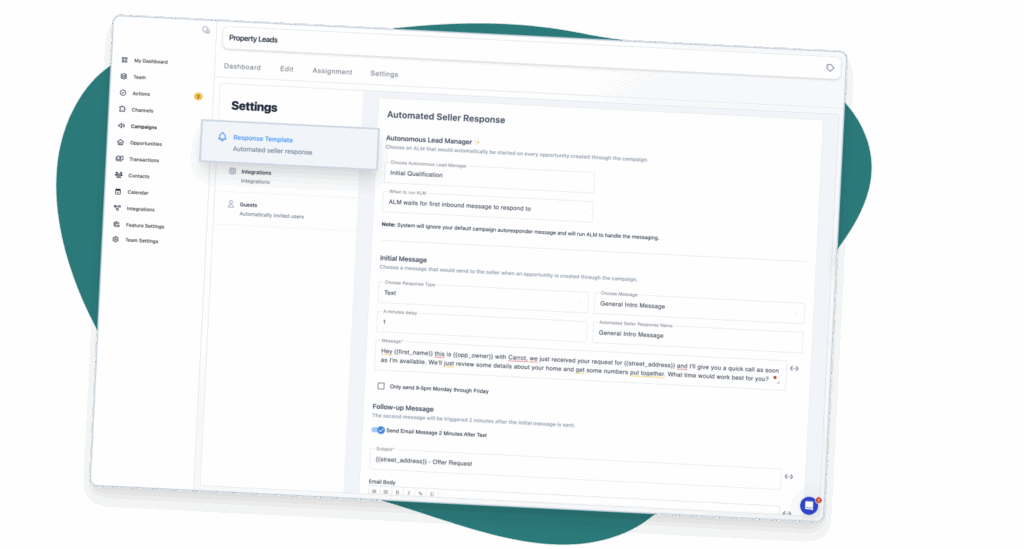
    1. Campaign Autoresponders: Message new leads immediately when they reach out, regardless of the time. You create templates that automatically fill in personal details (like their name and property address) to send customized responses instantly. 
    Carrot CRM campaign autoresponders

    2. Outreach Sequences: Set up customized follow-up campaigns by choosing the outreach method (texts, emails, voicemails), crafting the message, and setting the timing for each sequence. 

    3. Autonomous Lead Manager: It gathers property details, timeline, and motivation through back-and-forth texting with your leads. Then it compiles everything for your review, essentially giving you a virtual lead manager without the salary.

    Here’s a quick video showing how you can keep your pipeline engaged with Carrot CRM 👇

    Get Your Leads Back on the Phone: Automated drip campaigns for follow-up messaging — Carrot CRM

    2. Real-Time KPI Tracking: Know Your Numbers Without Cumbersome Spreadsheets

    Generic CRMs tell you how many “sales” you have, but not if it’s your Facebook ads that are working, or your organic content. 

    Spreadsheets can’t track how fast your team responds to leads. And since you can add unlimited columns and formulas to spreadsheets, you waste time building complex tracking systems for vanity metrics like “total phone calls made” instead of focusing on numbers that actually drive revenue.

    Without real estate-specific KPIs, you’re left guessing where to spend your marketing money. 

    The first step is knowing which KPIs matter to you. Check out this podcast to know 8 must-know KPIs for wholesalers and flippers.  

    After that, you need a system that tracks these numbers automatically and shows you exactly what to fix when performance drops.

    That’s where a CRM like Carrot, which is built for real estate investors, can help. 

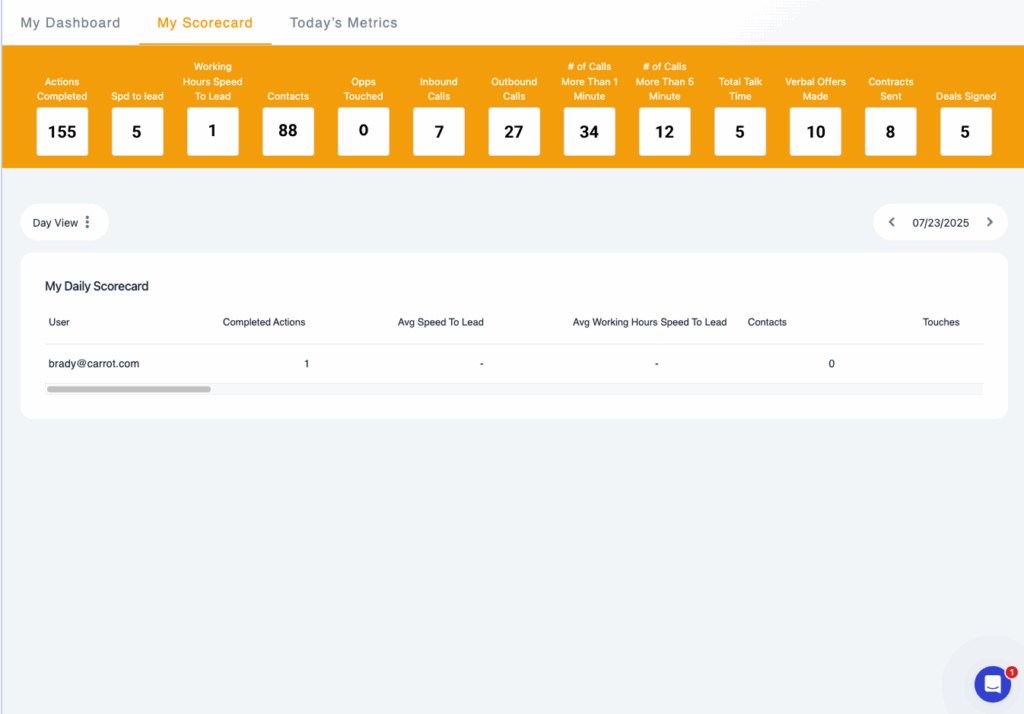
    KPIS & Scorecards Carrot CRM

    It tracks: 

    • Cost Per Lead & Cost Per Deal: See exactly what each marketing channel costs you, not just what you’re spending. Know immediately if Facebook ads are generating leads at $45 each while your SEO leads cost $12.
    • Speed to Lead Tracking: Monitor how fast your team responds to new inquiries. The difference between a 5-minute and 30-minute response time can determine whether you get the deal.
    • Employee Scorecard: Real-time visibility into individual team member performance: opportunities touched, tasks completed, conversion rates. Spot top performers and identify who needs coaching without digging through reports.
    • Pipeline Health: Track opportunities by stage, qualified vs unqualified leads, and conversion rates over time. Know if your pipeline is strong or if you need to increase marketing spend next month.

    From lead tracking to SEO insights, you can get it all in one platform. Take a look at how it works: 

    Advanced Analytics & Insights w/ Carrot’s Success Tracking 

    3. Built-In Property Data: Stop Paying for Separate Research Tools

    Every deal starts with the same question: “Is this property worth pursuing?”

    But getting that answer means bouncing between Zillow, county records, MLS data, and comp websites—burning 15-20 minutes per property just to gather basic information. Multiply that across dozens of leads per week, and you’re spending hours on research instead of talking to motivated sellers.

    Most investors either pay for expensive data subscriptions or make offers blind, hoping their estimates are close. Neither approach scales when you’re evaluating multiple deals daily. 

    Instead of juggling multiple subscriptions, Carrot CRM gives you comprehensive property data reports with everything you need:

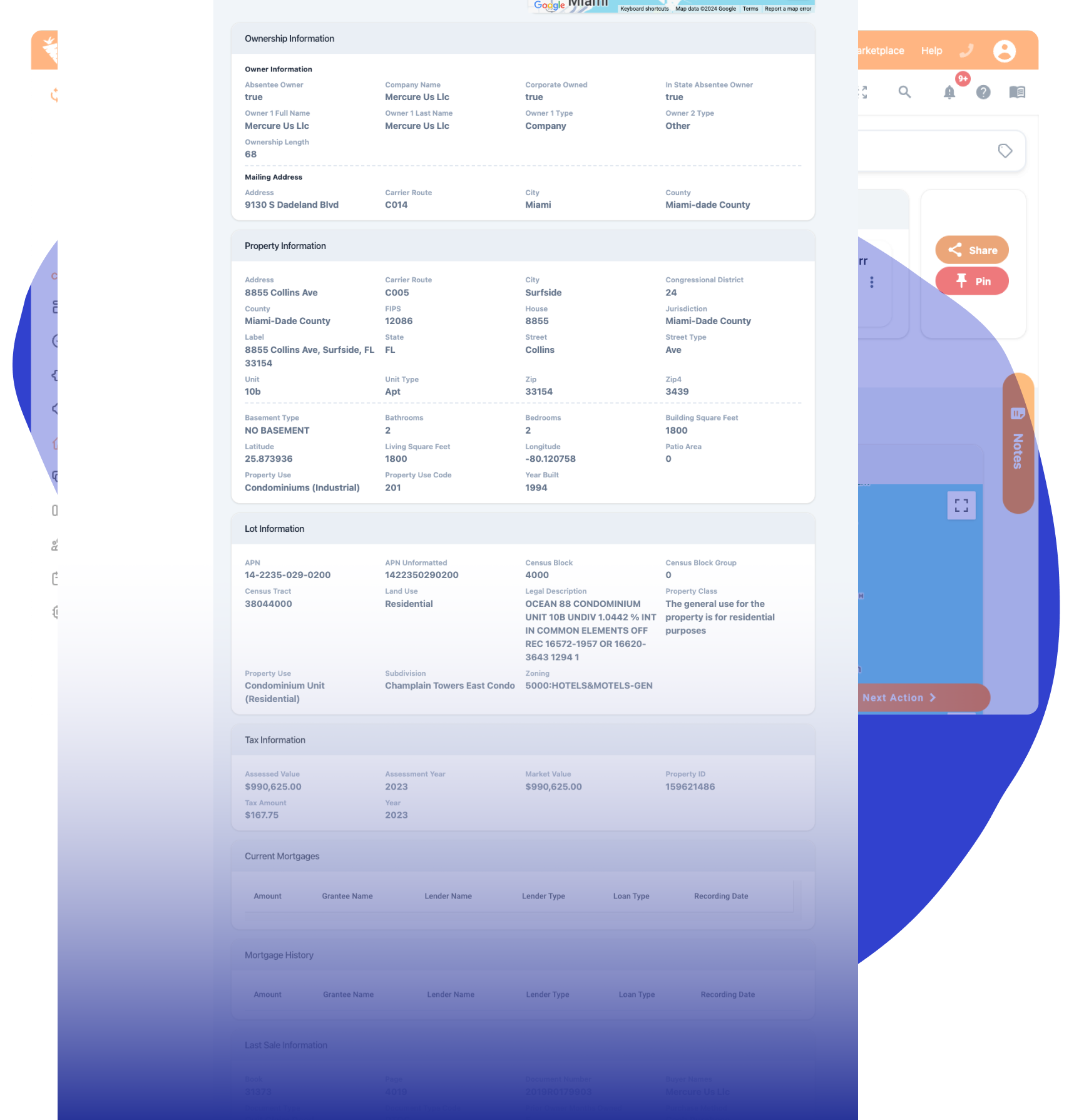
    • Complete Property History: Past sales, current ownership, outstanding mortgages, and tax information all in one view.
    • Neighborhood Comps: Recent sales data and values for surrounding properties so you can assess profit potential immediately.
    • Property Details: Square footage, lot information, and property specifics without switching between websites.
    Carrot CRM property data report

    As one investor put it:

    “There’s no need for a separate data provider to look up properties anymore. If you’re still paying for property research, just get Carrot CRM. There’s no question about it. It’s even got comps. No more searching for comps, you have them all right now.”

    Even the free version includes 20 property reports per month—enough for most new investors to ditch their separate data subscriptions entirely. Start free or choose the plan that fits your current deal flow. See all the options here.

    4. AI Conversation Summaries: Skip the Scroll, Get the Story

    When you’re juggling 50+ leads in your pipeline, remembering the details of each conversation becomes impossible. You end up scrolling through weeks of text exchanges and call notes just to refresh your memory before the next touchpoint. That prep time adds up—10 minutes per lead review means hours of your day spent catching up instead of closing deals.

    Most CRMs make this worse by storing every interaction chronologically without context. You get a wall of timestamps and messages, but no quick way to understand where things stand or what matters most about each opportunity.

    This problem multiplies if you have a team. When an acquisition manager takes over a lead, they need to quickly understand months of history without missing critical details that could kill the deal.

    You need AI capabilities in your CRM to automatically generate concise summaries that give you everything you need in 30 seconds. 

    Here’s what Carrot CRM provides:

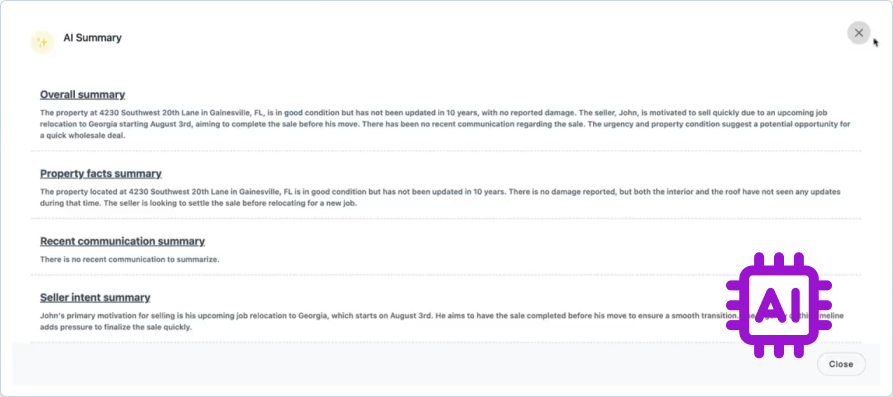
    • Property Facts: Key details about the house, condition, and any repair needs mentioned in conversations.
    • Seller Intent: Their motivation for selling, timeline, and any urgency factors that affect your approach.
    • Past Communications: Important points from previous calls, texts, and emails without the noise.
    • Deal Status: Where things stand and what the next logical step should be.
    AI Summaries Carrot CRM

    The AI handles the tedious work of reviewing conversation history, so you spend time having productive conversations instead of preparing for them.

    Check out this video to see how Carrot CRM AI can help you save hours of manual work: 

    A virtual assistant built into your real estate CRM - Carrot CRM AI

    5. Intuitive Design: Your Team Can Use It on Day One

    Most CRM tools try to be everything: payment processors, phone systems, email platforms, and project management tools rolled into one. The result is software that’s overwhelming to navigate and mediocre at everything, instead of excellent at lead management.

    When you log into an all-in-one platform, it’s easy to get distracted. You check email, review payment processing, and update project tasks. And suddenly, an hour has passed without working on any leads. 

    What you need is not something with fewer functionalities, but something intuitive enough that you can hand it to anyone and they immediately know what to do. 

    Here’s why Carrot is one of the best real estate CRM for you: 

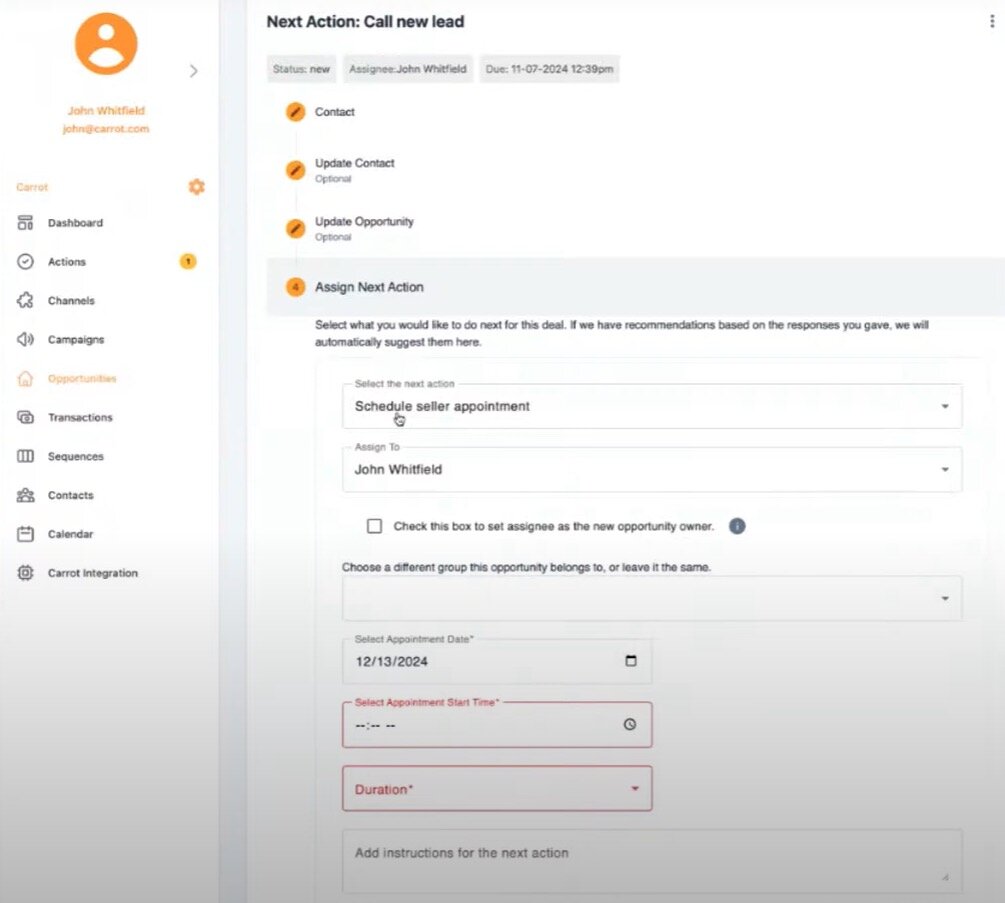
    • Action-Based Interface: The system tells you exactly what to do next for each lead instead of making you figure it out.
    Screenshot
    • Clean Design: Every screen focuses on deal progression, not administrative tasks that pull you away from revenue-generating activities.
    • Best-in-Class Integrations: Instead of building mediocre phone systems or payment tools, Carrot integrates with the specialized tools you already use.

    When your acquisitions manager opens the Carrot CRM, they see their daily action items, not a dashboard full of unrelated features. They can focus on what matters: moving leads through the pipeline and closing deals.

    See the features that real estate investors find the most helpful in closing more deals:

    See Carrot CRM in Action: Quick Walkthrough! 

    6. Easy to Switch: No Data Loss, No Downtime

    The thought of switching CRMs makes most investors break into a cold sweat. You’re looking at weeks of data migration, broken integrations, and team downtime while everyone learns a new system.

    Most people stick with clunky CRMs simply because switching feels more painful than the daily frustration. 

    The right CRM provider should make migration their problem, not yours. You need someone who handles the technical work, transfers your data safely, and gets your team productive immediately—not months later after you’ve figured everything out yourself.

    You also need confidence that your business won’t skip a beat during the transition. Leads should keep flowing, integrations should work from day one, and your team should be more efficient within the first week.

    Here’s how Carrot CRM delivers this:

    • White-Glove Setup: On our Scale or Team plans — Hop on a call, hand over your logins, and the team sets up your integrations. No technical expertise required on your end.
    • Complete Data Migration: Your existing leads, deals, and contact information are transferred safely, so nothing gets lost in the switch.
    • Team Onboarding: Your team gets training and support during the transition so they’re productive from week one.
    • Integration Management: Whether you use Zapier, email marketing tools, or specialized real estate software, everything connects properly from day one.

    Carrot CRM has helped some of the largest acquisition teams in the nation make the switch with its free migration service. 

    7. Fair Lead Distribution: Balance Your Team’s Workload

    Most teams handle lead assignment manually—checking who’s available, sending texts about new leads, or using spreadsheets to track assignments. 

    Without clear rules, leads either get assigned randomly (wrong person handles the wrong lead type) or sit unassigned while team members assume someone else is handling them.

    This creates delays, and your leads fall through the cracks. 

    You need automatic assignment based on lead source, lead type, and team member specialization. Different marketing campaigns should route to different handlers, and workload should be distributed fairly so one person doesn’t get overwhelmed while others sit idle.

    The system should also track who owns what opportunity and create the right follow-up tasks immediately, so there’s never confusion about responsibility.

    Carrot CRM automates lead assignment with flexible rules that match your team structure:

    • Individual Assignment: Route specific campaigns to designated team members. For example, Facebook ad leads automatically go to your top closer, while website inquiries go to your lead qualifier.
    • Round Robin Distribution: Automatically rotate leads among team members to balance workload evenly without manual coordination.
    • Group-Based Routing: Create specialized groups for different lead types, then route accordingly. Distressed property leads go to experienced negotiators while easier opportunities go to newer team members.
    • Campaign-Specific Rules: Each marketing source routes differently. “We Buy Ugly Houses” campaigns go to cash offer specialists, while investor networking leads go to your wholesale coordinator.

    Here’s what one Investor had to say after switching from RESimpli to Carrot CRM, putting Weighted Round Robin Lead Routing to use:

    “It gives me peace of mind when I bring on new acquisitions managers.”

    The system assigns ownership instantly when leads arrive, creates appropriate follow-up tasks, and tracks responsibility so your team stays organized and focused.

    If You Don’t Have a CRM Yet…

    If you’re a real estate wholesaler or house flipper, stop managing leads in spreadsheets or sticky notes. You’re losing deals every week to competitors who respond faster and follow up consistently.

    Sign up for Carrot CRM here. Choose the plan that fits your deal volume and team size. All paid plans include onboarding support and migration assistance, so you can get up and running immediately without technical headaches.

    Here’s what you can expect: 

    • Automated lead responses that work 24/7
    • Built-in property data so you stop paying for separate research tools
    • Real-time KPIs that show which marketing actually generates deals
    • AI conversation summaries that save hours of lead review time
    • Simple migration process with expert support

    Get started with Carrot CRM today →

    If You’re Already Using a CRM But It’s Not Working…

    The cost of staying with the wrong CRM isn’t just the monthly subscription—it’s the deals you’re losing because leads fall through cracks, the time wasted on manual tasks that should be automated, and the team productivity killed by clunky interfaces.

    Carrot CRM’s migration team has switched hundreds of real estate investors from underperforming CRMs. They handle the technical work, transfer your data safely, and get your team productive faster than your current system ever made them.

    Talk to a product specialist, and let us show you how we can help →

    Frequently Asked Questions (FAQs)

    1. Q: What is a Real Estate Investing CRM?
    Answer: A Real Estate Investing CRM is a lead management platform built specifically for investors, wholesalers, and flippers. It tracks deals, automates outreach, and centralizes property data.

    2. Q: How is a Real Estate Investing CRM different from a generic CRM?
    Answer: Generic CRMs lack property-specific tools, comps, and investor-focused KPIs. Real estate specific CRMs integrate these features natively.

    3. Q: Can Carrot CRM replace my property data subscription?
    Answer: Yes—Carrot CRM includes ownership history, comps, and property details, saving you from paying for separate tools.

    4. Q: Does Carrot CRM integrate with other tools?
    Answer: Yes—it connects with marketing platforms, communication tools, and analytics dashboards.

    5. Q: How fast can I migrate to Carrot CRM?
    Answer: Most teams migrate in under a week with Carrot’s white-glove service.

    6. Q: Is automation worth it for small real estate investing teams?
    Answer: Absolutely—automation saves time, increases response speed, and helps smaller teams compete with larger ones.

  • 4 Reasons Your Real Estate Website Isn’t Getting You Leads (And How to Fix Them)

    4 Reasons Your Real Estate Website Isn’t Getting You Leads (And How to Fix Them)

    Every day, motivated sellers in your area search online for someone to buy their house. They visit websites, compare options, and choose who to call. But they’re not always calling you.

    It comes down to three critical factors: 

    • Sellers don’t know your website exists
    • If they find your website, you haven’t convinced them you’re trustworthy
    • They want to contact you, but technical issues make it too clunky

    These three factors break down into 4 specific, fixable problems that most real estate investors face. Let’s see what they are and exactly how to fix each issue.

    KEY TAKEAWAYS

    • Most sellers start with a Google search—your site needs to rank locally for “sell my house fast [your city]” to be in the running.
    • Visitors won’t convert if your site is confusing or overwhelming. Simplify your forms and make your CTAs pop.
    • Trust is built through third-party validation—use testimonials, real photos, Google reviews, and recognizable affiliations.
    • A clunky user experience or poor mobile usability and site reliability can quietly wreck your lead flow. Test your site often and prioritize page speed.

    Table of Contents

    1. Your Website Isn’t Showing Up in Google
    2. Your Website Isn’t Built to Convert Visitors
    3. Your Website Doesn’t Build Trust
    4. Your Website Has Technical Issues
    5. What You Should Do Next
    Carrot icon
    Lead generation, at its best
    Attract, convert & close more motivated leads
    Try Carrot Today

    1. Your Website isn’t Set Up to be Found on Top in Search Results

    When someone in your area needs to sell their house fast, what do they do? They don’t flip through the Yellow Pages or look on social media platforms for a buyer. 

    They grab their phone and Google something like “sell my house fast Chicago” or “sell my house for cash.” If your website doesn’t show up in those search results, you won’t get this lead. 

    You can test this yourself — search for the terms you’d want to rank for in your area and see where your website appears. The further down you are, the fewer leads you’re getting. 

    Some of the common reasons why you’re not ranking on top in Google searches (aka not SEO-friendly) are: 

    • Your website doesn’t use the words people actually search for – you say “real estate solutions” but sellers search “sell my house fast”
    • You’re not creating helpful content that answers seller questions like “how to sell a house quickly” or “what do cash buyers look for”
    • Your site doesn’t clearly mention your city or the specific neighborhoods you serve

    For example, this website says they’ll buy your house in America without mentioning any specific city or region.

    No one likely searches “sell my house America” unless they’re living overseas and want to sell a U.S. property. 

    Even then, they’d probably search for their specific state or city, like “sell my house fast in New York” or “sell house quickly in Miami.”

    How to Fix Your Website’s SEO Issues

    Update your website content to include these keywords naturally. Your homepage should clearly state “We buy houses for cash in [your city]” instead of vague phrases like “comprehensive real estate solutions.” 

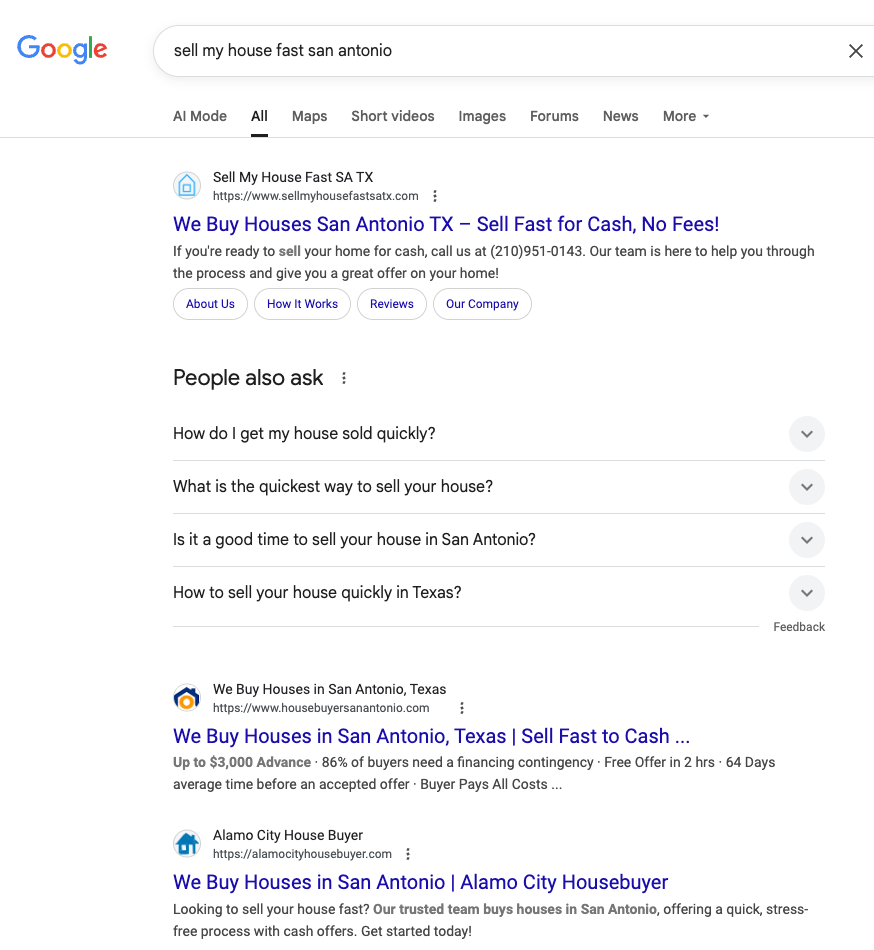
    For example, let’s look at the top result we get when we search for ‘sell my house fast san antonio’ 

    It’s this one… 

    Their website’s homepage clearly states “We Buy Houses In San Antonio, TX” right in the main headline and “SELL YOUR HOUSE FAST SAN ANTONIO” and similar terms throughout the page. They’re using the exact words & questions people search for, not fancy business language.
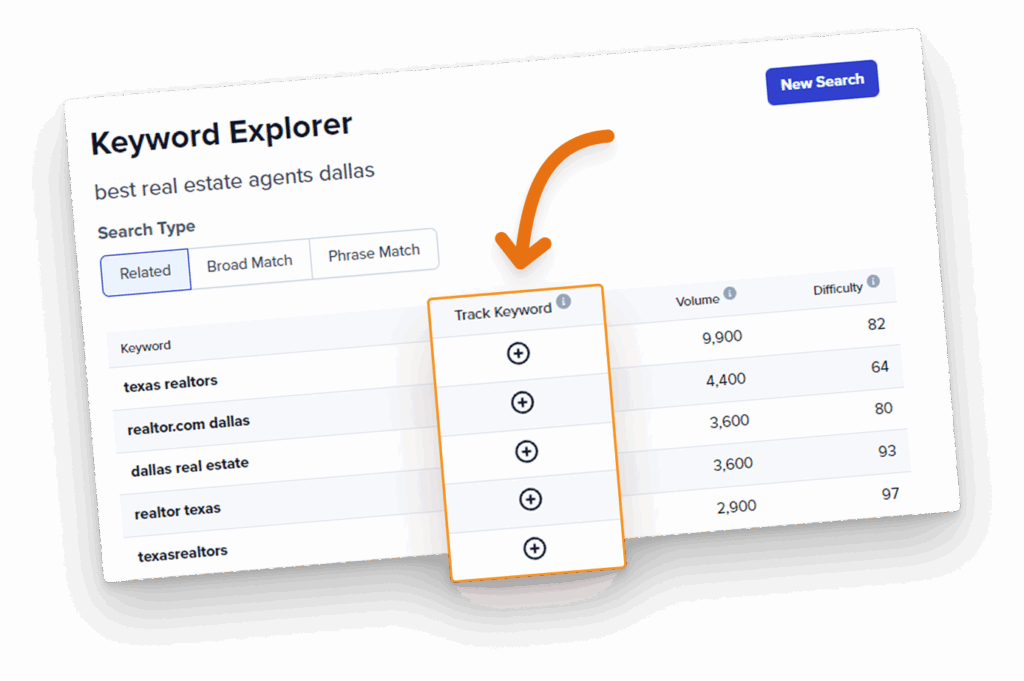
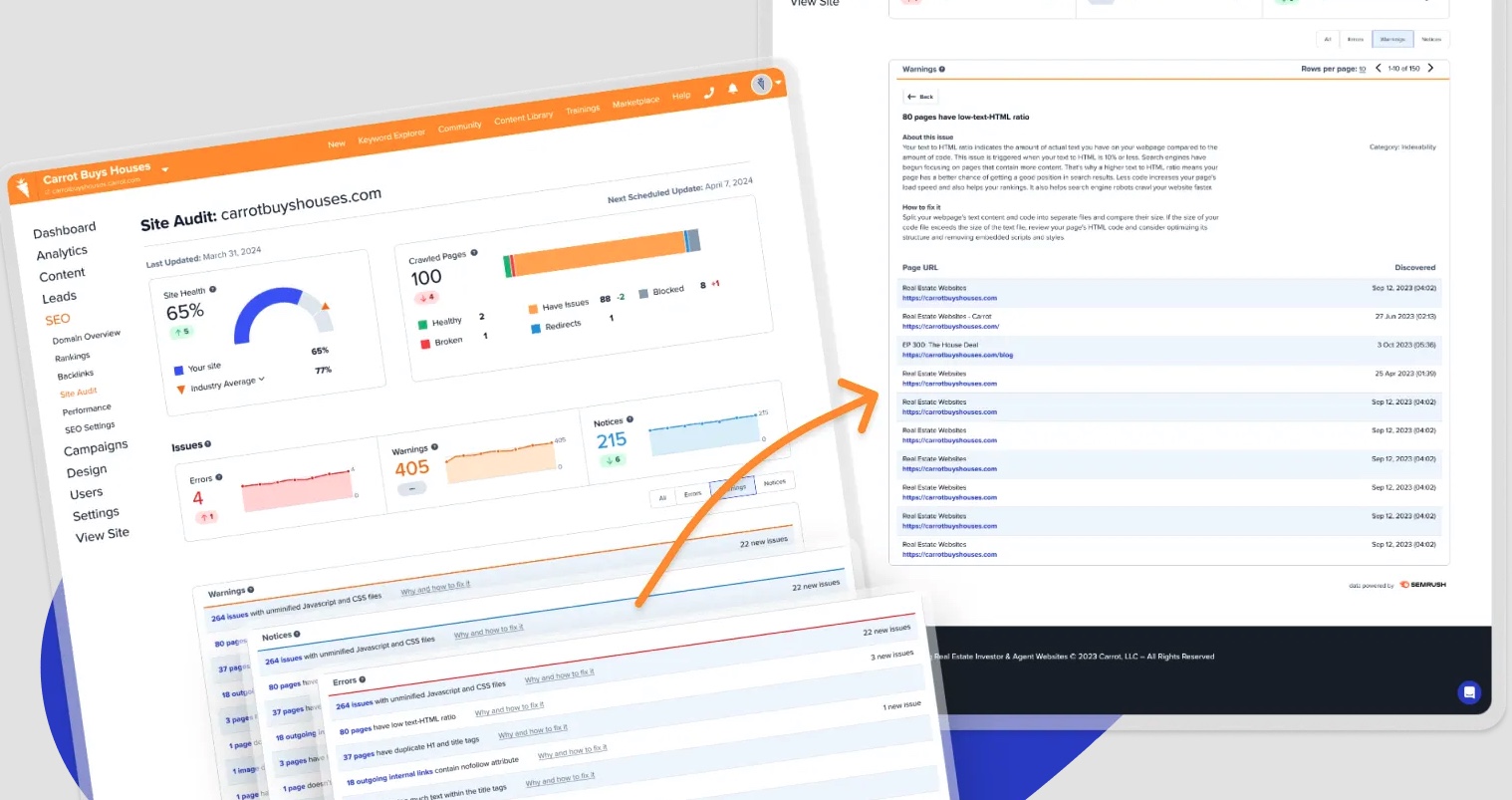
    To find the right keywords you can use Carrot’s Keyword Explorer. It shows you the exact phrases people type into Google when they need to sell fast, plus how competitive each keyword is in your market.

    Even if you use the right keywords, technical issues on your website can still impact your SEO. Things like slow page loading, broken links, or pages that don’t work properly on mobile phones will signal to Google not to prioritize your website. 

    That’s where Carrot’s SEO Site Audit tool can help. 

    It scans your entire website and identifies technical problems that could be dragging down your search rankings.

    SEO isn’t a one-time fix. Regularly publish helpful content, monitor your keyword rankings, and keep optimizing based on what’s working in your market.

    2. Your Website isn’t Designed for Conversion

    You might have hundreds of people visiting your website each month, but if they’re leaving without contacting you, you have a conversion problem.

    Conversion is getting visitors to take the action you want – whether that’s filling out a contact form, calling your phone number, or requesting a cash offer.

    Here are some of the biggest conversion killers sabotaging your website:

    (Keep reading, but if you want to dive deep into site conversion, check out this podcast.)

    7 Site Conversion Killers & 2 Credibility Boosters

    Your forms are asking for too much information 

    When visitors see a long form, they get overwhelmed and abandon it. Research by Hubspot analyzing over 40,000 landing pages reveals that 3-field forms convert at 25%, while 10-field forms drop to just 13%. 

    Here is an example of how not to create a form — too many steps make people overthink and abandon the form: 

    Ask only the essentials: name, phone number/email, and property address (optional). You can gather additional details like timeline, property condition, and motivation during your phone call (or using the Autonomous Lead Manager).

    Here’s a form on a Carrot site that converts visitors to leads at a high rate:

    Your call-to-action buttons are invisible or confusing 

    Your button should be the most prominent element on the page – use contrasting colors and specific language that tells visitors exactly what they’ll get.

    Notice the call-to-action (CTA) in the form image above. 

    • The bright orange “Get My Fair Cash Offer” button jumps off the page compared to the other colors, making it impossible to miss.
    • The copy is benefit-driven and specific – instead of generic text like “Submit,” it tells visitors exactly what they’ll get: their cash offer.

    At Carrot, we tested changing button text from “Click to Continue” to “Get My Fair Cash Offer” and saw conversions jump 49.5%. 

    Important elements are buried on your page 

    Don’t fall into the trap of making your website look beautiful at the cost of conversions. Your goal isn’t to get a “wow” when someone visits your site – it’s to get their contact information.

    This Forster Jones page looks sleek and sophisticated, but the tiny “Contact Us” link is buried in the top corner and easy to miss.

    Compare that to this investor’s homepage that prioritizes conversion over aesthetics (one of the highest converting sites in all of Carrot):

    This page has: 

    • A prominent headline that immediately tells visitors what they’ll get.
    • The contact form is clearly visible. It’s a simple 3-field form that people won’t hesitate to fill out. 
    • The blue “Get My Cash Offer Now” button dominates the page and can’t be missed.
    • Multiple contact options. The phone number is visible with “Call Us.”
    • Trust signals like recognizable publications they’ve been featured in are visible under the form.
    • Clear benefit statements — “Sell as-is | Any condition | No repairs | No cleaning | No agent fees” — address the main seller concerns upfront.

    We might suggest they test a different button color so it pops out even more. They could push their conversion rates even higher!

    3. Your Website Lacks Trust Signals That Convince Visitors You’re Legitimate

    People don’t trust businesses saying good things about themselves. 

    Instead, they look for validation from others who’ve been in their exact same shoes – past customers who needed to sell their house. When they see logos from authority websites, professional organizations, or credible third-party platforms on your site, trust builds naturally because these entities have nothing to gain by vouching for you. 

    You need trust elements on your website to show people that you can be trusted to do business with. 

    Some of the key trust signals are:

    • Real testimonials with photos: Not just “Great service! – J.K.,” but detailed stories with full names and pictures. Carrot found that sites with testimonials saw a 123% increase in leads compared to sites without them.


    Check out this video to learn how to ask specific questions that’ll get a house seller to give you a raving review that busts objections. 

    Getting Better Testimonials: Increasing Trust & Conversion for Real Estate Investor Leads


    • Your photo and company information: People want to see who they’re dealing with. A photo of you or your team and a personalized “About Us” page shows you’re real folks. 

    • Google reviews and ratings: Display your Google star rating prominently. 
    • Authority website logos and credentials: BBB accreditation, professional association memberships, industry certifications, or “As Seen On” logos from reputable news outlets all build instant credibility.

    4. Your Website has Technical Problems

    There’s nothing more frustrating than a motivated seller trying to contact you but giving up because your site doesn’t work properly.

    Does your website work properly on mobile?

    With over 93% of mobile searches happening on Google and most people searching for house buyers on their phones, a website that doesn’t work on mobile is essentially invisible. 

    Check if your site has these mobile killers:

    • You can scroll side-to-side, and the screen doesn’t adjust to phone size
    • Text becomes so small it’s unreadable on mobile
    • Buttons are too small to tap with a normal-sized thumb
    • Contact forms don’t work properly on phones or are hard to fill out

    Switch to a mobile-friendly real estate website design like Carrot to fix these issues once and for all. 

    Are your forms working correctly?

    Another common technical issue is: Broken forms. 

    A broken form doesn’t just mean it shows an error or won’t accept information. Sometimes forms appear to work perfectly but are actually failing in hidden ways:

    • The form submits, but visitors never see a “thank you” or confirmation message, so they assume it didn’t work and either try submitting again or give up entirely
    • You’re receiving the leads, but they’re going to your spam folder, so you never follow up
    • The form works on computers but crashes on mobile phones

    Forms that don’t submit properly, error messages that don’t explain what went wrong, or confirmation pages that don’t load will frustrate sellers into calling your competitors instead.

    Here’s an example of a form that shows a clear error: 

    Test your contact form monthly by submitting it yourself. Make sure you see a clear confirmation message after submitting. Connect your forms to a CRM and add SMS alerts so you know immediately when someone contacts you.

    Is your website loading as fast as possible? 

    If everything else is working correctly, check how fast your page loads. A 10-second load time might not seem like much, but when people are online searching for someone to buy their house and they have dozens of options, they won’t wait around.

    Google has found that bounce rates increase by 32% when page load time goes from 1 second to 3 seconds. For real estate investors, this means every extra second your website takes to load is literally sending motivated sellers to your competitors.

    Our websites are built specifically to load fast, rank high in search results, and convert visitors into leads.. That’s why you’ll consistently find Carrot sites loading noticeably faster than the industry standard.

    You can test your website speed at Google PageSpeed Insights. (And check out a few more tips on page speed from our help center.)

    The test below was done on Josh & Tiffany High’s Carrot website using Google PageSpeed Insights. Check out the score!

    If your site takes longer than 3 seconds to load, make sure your website is built with clean code from the ground up, your server is fast, and your images are in the proper size and format. We have all of that baked into our Carrot real estate websites.

    What Should You Do Next?

    These four issues are costing real estate investors thousands of dollars in lost deals every month. The good news is they’re all fixable.

    You can tackle them one by one, or you can use a platform like Carrot that’s designed specifically for real estate investors.

    Every Carrot website comes with the conversion elements we’ve discussed already built in: mobile-optimized design, fast loading speeds, strategic contact forms, easy-to-add trust signals, and SEO optimization. 

    Carrot websites generate 2.5 times higher profits per lead compared to other platforms. Members have generated over 1 million motivated seller leads, and Carrot sites hold 45% of the top search rankings in most U.S. markets.

    Check out a demo of Carrot today and see why thousands of investors choose it over building their own websites from scratch.

  • What I Learned From 1,000 Carrot Leads w/ Daniel Cabrera

    What I Learned From 1,000 Carrot Leads w/ Daniel Cabrera


    Daniel has generated over 1,000 Carrot leads through his Carrot Lead Generation hub, a.k.a. website. He’s usually ranked number one in his competitive market of San Antonio, Texas. In our conversation, we talk about:

    • The first steps Daniel took in SEO in the first 90 days and first year
    • What he would do differently in his marketing if he had to start all over
    • How negotiating with his SEO leads is very different (and easier) than other lead sources
    • How Daniels’s “buy box” has evolved over the years and he’s able to make use of every lead he generates
    • What Daniel is doing to flip the stigma around wholesaling and real estate investing

    Mentioned in this episode:


  • The Polite’s of A&E’s 50/50 Flip: From Wholesaling to 66-units + GOLD Marriage Advice

    The Polite’s of A&E’s 50/50 Flip: From Wholesaling to 66-units + GOLD Marriage Advice


    The way Krystal & Dedric Polite run their marriage and their business is something we could all aspire to. Sure it’s cool being on a T.V. show (A&E’s 50/50 Flip) and having a $5M real estate portfolio, but the gold nuggets I picked up in my conversation with them were about having a crystal clear vision backed by a purpose beyond themselves, their counter-culture, yet effective approach to dating that has allowed their marriage to thrive, and how they’ve managed their finance as they went from W2 to wholesaling to flipping and owning multiple businesses. I hope you enjoy this as much as I did. Listen in for a true behind-the-scenes look!

    About Dedric & Krystal Polite

    Dedric & Krystal are stars of the house-flipping reality TV show 50/50 Flip on Hulu & A&E. The Polites are rare keynote speakers, coaches & entrepreneurs who actually own & operate multiple highly profitable 7 figure businesses.

    Mentioned in this episode:


  • EP 490: From An Unsteady Market in 2023 To A New Framework For 2024: Annual EPIC Planning Call! (Replay)

    EP 490: From An Unsteady Market in 2023 To A New Framework For 2024: Annual EPIC Planning Call! (Replay)


    This year, I will break down my journey, my wins, my mistakes, and what I learned along the way. I will share with you the biggest mindset shifts you can make in conjunction with the framework that helped propel Carrot to get on INC 5000’s fastest-growing companies list for 5 years to scale your business in 2024!

    Here’s What You’ll Learn On This Call

    Plug & Play Framework

    Download my entire plug-and-play framework for crafting a 1 year and 3 year business strategy that grew Carrot into one of the fastest-growing companies in America 5 years in a row.

    Biggest Mindset Shifts

    Why I’ve shifted my focus from years of “fast growth” to a sustainable business that gives me and my team joy while staying profitable.

    Shift income into wealth

    I shifted my active income into long-term wealth, the financial modeling I use to ensure all my eggs aren’t in 1 basket, and how I’m hedging against inflation in 2024.

    Reflecting on 2023, it’s been quite a rollercoaster. None of us could have predicted the twists and turns it brought. And as we step into 2024, the future remains uncertain. In these unpredictable times, we must ask ourselves: “How do we keep our focus on what truly matters?” That’s why I’ve hosted the “EPIC Planning Call” for the past five years to share the blueprint I use for success.

    This process has secured our spot on the INC 500/5000 list and empowered us to thrive amidst challenges. It’s a plan that brings freedom rather than chaining us to the grind.

    Watch the Replay here <<<<