It’s a special day today. Not only is it International Carrot Day today (April 4th, Google it. It’s a real holiday) and we’re celebrating all things Carrot today with a virtual party from our home offices.
But we’re also celebrating the official announcement of our new Carrot Impact Fund as our latest commitment to go ALL IN on impact.
We’re officially committing $500,000 to help serve the communities we live, work, and play in to help fuel our giving program for years to come.
Now Be Honest… Why did you really want to become an entrepreneur?
Time? Freedom? Money?
For years, I struggled to answer that question. There was something missing in my past businesses. I couldn’t find the happiness that took it to the next level.
I couldn’t connect with that life-changing moment.
We create businesses for three main reasons:
Freedom
Flexibility
Finances
The problem is we were missing one…
IMPACT
We’re going all in on not just making an income but making a real impact. All in on stepping up as a small business in these times to do what we feel doing business is all about.
For a few years, we’ve had our “Carrot Giving” program where we’ve given 1% of our gross revenue to causes that amplify our Core Values here at Carrot.
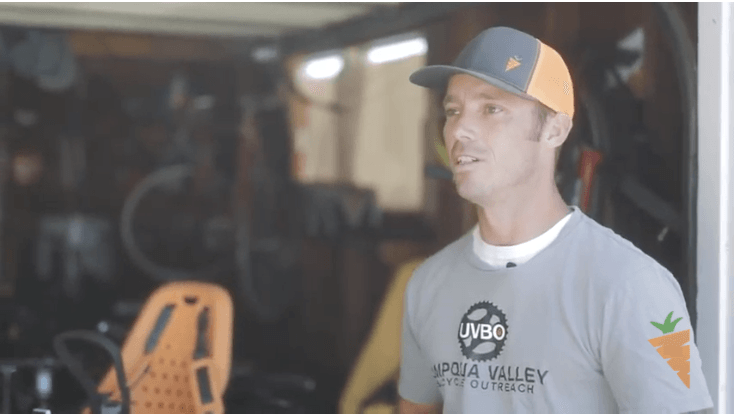
Supporting Local Youth Through UVBO
Housing Homeless Female Veterans
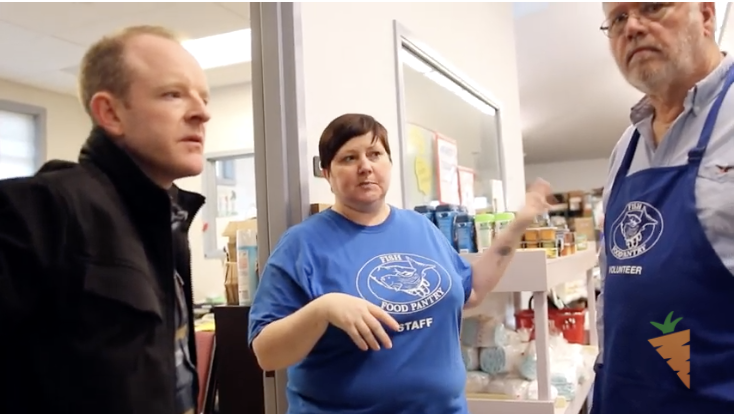
Feeding Families Across America
It’s been AMAZING!
Seeing the impact it’s made on our communities, our team, our members, and those directly impacted by our gives has inspired us.
Inspired us to not just give when things are going great. But to commit to giving at a larger scale so it’s fully a part of our soul as a company… not just “something we do”.
Head over and check out our official announcement on the Carrot Impact Fund and see ways you can start to make an even greater impact in your own community.
We want to help you make a bigger impact on your life and business!
We want to help create…
A more positive world.
A world where more people genuinely care about others.
A world that celebrates creativity and being open-minded.
A world that is grateful for what we’ve been blessed with — even in hard times.
A world that sets high standards for ourselves and thirsty for self-improvement.
A world where money empowers and uplifts… it doesn’t separate.
A world where transparency is rewarded and honesty is the norm.
A world where companies place customer happiness over profits… and funny thing… you become more profitable because of it.
And…
… a world that’s more fun and doesn’t take itself so seriously.
Announcing the Carrot Impact Fund!
This announcement isn’t about us. It’s not about celebrating Carrot. Yes, we’re excited about those the Impact Fund will help and we’re proud of the hard work it’s taken to get here.
But, it’s really about the part of why we exist.
For us, we’re on a mission to Be A Beacon Of Positivity and Possibility and to create a ripple effect of small businesses that do good while they do great work.
We Want To Challenge You
We hope you’ll take our challenge to join the movement and to start to make a greater impact today.
If you already have a giving program, you rock.
The impact we can all make together will reach MILLIONS of people over the coming years.
Maybe you’ve been waiting for the “perfect” cause or for the day you have “enough” to give. But, what if that perfect day never comes?
If we don’t give our time and money to amazing causes when we don’t have it… we likely won’t do it when we do.
If you are looking to make the biggest impact its not going to be from a lifestyle business. It’s going to be a machine that you can build and grow. Something that adds real value for your clients.
Trevor Mauch
To Scale Up or Step Back? How To Regain Time & Energy From The Business You’ve Created
Have you created your dream business only to find that the freedom and flexibility you envisioned simply doesn’t exist? After hours spent in the office, countless long nights, and time spent away from your family, you may feel tired, stressed and burnt out. You may dread doing those necessary, yet grueling tasks that drain your energy and make you miserable.
Many entrepreneurs hit a fork in the road where they must decide if they want to scale back and enjoy a lifestyle business or move forward in order to make a real impact on their industry, community, and career. Growing your business doesn’t have to require even more time and energy.
By creating proven processes, a strong team, and a structured schedule, you’ll be able to regain time and grow your business in ways you never thought possible… without having the life sucked out of you.
Read the Full Show Notes Below…
You’ve created your dream business… Congratulations! That said, true success usually comes after a lot of hard work. Starting a successful business can often require long hours and a relentless pursuit of tasks that continuously drain the life out of you. You started your business for freedom and flexibility but have found that those two luxuries simply aren’t available for you. If your goal is to grow your business, you’ll have even less time to pursue your passions, spend time with your family, and enjoy life.
So what do you do? How do you regain your time and energy so you can finally do the things you’ve always wanted to do?
Solutions To Stop Burnout
Adding trusted processes, building the right team, and learning to delegate will help you find time for the high-energy tasks that can really impact the direction of your business. Recently I did a training for our Advanced Marketers called The Entrepreneurs Freedom Formula which discussed exactly how I like to build teams, create company culture, and structure my time. Doing these things has allowed me to build a business that serves me and fuels my passions.
Finding Fulfillment In Your Work
If you are looking for the biggest impact it’s not going to be from a lifestyle business. It’s going to be a business machine that you can build and grow. It will be something that provides real value to you, your clients, and your team. For me, the lifestyle business was unfulfilling. I was always hustling, looking for the next product or service to add when in reality the best thing to do was to pull back and simplify.
By building the right team, I was able to simplify the process. As the team and business have grown, we are faced with new challenges, which help us grow both professionally and personally. We are ever-evolving, refining our processes, and creating better service for our clients. By continuously growing, we are able to make a bigger impact and give back in ways I had never imagined.
Carrot Day!
Carrot Day is coming up on April 4th and we have a MAJOR announcement to make. We’re going to be doubling down on the ways we create impact and we can’t wait to share the news with you!
Make sure you subscribe to this podcast so you can be one of the first to hear about our awesome announcement!
During this article, I’m going to be talking about how you cope with these major changes in the economy, real estate, and the way that we’re working and living and thriving.
Get Quick Context About This Blog Post Before Diving In…
Listen to the Full Podcast Episode Below
Now everybody’s going to be impacted in some way, shape, or form. But, you don’t have to be impacted negatively.
There are people that I know, businesses that I know, that are actually doing better than ever right now because they’re geared and they’re set up and they planned for things like this. Or, maybe they just got lucky and they have certain products, of course, that are just in high demand for these times.
I’m going to be talking about how to better prepare for what’s to come.
How Do You Come Out on the Other Side of This Stronger?
How do you as a real estate investor or agent plan and prepare for what is going to happen?
I’ll be the first one to admit that I didn’t treat this seriously enough early on. I thought, it’s just this, like a lot of people were saying right, it’s this cold, it’s this flu. The flu numbers kill more people than this is killing. And that was honestly just a full misunderstanding of how pandemics work, a full misunderstanding of how math actually works in these types of situations.
Preparing for the Financial Impact
The financial side is what I want you guys to prepare for. What happens with all the shutdowns? The shutdowns are where the devastating part is on the financial side because there’s the health side of it, which is a huge deal, but it’s going to likely be shorter-lived, months rather than years. The financial side though is where it gets really, really interesting and possibly scary for many people.
So if you have stay-in-place orders in California and Washington (now in Oregon) and all over the place, and kids are out of school here in Oregon until the end of April now rather than just spring break…
That leaves over a month and a half to where parents have to figure out a way that they can work at home while trying to take care of their kids still. We’ve got team members who have multiple kids at home, who are working and they’re trying to do their best work. So we’ve put policies in place to give our team members more flexibility and more leeway during these times. And we said, “We’ll take it two weeks at a time during the next two weeks.”
But, we’re not pumping the brakes.
This is when we actually need to hit the gas more than ever to help our customers more than ever, to help you guys wade through and win in this market.
And that’s where I’m going to come to next because there are so many people doing amazing right now still because so many people are pulling back and I’m going to show you guys exactly how to do that, but we need to be doubling down and helping you guys win even more right now, not pulling back ourselves and going, “Hey, let’s wait and see.”
Don’t Pump the Brakes… Give It More Gas
I think if you have a wait and see attitude, then you’re likely going to get impacted way more negatively than you wish.
We put in the policy, where for the next two weeks, put in the hours that you can. We don’t want you to have to make a decision between being a good father or mother and being a good worker. I would rather have you make the decision to be a good father or mother versus trying to fit in all 40 hours. So if you’re only able to get 35 hours of good work in, good focus work in, awesome. Report the full 40 during these next two weeks, and then we’ll take it two weeks at a time after that.
So if you’re an employer, find out ways that you can really help your team members wade through this. Help your team members have confidence in the way that you’re doing things…wade through it with them.
Next thing, if you’re an employer, you need to be doing weekly updates with your team members at the least. I did one last week, pulled up a bunch of slides and just walked through…
“Hey, here’s what we know about the pandemic so far.”
“Here’s how we can serve you, even more, to make working from home even better than we already have.”
Then the next thing was…
“Let’s go through the financial picture. Let’s go through how much cash reserves we have. How long could we run this business if some big things happen that cut our income by 10%, 20%, 30%, 40%, or 50%.”
Now, the 10% is realistic, 20% possibly. 50%, I don’t believe that that would happen, but there are cash reserves that we have and could survive and thrive with that.
I also covered hiring…
“But also here are the plans that we have. Are we going to be adjusting our Q2 plans of growth in our hires? Well, we’re taking some of our hires and moving them to contractor roles until this shakes out.”
We’re not stopping those hires because we need them. We need them to grow, we need them to help serve you guys better. But we’re moving them to contractors instead to kind of add that extra buffer in place.
So that’s another move that you can make. If you have any hires coming up, make them contractors instead of employees the next few months to see how things shake out.
Survive and Thrive
The next thing, I’m going to give you guys some really, really actionable steps. How do you wade through this, thrive, and survive?
The first thing is you have to have reserves.
Let’s look at the foundation level. The people that are going to be getting in trouble are the people that have been kind of running fast and loose the last three, four, five, six years.
Thinking that whatever their situation is, it’s going to go on forever in a good way and not stocking away reserves. So the one thing I’ve always had pretty good discipline in, and then we carried it through the previous years as well, is carving out reserves.
Every quarter we look at our profits and I always set how many months of cash reserves we want for operational expenses for the business. And some people suggest three months, six months a year. I suggest six months is what every business should have in operational cash.
What I mean by operational cash is, what does it actually cost you to run your business? If all of your revenue disappeared, what does it cost you to run your business?
That includes all of your employees, any of your fixed expenses, things like that. Add that up for six months. And then I think that’s what you should have in your bank account for reserves.
As I said, the likelihood that you’re not going to bring in any cash for six months is very low, but at least it gives you breathing room.
Now it gives you time to pivot and adjust and change course if you need to. If you only have a month or two or three months, you’re in crisis mode at that point. You can’t really get very crazy creative and have time to really pull back, think, and pivot. You won’t have the luxury of planning a little bit.
Building Reserves Now
What can you put in place right now to ensure that you’re building up your reserves?
Do that now. Start to stock away cash and start to build up that six months reserve. Do the same thing on the personal side. Start to stock away more cash than you normally would right now. Build it up in reserves, six months, personal expenses, your mortgage…
What does it cost you to live on a personal basis? Do that. The next thing is even if you don’t predict a downturn in your business, start to cut expenses.
Start to look at things like that because we want to plan for the worst, but hope for the best. Okay, plan for the worst, hope for the best. And those of you that are not taking this seriously enough are going to be bitten in the butt in several months possibly.
Now we hope not. But as I started to dig into this, the financial ramifications when parents are staying at home and when businesses are closing, all of a sudden unemployment’s going to go from 3% to 5%, to 20% for the next month or two and unemployment benefits rush in there.
Then all of a sudden you have some people that aren’t able to pay their rent. So what happens to landlords during this time? Well, some landlords might struggle to pay their mortgages because some of their employees might be restaurant workers. They might be workers that are having their position shutdown and they might not be able to pay their rent.
What if you’re landlord, that’s over-leveraged, that doesn’t have cash reserves for a while? That now can’t pay your mortgage. So now you’re going to go behind in your mortgage and then all of a sudden, let’s say a bunch of landlords start to default on their mortgages three months from now or two months from now, then you have some sort of banking issues as well.
The Economy
Now is it going to be the same as what happened back in 2008? Let’s dive into some economic stuff right now.
The likelihood that that is going to happen is extremely low. They’re just totally fundamentally different factors that are happening in the economy right now.
Back in 2001, 9/11, what happened was that it was an event, a terrorist attack, that completely wrecked the economy for a period of months. And it wasn’t because there was something fundamentally wrong with the economy. This event wasn’t a bubble…
But, there was the .com bust that happened several years before that. That was something fundamentally wrong with the economy. There was way too much over-investment in the tech world. No one knew what it was. Too many IPOs that were too overhyped. And there was a bubble that popped.
9/11 an event that was a black swan event. Kind of like this pandemic where it’s outside of most people’s control. It’s not something that you could really easily plan for very well. But it does impact things vastly.
After 9/11 people basically stopped traveling. And when people stop traveling, that sort of decimated the travel industry. Hotels, airlines, the same thing that’s happening right now, which then trickled down into everything else, unemployment rises.
But all that didn’t last for too crazy, crazy long. Go back and look at the history books. Some of it lasted for the course of the year. The travel industry took a little while to recover, that’s for sure. Some stuff bounced back within months. But the overall economy, the stock market did take a hit, but real estate prices continued to appreciate actually.
So real estate prices did not depreciate, they continued to appreciate. That is a little bit different though because that was coming out of the stock market crash, the tech bubble of ’98, ’99, 2000.
Things had already started to kind of improve there a little bit. The difference here is we’re at the end, almost overdue of a bull cycle the past 12 years in the stock market and real estate market.
All these things have been amazing for the past 12 years. And for the past couple of years, I’ve been preparing Carrot and my team for a recession. We don’t know when it’s going to happen, but arguably the current policies are helping to prop up the economy longer than I think it should have been.
Bubble?
So is that creating a bubble? Possibly.
There could be some things there, but this black swan event of the pandemic now started to kick it forward, started to kick it down the curb. I do believe that this will kick off some sort of a step into recession.
Now, will this recession be like it was in 2008? I don’t believe so.
Once again, it doesn’t have the same fundamental economic issues there that the mortgage crisis created. And also, the issue of this time has not related to real estate per se.
The issue last time was directly related to the real estate market being overheated. Too many people buying properties that shouldn’t because it was way too easy to get loans.
We’re not seeing that right now. I don’t predict that real estate prices will take a crash because they haven’t been overinflated as much as previously.
Now, will we take a little bit of a dip in prices? I think so. I think toward the end of the year you might see some markets start to slow down a little bit, but I think it’d be more of a softening.
How Real Estate Agents Have Shifted
In the short term, I’ve been talking with lots of agents about what they’re seeing, what are they experiencing in their world.
The experienced ones aren’t missing the beat.
Some have turned to doing virtual showings now over Zoom or Facebook Live instead of having big open houses. They invite everyone to tune into their Zoom room during a certain time and they walk around the house and they talk about it. And then they give people a tour. They’re still showing houses.
One agent said that there have been buyers who still want to buy but they’re going to kind of tap the brakes and wait this out a little bit. There’s also been a seller or two who didn’t want to have a bunch of people going through their house during this time, which is understandable, but they said, in general, they’re still closing the houses. They closed six houses last week alone.
What a lot of other people are kind of using, they’re letting fear stop them from doing this. They’re assuming because all this stuff is happening, then real estate is not working. That none of this is going to continue to work.
That’s just not the case. That’s just not the case at all.
For more information about the coronavirus and realtors, check out this guide.
How Real Estate Investors Have Shifted
Talking to investors, yes, some are worried about their portfolios because they have so many renters that are lower income. That should be an issue. You should be tight. You should be getting as much cash liquidity right now as you possibly can, just to plan for the worst, hope for the best.
But for people out there flipping houses, wholesaling houses, buying houses, things like that, we’re not really seeing much of a slowdown. Now there are some municipalities that are closed down or they’re not processing transactions.
I talked to Cody Sperber down in Phoenix, Arizona last week. He’s coming out for a podcast issue for CarrotCast here shortly. Cody did say that he had a transaction or two canceled at escrow, but what we’re seeing is more around the financers. It’s more on funding. It’s more on the private lenders that are pulling… They’re tapping the brakes a bit.
Let us wait and see this out. Let us dampen our risk in this process. And let’s wait for a month or two before we start to deploy cash, so that’s what you are going to see some private lenders doing that.
Now, how do you contend with that?
Well, number one, you need to be going to your private lenders if you’re a house buyer, and talking with them and educating them on what opportunities there are in the market and how you’re safeguarding their investments.
Go to them right now and talk. Do a Zoom call with your investors and talk to them about the market, about what you’re seeing on the ground, about what other investors are seeing locally, about how you’re going to safeguard in their investment during this time, but also about the opportunity that there is going to be, in this time, to add more value and have them get even greater returns.
That needs to be done. You need to be reaching out to your investors right now to continue to build that relationship, to continue to build that trust and credibility with them so they’re comfortable in these crazy times.
The next thing, if you’re a flipper or a wholesaler is, there’s so many of you who are tapping the brakes on your marketing and you’re going, “I’m going to wait this out.”
That is insane right now. That is the worst thing you can possibly do.
Here’s Cody Sperber’s Game Plan During the Current Situation…
You Have an Audience Right Now
Right now you have some of the biggest captive audience possible out there for people to see your marketing message. Mail is still being delivered. There’s no plan, it doesn’t seem, for mail to stop being delivered. Phone calls are still being answered. Even more now so, because people are at home and possibly home from work.
People are going online and still doing the searches.
In some categories, they’re doing more searches than they were before. For house sellers, we saw a dip a couple of weeks ago. We’re going to look at the data and see. It’s barely, it’s like 10% or so.
According to a recent WordStream study, search traffic in the real estate industry remains relatively stable, as well as little change to search volume, CPC, or conversion rates.
But as we move into the next two or three weeks, some important shifts could have some important industry consequences.
What Can You Expect?
What I predict is people looking for investment properties might be kind of pulling back some of their demand right now.
I predict while in that first phase of the pandemic fear to happen, I think a lot of people will pause just because they don’t know what else to do. They’ll pause out of fear, they’ll pause meaning, “I want to wait a little bit to see what happens before I sell my house.”
But here’s the deal. If they start to have income issues, if they already had an issue with the property they’re needing to sell, and now he gets exacerbated with the economy, what’s only going to happen now is as the weeks go on…
That pain is going to actually increase.
So, if you’re an agent or if you’re an investor, you need to be out there solving people’s pain. This isn’t about taking advantage of people. There’s not one lick of that here.
What we need to be doing, as a society, is finding out how can we solve people’s pain.
How can we truly solve problems? How can we truly add value to people’s worlds right now when they need it the most and some people need it right now more than ever?
Right now is not the time to hit the brakes, right now is not the time to pull back and say, “I’m going to wait and see it out.”
Right now is not the time to pull your marketing back, right now is actually the time to double up on your marketing and increase your spend on marketing.
I was talking to Christina Krause, one of the biggest direct mail marketing consultants for investors and she said her three biggest clients have made their largest purchases ever with her these past two to three weeks. That says a lot!
So why is that? Because what they’re doing is there’s a lot of print houses, mail shops and things like that, that might be shutting down for business for a while, if there is a stay-at-home, a stay-at-place order. And a lot of those shops might be in California or some other states where they’re doing stay-at-home orders.
Get your orders in right now… To get your mailing pieces printed off before any stay-at-home orders are done.
Make those big orders and then pull back. The post office doesn’t seem like they’re shutting things down. Could that change? It could.
Make those orders, get your direct mail pieces in because what happens if you try to place your order and then they’re slowing down business for two weeks, all of a sudden you’re two to three weeks behind, maybe even four weeks behind because now they have a stockpile of orders they need to process.
You’re two to four weeks behind on getting mail out to people when they need it the most. Then those who are getting mail out consistently and often during these times are going to come out the other side winning.
Those who are going and looking at their Google PPC costs and saying, “Hey, there’s people.” What you’re going to see right now is people diminishing or stopping their PPC, their spend.
You’re going to see people stopping their PPC spend because, out of fear, because they’re seeing, “oh my gosh, my click cost is $45 a click or $25 a click and my leads are $300, oh my gosh.” But that’s if you’re trusting emotion, not math.
You need to go back to the fundamentals we’ve been teaching for years…
TRUST MATH NOT EMOTION
If your average profit per deal is $20,000, your for-average-commission per deal as an agent is $10,000 and as an investor, let’s say, after that $20,000 profit, it takes you 10 inbound online leads through PPC or through SEO to close the deal, which is about average, right around there, 10 to 15.
I would just about average, the highest lead to close ratio you can get with any lead. Any lead, as an agent and an investor, so if you’re closing one in 10 and your average property is $20,000 and you’d be willing to trade $5,000 to get that $20,000 deal done in marketing, that means you can pay up to $500 per lead and win the market.
And there are so many people cutting and killing their pay-per-click at $150 a lead, at $95 a lead at $225 a lead, because their neighbor over here is getting leads for $22 or $5 on Facebook or because they’re fearful.
Right now is when you need to actually look at your numbers again and say…
“I’m going to double down on this. I’m going to spend even more. I’m going to make sure I’m answering these phone calls quicker.”
Stay in front of those sellers and help serve them even better. Make sure to give them multiple different offers.
Can you imagine if, in this market right now, where there’s a lot of things happening and there are people who are wanting to sell, a guy like Eric comes in and says,
“Hey, here are three options…
#1…List it for the most money in your pocket.
#2… I can pay cash, but it’s going to be a discount, but it’s immediate and you don’t have to worry about repairs or anything.
#3… Or, I see there’s an opportunity to renovate your kitchen and your bathroom and add $60,000 in value with a $20,000 investment. I will put in the $20,000. I’ll bring in my construction crew. Then afterward, you and I will split the difference between the equity that was gained…
…On that extra equity where it’s going to add $50,000 in extra equity, I’m going to get my $20,000 back for the renovations, which leaves $30,000 left, and we’re going to split that. You’re going to get $15,000 extra over and above what you would’ve got if you’d have just listed it as is. I’m going to get $15,000. Then I’m also going to get the listing over here for the rest of the principle. Okay?”
Be Creative Right Now
Here are three things I want you guys to do right now.
First, create reserves for personal and for business.
Make sure you have six months reserves in the bank. Now, if you don’t have six months reserves in the bank, then should you freak out? No, but you should prepare for it. You should pull back and go, “What expenses can I trim right now where I can start to build up more reserves?”
Stop spending on the ice cream. Stop spending on things that don’t matter. Cut the Netflix subscription for awhile. Whatever you have to do, start building up cash reserves, not just for the pandemic, but if a recession does kick in, there’s always amazing opportunity, but only for those who are prepared, only for those who actually are ready for capitalizing on this opportunity with cash or with partners who have cash.
Second, go out there and start building relationships with private investors.
Start to build relationships with those private lenders because those people are the people that have been piling cash for years, and they want opportunities in the market when those opportunities arise.
Start to build relationships with people that are well-off in your area. Ask them about what their plans are, tell them about what you’re doing in real estate, and start to get them interested in it.
Don’t ask them for money, but if you talk about what you’re doing enough, they will be interested, they will ask you, and they will say, “Hey, yeah, that sounds amazing. Let’s chat about it.” Okay? How do you make sure that you are being proactive in building those relationships right now?
Third, grow during these times.
I don’t want you to pull back. I talked about before how there’s going to be a lot of people who are going to be doing the, “Let’s sit and wait.”
There’s going to be a lot of people who are doing the pullback and like, “I’ll pull back out of fear because I don’t know what’s going to happen.” Now is NOT the time to pull back, NOT the time to pull back business strategy-wise, NOT the time to pull back investment-wise and marketing.
Right now is the time to double down. If you’re an agent, get a darn Zoom account and start talking with your customers over Zoom. If you’re a personal trainer, start to do personal training from home with Zoom. Get creative right now, guys. Don’t hit the brakes on that stuff.
What I want you guys to do is grow personally right now.
Understandably, there are many people who are unsure and worried right now. But, don’t treat this as a vacation. This is not the time to treat this as a vacation.
Now is not the time to say, “Hey, this is where I can lighten up my load.” Now is the time when you need to get really diligent and grow personally. Read personal growth books.
This is the time when you need to actually double down on your learning. This is the time when you actually needed to take courses or focus on family.
We need to be more diligent, which means acting more decisively, which means less wasting our time, which means tackling an opportunity that’s in front of us and not doing the sit and wait.
It means being innovative and being creative and adding more value than you’ve ever, ever added in your business ever before.
Don’t pull back. Step in. Lean into this. Be healthy. Stay away from people if you have to, but get creative. We’re going to weather this with you. We’re insanely positive about this. Agents and investors are not stopping their transactions right now.
They’re still meeting with sellers physically or over Zoom. They’re still meeting with a buyer physically or having open houses over Zoom. Investors are doing the same.
Investors are doubling down on their marketing right now because they need to get that marketing out for the next three, four, five, six, seven weeks while people are really needing your services now more than ever.
They’re not pumping the brakes.
This is where you need credibility in your business more than ever right now. You need credibility. You need online credibility. You need performance from your Carrot system.
I’ll give you guys another update in the next week or two on pandemic stuff and how you can really strategically go out there and market better and differently and how you can change your business to work more remotely during these times.
When you are first starting out, it’s so important to figure out who you really are. You may want to change your income, but none of that will change until you do.
Jon Tran
100% Virtual Real Estate Investing | How To Find The Best BRRR Deals, Private Money, Consistent High-Quality Leads, and More w/ Jon Tran
Not every investor is the same – and that definitely rings true for Jon Tran, who many of you will resonate with. Jon left med school to partner up with his brother, where together they’ve built a pretty slick operation.
Jon lives in San Diego, but 99% of his deals are fix n’ flips and buy & holds in rural Wisconsin. This allows him to hyperfocus on his lead gen and marketing.
Today you’ll not only get a raw inside look at what led to this wild transformation story, but also what he’s learned, and what’s crushing it for him right now via virtual real estate investing.
Read the Full Show Notes Below…
One of my favorite things about what I do is connecting with Carrot customers and learning about their personal journeys.
Johnathan Tran is a CarrotCast listener, turned camper, turned investor. I wanted to have Jon on here to share what can happen once you make that mindset shift and change your energy.
When you really commit, follow-through, and hustle when you need to, incredible things can happen… even when you aren’t doing business the same way everyone else is. Jon and his brother are proof of that.
Jon’s Unique Business Model
Jon lives in San Diego but to acquire rentals in Southern California will take a lot of upfront capital. Instead, Jon and his brother started virtual real estate investing in the Racine/Kenosha area, a community they are very familiar with, which is about 30 minutes south of Milwaulkee.
They use the BRRRR method which involves buying, rehabbing, renting, and refinancing. They have also done a few flips which proved to be very profitable for them.
Over the past 18 months, they have been able to acquire 10 rentals and $350k in equity. They’ve done this by stacking up multiple bricks in their marketing and making sure they were utilizing different channels. Today they are using 5 or 6 different marketing methods, all of which have proven to have great results.
When it comes to Craigslist ads, you can make it a point to search each day for FSBOs. You can search within these ads for specific words that would indicate they are a highly-motivated seller. Once you find these people, reach out and build a rapport.
Making The Skeleton Dance
Their first Craigslist deal turned out to be one of those unicorn deals you only find every once and awhile. One reason they were able to close is because they did something called, “Making the Skeleton Dance.”
Instead of hiding the fact that they were novice investors, they told the seller point blank that this was the first house they were buying. Not only did they let the skeleton out of the closet, but they made him dance!
The seller went above and beyond to help them get the deal done with numbers that would work. Instead of pretending to be pros, their honesty and likability paid off.
The Great Mindset Shift
Jon’s business is booming, but it wasn’t always this way. Right out of college, he felt a little lost, unsure of which direction he wanted to go. With so much time invested in Medical School, he felt he should proceed, but something told him it wasn’t the path he was meant to be on.
He would find himself lying in bed for hours, not sure how to even start his day. It’s something I see in a lot of entrepreneurs… a depression that sets in when they have gone as far as they are going to go on one journey before they have found the next.
Jon started listening to the CarrotCast and downloaded a copy of our habit tracker. He began to become more focused and determined in what he wanted to do. He spent time journaling in the morning, reading, and exercising. He’s lost over 60lbs and has made a huge shift personally.
Fueling Your Passions
Something Jon pointed out that a really resonate with has to do with starting a business based on your passion. For me, my passion isn’t necessarily real estate or SEO. For me, it’s about the lives I can change by doing what I do. It’s about the connections I can make and lessons I can learn. For Jon, his passion isn’t an activity, it is an emotion. His passion changes as it is a feeling he gets when something fires him up.
When we first met Jon at CarrotCamp, he was an up and coming investor who had the energy we are always looking for. We connected on Instagram where I saw the shifts he was making in his own life and I knew he had to join us.
CarrotCamp was the perfect place for Jon because he was able to pick the brains of several top investors who had been in his shoes. The bonds and friendships formed will last a lifetime. The amazing energy brought to CarrotCamp by our attendees is off the charts.
Our CarrotCamps are typically held in May and September and can offer incredible opportunities for growth both personally and professionally. We’re incredibly excited to see when Jon takes his business and we would love to see you at our next CarrotCamp!
Direct mail is all amount momentum and consistency. Once you have that momentum, don’t break it, keep it going and you will see the magic begin to happen.
Christina Krause
Direct Mail Masterclass #4 | The One Missing Piece To Your Direct Mail Marketing w/ Christina Krause
We’re coming at you with part 4 of our 4-part series on direct mail marketing for real estate. In the last two episodes of this series, we sat down with Todd Swaggerty of Yellow Letter HQ to get his take on direct mail marketing for real estate, what you should be mailing, and when. We talked about lists and how to hone in on your ideal clients.
She’s been with us at CarrotCamp and at our Market Leader Summit. I am super excited for this episode as we sit down and dive deeper into tracking, training, metrics, and all of the insanely strategic things Christina does for her clients.
So get out a pen, get comfortable, and get ready to learn about what your direct mail campaign may be missing: DATA.
Here at Carrot, we will always advocate for a well-rounded marketing mix. Your PPC, your direct mail, and your social campaigns are all just pieces of a larger puzzle.
When done correctly, each part of your marketing mix will amp each other up. Your offline marketing supporting your offline marketing and vice versa. This is why we are so excited about this series covering direct mail for real estate.
To close out the series, having Christina on was a perfect choice. Her data-driven lead-gen has been helping real estate investors all over the country get more leads and close more deals.
While her company isn’t a mail house, they do oversee the campaign from start to finish. They will generate leads, oversee the mailings, and most importantly, track the data throughout the entire sales pipeline.
Mailing To The Right People
For her clients, Christina will often run a direct mail campaign that is 90% postcards and 10% letters. According to the data, letters have a higher response rate but will cost more to send. As such, the letters are reserved for the highest value leads. To find the highest value leads, you’ll have to get the right lists, study the data, and track everything!
Using Direct Mail For Real Estate? What You Should Be Tracking…
You see the threads on all the real estate websites. People will say to do this or don’t do that. Put this on your mailpiece. Don’t put this on your mail piece. Taking the advice of people online can help you learn a thing or two, but to know what is going to work for your business you’ll have to do some testing. You want to put your money into things that are working, not hearsay from things you read online.
Tracking your results is the only way to know what works. Christina recommends these three KPI’s or Key Performance Indicators.
Your Response Rate – This is anyone who called you because of your postcard. Even if they asked to be taken off of your list, your mailer got their attention and initiated a response. Be sure to remove any dupes, only counting unique callers.
Your Net Lead Rate – Now how many of those people who called actually had a house they are ready to sell? This is your net lead rate. Even if they aren’t ready to sell today, they may be ready in the future. These people need to be put into a follow-up sequence as they are a potential lead. (More on following up later…) When looking at the numbers, you should aim to have 50% of your calls be net leads.
Your Appointment Booking Rate – Of those net leads, how many are you able to schedule an appointment with? As Christina says, you should be aggressively booking appointments. Getting in front of your potential client’s faces is huge. Try to set appointments with 30% of your net leads.
Closed Deals – As a good rule of thumb, 10% of those appointments you go on should turn into deals.
To get even more granular with the tracking, you can use different phone numbers for your different segments. There are many companies that can get this set up for you, even using Google Voice to set up multiple numbers that ring to one place can work.
Tracking all this data may seem overwhelming, but if you have a CRM (And you should have a CRM), it should be able to do all of the work for you. If you are just getting started out and don’t have a CRM in place, you can just as easily take out a pen and a piece of paper to track these things yourself.
Creating A Mailpiece That Gets Attention
Letters have a higher response rate than postcards. Part of this being that people simply like receiving mail. Having a first-class stamp as opposed to a bulk-rate marking is another way to add value to your mail piece.
Another interesting thing Christina recommends is to use envelopes with a point that seal with a sticker as opposed to the straight-edged one that you moisten to secure. Pointed envelopes are easier to open, this increasing your response rate.
If sending a postcard, less is more. You will want to get your message across in as few words as possible. One one side, state what you can offer. The other side can offer a few more details as well as a way to contact you.
People taking the time to read your postcard will have piqued interest and will want to dig a little deeper into who you are. Including the link to your Carrot site on your postcard will improve your credibility.
A great tip Christina offered is to send the mailer to yourself. When rifling through your mail, does the piece grab your attention? You may see something on your computer and think it looks great.
But that same mail piece may give off a completely different feel when you see it in person, amongst your other pieces of mail. Before sending out a mailer, Christina will send it to herself and to her staff for feedback.
The Biggest Mistakes People Are Making With Their Direct Mail Marketing for Real Estate
Christina and her team are responsible for millions of mail pieces each month. She’s worked with clients all over the country and she sees the things that help people succeed, vs. the mistakes that cause them to fail. You could have a great list and a great mail piece, but the path to conversion doesn’t stop there.
Untrained Sales People
Leads are not created equally. So many salespeople have grown accustomed to dealing with leads that come in from the internet, people who have been searching for a way to sell a home.
With direct mail marketing, the leads are a bit different. Your mailer got their attention, but they hadn’t been out there searching you out. With these leads, you are introducing a concept, which requires a bit more nurturing. You will be having a different conversation with them and cannot give up easily.
Lack of Momentum and Consistency
With direct mail, it is all about momentum and consistency. It will take a little bit to get things dialed in, but as Christina says, there is magic to that fourth month of direct mail marketing. Some people will stop around this time because they aren’t able to handle all of the leads. But unless you are able to find a way to handle it and keep things going, you will have to start all over again when you decide to start another campaign.
Lack Of Follow-Up
Another problem Christina sees is a lack of follow up. 60-70-% of your deals will come from follow-up. You need to get these leads into a follow-up sequence, hitting them with your message from all angles. You can call, email, and retarget via Facebook.
Wrapping up this series, I want to leave you with this: your offline marketing will drive your online demand. Your website is just a piece of the pie.
You need to use direct mail to activate people who may not have been thinking about selling. Using direct mail marketing for real estate will help you to scale, grow your business, and ultimately close more deals.
There is nothing more important to a direct mail campaign than good sales skills and good follow-up.
Todd Swaggerty
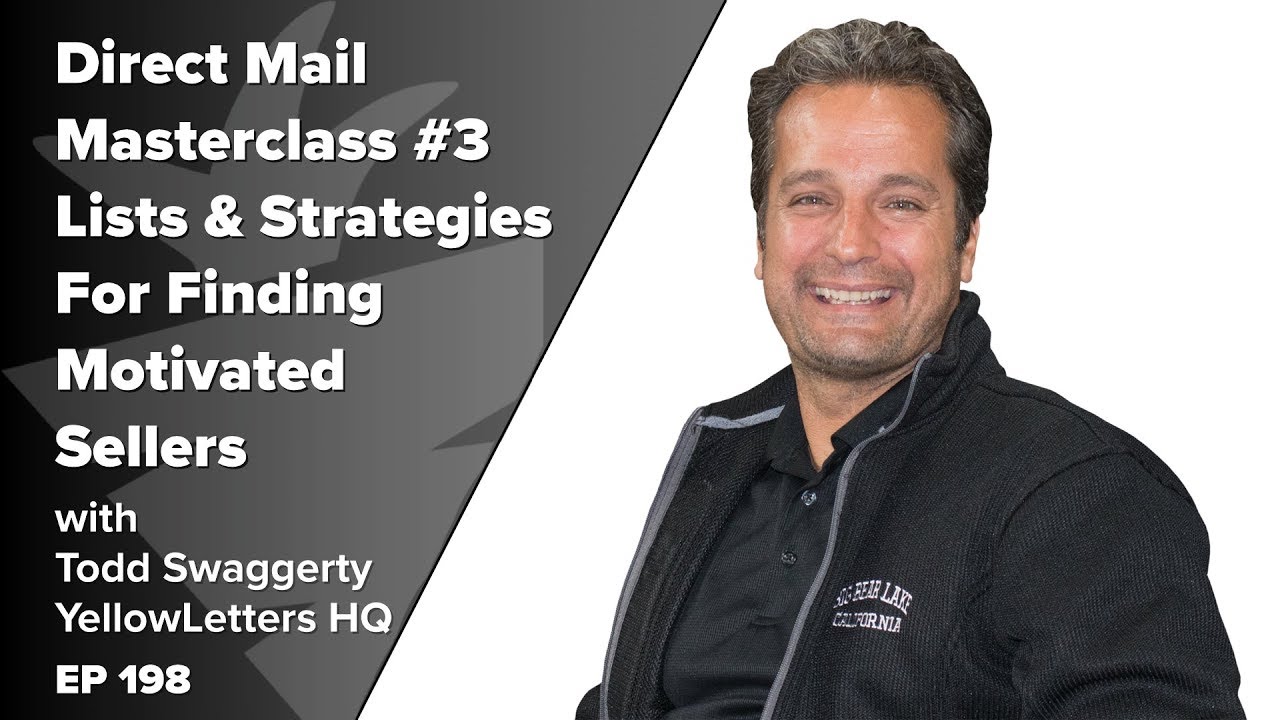
Direct Mail Masterclass #3 | The Best Direct Mail Lists & Strategies (that you’ve never heard of) For Finding Motivated Sellers w/ Todd Swaggerty of Yellow Letter HQ
Welcome to part 3 of our 4-part series on direct mail for real estate. In the last episode, we sat down with Todd Swaggerty of Yellow Letter HQ and we talked about how to get started with direct mail for real estate no matter what sized budget you are working with. We discussed what you should be mailing, how often, and what should be on your mail piece.
Today, we are sitting down with Todd again to dive into lists and strategies for finding your ideal clients. We will share with you direct mail strategies you’ve never heard of before. Ready? Let’s do this!
Read the Full Show Notes Below…
Deleted:
You might be wondering why we are doing a whole series on direct mail when we are web guys at heart. The easy answer to this is momentum. You’ll want to focus on consistency and predictability in order to gain momentum within your business. The more marketing channels you can add, the more consistency you will create as other things ebb and flow.
Direct mail marketing is proven to work.
There is nobody more qualified than Todd Swaggerty to share insight into direct mail marketing for real estate.
Who Are You Sending To? Direct Mail Lists
The first thing you’ll need to do when starting your direct mail lists campaign is determining who you should be mailing to. As we mentioned in the last episode, when you are first starting out, knowing where to look can feel like a challenge. Your sales skills may suck and instead of seeing things through, many investors end up giving up.
Knowing who to mail to is a progression that can take a little time. You may start by driving for dollars, then branch out into niche lists. A few niche lists to focus on include evictions, probate, inter-family transfers, divorce, and tax-delinquent homeowners. People in these situations are more likely to want to sell their homes. List Source and PropStream are two great sources for data.
Many investors will hire someone on Fiver or Upwork to do data scraping on their behalf. They should be looking for a full name along with the property address and mailing address. You’ll often find missing contact info when pulling data but don’t let that frustrate you. Companies such as Melissa Data can help you append the correct information to your mailing list. Compiling this data, with niche lists acquired over time, can provide you with a mailing list with an incredibly high response rate.
On the other hand, much of your competition may be taking the easier way out. Many investors find it easier to send out a broad mailing to a geographical area as opposed to the niche lists. This can be more cost-friendly upfront, but your response rate will be much lower.
How Often Do You Follow-up and When?
Not everyone is ready to sell the house the day they receive your first mail piece. However, several months down the road, they may be looking for a buyer. Keep in mind, some of your niche lists will have a shelf life.
You’ll need to be intuitive keeping in mind it isn’t practical to mail to people on a probate list or on a recently divorced list for more than a few months. On the other hand, you may find a list that works that you don’t change for years. You may end up sending them 6, 7, 8 mail pieces before they realize your solution is the answer they are looking for.
With direct mail being tangible – something they physically hold in their hand – it can be easier to keep your services right there where they will see them.
Direct Mail Is A Numbers Game
You’ve likely heard me ask how much are you willing to trade for a deal? We really focus on ROI here at Carrot. To do that, I will ask investors and agents what is their average profit per deal. It could be $10k for a flip or $6k in commission for a successful house sale. Next, I will ask them how many leads it takes to get one of those deals. This will vary based on the marketing method. Your SEO will provide more qualified leads, but it isn’t as easy to scale.
When determining how much you should be spending on direct mail for real estate, go in with the right expectations. You need to remove the emotion from the investment and really focus on math. Check this out…
Your average profit per deal is $10k
It takes you 30 leads to close 1 deal
You send out 10k mail pieces, costing $3,600
.5% of your recipients reach out
50 leads will end up costing you $72 per lead
So what would you trade to get that $10k deal? If you are only willing to trade $3k for a $10k profit, a list like this may not be sustainable for you. However, this is where you can tweak the numbers, find better niche lists, and do what it takes to make the math add up for you.
The Biggest Mistakes People Make With Direct Mail for Real Estate
When doing direct mail for real estate, it’s important to stay in your lane. Avoid absentee lists when you have no business mailing to them. The rule says you need to put time and energy into this process. It is no longer a spray and pray business. A truly great mailing list is calculated and done on purpose. Set the right expectations for yourself and your direct mail marketing.
A big problem Todd sees when investors and agents use direct mail for real estate is poor follow-up, untrained people answering the phones, and people thinking they can leverage a dollar when they should have spent $3.
In our next and final episode of this series, we will sit down with Christina Krause of Postal Impact to dive more into follow-up, scaling, and the best ways of training the people who are answering your phones.
I believe that one of the most powerful resources an entrepreneur has is their mindset.
The moment you understand how the right mindset is critical in unlocking the next step for you, everything begins to change.
This is why I want to share with you the biggest mindset shifts I’ve experienced over the last few years. Whether they’re from coaches, mentors, books, or personal revelations, each one of these mindset shifts has played a crucial role in growing Carrot.
But, I’d be doing you a disservice if I didn’t also tell you about the tools we use to lead and grow the company as well. That’s why I’ll be walking you through everything from overcoming limiting beliefs and self-doubt to setting a clear vision plan personally and professionally.
So, whether you’re a solopreneur or you’re a leader of a fast-growing company, you’re going to get a TON of value out of this series.
Grab a pen, get ready to take notes, and dive into this up-close-and-personal podcast series.
Trevor Truck Talks: Mindset Mastery Edition
#1: The Annual Planning Process That Every Business Needs to Crush the Next 365 Days
This episode walks you through how I begin to plan out my entire year, to make sure I’m laser-focused on what’s most important. There’s an exact process that I follow to hit the reset button on my business, gain clarity and alignment with my team, and re-energize so we can head into the next year ready to make a massive impact.
Join me in this brand new series where I’m tackling the #1 key ingredient every entrepreneur needs to understand in order to be successful… MINDSET.
#2: Live a Life Worth Waking Up For – How To Craft Your Vision Story
Are you clear on the person you want to become and are you okay with the person you are becoming? If not, then you might be where I was just a few years ago…successful on the outside but something deeply missing on the inside.
I had everything, but I was miserable. I needed a clear vision and a way to get there. Today I’m going to share the exact process that I used to create and live out my dream life, so you can go do the same.
#3: How to Recognize and Squash Your Limiting Beliefs
One of the biggest derailers of our success is limiting beliefs. We all have them. It’s the negative thoughts that stand between us and the person we want to become. But, the struggle that most of us have is the ability to recognize those thoughts and actually get past them.
This is one of the biggest mindset shifts that happened in me, that has allowed me to build, grow, and scale something that I’m passionate about and that truly makes an impact. Find out what’s stopping you.
#4: Are You Full of PIE? How to Get Back Your Personal Impact & Energy
You’re working in your unique ability when you have more energy at the end of the day than before you started. Is this you? Or are you coming home every day wishing you had enough energy to show up for your family and you’re not even remotely excited to face the next day?
That was me before all of my hustle and grind almost caused me to lose my family – the ones I was working so hard for. Don’t go another day without doing this one simple exercise that completely changed my life.
#5: Our Best Kept Secret For Setting Annual + Quarterly Goals (HINT: We stole it from Google!)
Over the years, I’ve crash-tested dozens of ways of setting goals, both personally and with Carrot. Nothing has been more effective and brought more focus and alignment than this right here.
If you don’t already have your sight sets on clear, measurable goals for work and at home, now’s your chance. Listen to your annual Epic call to find out how we do it.
#6: How to Turn Threats Into Opportunities with This One Incredibly Simply and Powerful Tool
Do you have a clear framework that shows you the blind spots in your business? Do you have a defined strategy that reveals weaknesses and threats to your business?
I want to show you the process that our leadership team uses to protect our business and set us up for massive success going forward. Listen in!
#7: The Pre-Loaded Year – How to Avoid Being Behind the 8-Ball in 2020
Are you used to the feeling of always behind? Are you playing catchup and planning your quarter after it’s already started? I’ve been there too.
Listen to this final episode in my mindset series as I show you how to get clear on your most important objectives so you can make the biggest impact possible.
BONUS: EP 189: Behind the Scenes at Carrot | My 6 Biggest Mindset Shifts To Grow A Company From Zero to $10 Million
As a business owner, investor, or entrepreneur, you’ll have to make shifts as you grow and scale your business.
Since starting Carrot I’ve learned a number of lessons about optimizing myself both personally and professionally.
I was pumped to sit down with Brady for an in-studio session diving into some of the biggest challenges and lessons I have had to learn as we grow this business from nothing to $10 million.
Don’t be afraid to make it personal. Adding something about yourself disqualifies you from a nobody.
Todd Swaggerty
Direct Mail Masterclass #2 | Everything You Need To Start and Stand Out on Any Budget w/ Yellow Letter HQ Founder, Todd Swaggerty
Welcome to Part 2 of our awesome four-part series that will tell you everything you need to know about direct mail for real estate. We’re sitting down with some of the industry’s top marketing experts to demystify the direct mail process, to get tactical about your direct mail marketing, and to show you exactly how to get started on any budget.
We’ll let you know how to optimize, who to target, and what you should be paying attention to. We’ll teach you how to leverage your direct mail and walk you through how it relates to your marketing mix!
Today, we’re hanging out with Todd Swaggerty, founder of YellowLetter HQ. Todd got into direct mail while marketing his own business and realized he loved the strategy involved.
In 2015 he founded YellowLetter HQ which helps investors target the right clients with the right message. Today, we’re laying out everything you need to have success with direct mail on any budget. This is your game-plan. Ready? Let’s go!
Read the Full Show Notes Below…
Cut Through The Clutter With Direct Mail
Direct mail should be a part of any successful marketing mix. Todd Swaggerty learned this first-hand when he began creating direct mail campaigns for his own business back in 2009.
For 15 years Todd was a firefighter/paramedic. He started flipping houses in 2009 and threw himself all into the sales and marketing side of things. He mastered direct mail and recognized that he could do something really big for people in the real estate industry. From there, YellowLetter HQ was born and Todd hasn’t looked back since.
To create a business that is predictable and stable, you’ll want to make sure you have a great marketing mix. Think of your business as a stool. With one marketing channel, your business will stand. However, the minute you get up, the stool falls over.
Once you master one channel, adding 1-2 more will give you the stability you need. You won’t be working on marketing as much as it will be working for you.
Getting Started With Direct Mail on Any Budget
Direct mail works no matter what business you are in, plain and simple. Someone with a smaller budget may take a different approach than someone mailing out 500,000 letters each month. For both clients, it all comes down to the numbers game. How can you best leverage your marketing dollars?
Small Budget
When you are first starting out, it will be more about the hussle than what you are spending. This is where you need to do the work. When you have the time, but not the money, driving for dollars is the best thing you can do.
Once you have done the work and gathered the data, you can use a budget of $500 or so to begin targeting them with your direct mail campaign. Spending your money blindly, without doing the work, will not get you the results you are after. Stay in your niche and be true to yourself.
Todd has clients mailing out 3,000 or fewer pieces and making over $1 million per year. With the right targeting, they are able to mail based on quality, not quantity. If they were to mail out 40,000 pieces, their leads would likely be lower and they may not have the manpower to answer the calls they are receiving.
Medium Budget
When you have been in business for a while, you’ve likely built up some data and stacked some lists. You are able to touch on multiple pain-points your potential client may have. Now you can add more to your marketing stool by implementing other channels such as texting and SEO.
With a medium-sized budget, you will likely be mailing out somewhere between 3,000-10,000 mail pieces per campaign. These are the niche lists you have built from county records, probate lists, tax delinquent, water shut-offs, etc. Many of these lists are public information.
Once you find out how to get the data, you can have someone on Upwork go in and compile it for you. Your niche list will have a 1-2% response rate on average.
Large Budget
Once your marketing budget gets a bit larger, you’ll really be able to work that numbers game. You can add things like the Deal Machine app, a texting service, and email campaigns.
You can create direct mail marketing campaigns for leads that went dead who you’d like to reach out to again. With a larger budget, you will likely be sending out upwards of 20k mail pieces per campaign, with a sales team to back you on all the calls you will have coming in.
At this stage, you are leveraging the dollar more than the hustle. A broader list will have more volume, but a lower response rate – typically around .5%.
What To Mail, When To Mail, and What You Should Put On It
The first thing you need to focus on it how to get seen in your prospective client’s stack of mail. If your lead was found on a public list, you probably aren’t the only person mailing to them. While what you say matters, putting something on there to get them to stop and take notice, will give you the chance to get their attention.
Todd’s favorite mailpiece right now includes a street view of the person’s home right on the front of the postcard. This causes people to say “Hey, that’s my house!” On the back of the postcard, he has a picture of his family and a quick note about himself. While some people may ignore this part, for others it gives them a chance to feel like they already know something about him before they ever reach out and make contact.
One of the most popular pages on a website is the “About” page. People want to know who you are before they work with you. Todd has found that the postcards that appear to be personally handwritten do better than those that look formal and professional.
When sending out your direct mail campaign, 1st class mail is usually the way to go. Other methods may seem more cost-effective, but standard mail isn’t forwarded and it will take longer.
Postcards will cost somewhere between .36-.60 per piece, while letters are about .50-$1+. To add an even greater personal touch, Todd’s company uses actual stamps on the letter. It’s these subtle differences that make his mail pieces stand out.
I’m super excited about our next episode as we dive more into lists, how to scale, how to get better response rates, and how to best leverage your marketing dollars!
If you want all the details broken down step-by-step – what lists, where to find them, how much to mail, when to mail, what to track, EVERYTHING you need laid out in a path for you to follow, be sure to check out our extensive Free guide at Carrot.com/mail
You big volume will come from your offline marketing. Your most motivated leads will come from online and SEO. When you pair the two, you create a force of marketing, that will give predictibility and freedom.
Trevor Mauch
Want more motivated house sellers using direct mail? We’ve got you covered. Listen to real estate’s #1 experts in direct mail teach you exactly what thousands of investors and agents are doing to bring in more high-quality leads, at a lower cost, without the headache.
In this 4-part direct mail series, we answer all your questions on budgets, lists (including ones you never knew about), who to target, when to target, frequency, follow-up, mail pieces, testing, and more! Whew, that’s a lot! Can you even handle this??
Let’s dive in!
Read the Full Show Notes Below…
Why Direct Mail?
You might be wondering why we’re doing not just an episode about direct mail, but a whole series on the subject. The answer is simple: direct mail works. Direct mail for real estate is part of a larger marketing plan that will help you to build consistency within your business.
While Carrot helps you to stack bricks and generate inbound leads using SEO, direct mail and other offline marketing channels will help to activate the demand within your potential customers. In this series, we will answer all of your questions about direct mail for real estate including:
How often should I send my mail pieces?
How much should I spend on direct mail campaigns?
What should be on my mail pieces?
What shouldn’t be on my mail pieces?
How to build a great list?
How is your team handling calls?
When should I retarget my campaign?
When you are armed with the answers to these questions, you can easily close 5, 10, even 20 more deals per year! We’ll show you how just by making a few tweaks to the marketing you’re doing now, you will be able to close more deals without even trying!
Start With One Marketing Method
When you are building your marketing plan, you’ll want to find one channel and go all-in. Own it. Master it. Once you do, you begin to stack more and more channels, building consistency, predictability, and momentum within your business.
Our marketing plan generator is a completely free tool that will help you to get your marketing dialed in. All you have to do is answer a few general questions about your business, and you’ll gain some valuable insight no matter where you are in your business.
Add Some Legs To Your Marketing Stool
If you have your online presence down, start your offline marketing to generate the demand. If you have the offline thing down, amplify it with your online presence. SEO will help you attract the most motivated people, collect the most revenue, and close the most deals However, direct mail for real estate is all about the volume. When you have the two channels working together for you, you’re capturing leads from all angles
My Challenge For Your Direct Mail Marketing
Whenever someone gets a mailpiece that sparks their interest, more often than not, the first thing they will do is Google you. The same goes for cold-calling. When a strange number pops up, the first thing people do it look the number up to find out who is calling them. In most cases, looking up the phone number will lead to one of those “who called me” websites, often listing your phone number as spam.
My challenge to you is to take a look at a recent mailpiece and write down anything identifiable about your company. For example, the company name, your name, the phone number listed on there, and even your tag line. If you are using a number of different tracking numbers, make sure to have all of those phone numbers written out on your contact page.
Doing so will help your contact page start to rank for that phone number as opposed to just all of the “who called me” websites. You will be able to control the conversation when someone looks you up instead of a third-party website. By refining your marketing and amping up your online credibility, you’ll close more deals and generate more revenue.
Our Featured Experts
In this series, I am ecstatic to feature two of the top professionals when it comes to direct mail for real estate, Todd Swaggerty and Christina Krause. These are two people I have known and worked with for a long time, and frankly, they are both absolutely crushing it!
Todd Swaggerty is the CEO of Yellow Letter HQ. His company offers incredibly fast campaign turnaround through the use of personalized direct mail marketing.
Christina Krause is the owner of Postal Impact and through her extensive research, she has mastered direct mail for real estate and helped her clients create an awesome follow-up sequence to close more deals!
Guys, I am so excited for the next 3 parts of this series. We’re going to answer all of your questions about budgets, lists, and what goes into a great mail piece. Higher-quality leads and the ability to save money on your marketing? We’re in. Get your notebooks ready, the next three episodes of the podcast will change your business forever!