“You grow with focus and only after you achieve significant success do you expand out. The mistake most entrepreneurs do, is they expand out now and think that diversifying will bring them growth . No! It actually stunts growth.” – Mike Michalowicz
Have you started a company before? Did you struggle? Or, did you make so much money that your ego got the best of you and you spent every last dime?
Whether you’re just starting out or have been crushing it for years, don’t miss Mike’s invaluable approach to business. It might be the shot in the arm that you’ve been looking for.
If you’ve ever listened to a Mike Michalowicz podcast, you know that you’re going to walk away with a better mindset and stronger passion than ever before. That’s why we’re so excited to have the pleasure of having Mike on this episode of the CarrotCast. He’s one my favorite authors and business leaders.
He has founded and sold multi-million dollar companies. He has lost it all. Then started all over again by finding ways to build strong and healthy companies.
We value every review. If you take the time to leave one, THANK YOU – You’re awesome!
During the CarrotCast show, Mike Michalowicz shares…
How you can handle success. And how not to (from experience).
Focusing on what is best for you.
Getting more out of your business to achieve sustainable growth.
How to be innovative when you practically have nothing.
What to look for when entering a new market.
Watch the Video Version
Start – 3:15 – Mike’s background as a full-time author and entrepreneur. 5:45 – How to handle going through tough times. Fighting stress and overcoming the feeling that a wall is collapsing on top of you. 11:43 – Taking a step back and “Pumpkin Plan.” To focus on what’s best. Pick one thing and build up. 14:53 – How to become narrowly focused and grow those opportunities. 18:20 – Get focused on what you do best. 19:00 – Are you too early or too late to enter a market? How do you get in the right place at the right time? 22:30 – The theory behind “Profit First.” 24:40 – The Frankenstein formula. Should you be putting your “paid” day off? 27:12 – Changing your mindset on how you behave around money. 29:30 – The core fundamental – Parkinson’s law. 30:41 – How to be innovative when you practically have nothing. 35:34 – Timing markets and what the #1 thing entrepreneurs do wrong. How to ride a 20-foot trend wave. 42:55 – How Mike identifies topics to write about. How much gear it takes him to write a book and what he’s reading right now.
“If I’m an investor and I want to buy a stock, I can’t just go buy a stock for 20% less than it’s worth. But in real estate I can. That’s what I love about real estate. You can provide a service that people need and want, get a deal, and make a profit at the same time.” Martin Boonzaayer
Are You Having Trouble Fighting Your Way Through A Competitive Market? Listen To This CarrotCast And Start Standing Out!
It’s not every day that you get to have a conversation with an Olympian. Especially not one who is a very motivated and smart real estate entrepreneur.
This CarrotCast’s guest is that guy. Martin Boonzaayer is one of the top investors in the very competitive Phoenix, Arizona market. In fact, there is probably no better place to experience trial by fire.
Over time, he’s built a system around being professional, consistent and honest with his clients. By using this system, he continues to stand out from the competition, even while offering much lower prices. He recently offered $20k less than his competition and closed the deal that netted $32k.
Follow along and learn this system and much, much more!
Have you Subscribed yet on iTunes??? If not, do it and rate us, we’ll love you forever!
Martin joined us on this CarrotCast to talk about…
How he leverages his Carrot website with direct mail.
How to stand out from competition.
Being professional. It pays off!
His hiring process for VA’s.
Watch the Video Version
Start – How Martin got his start in real estate and his cool story of being an Olympian. 7:43 – Ramping up direct mailing. Why trying to be more competitive on pricing wasn’t the answer. Solving that problem using a professional presentation. 12:13 – How his company stands out in one of the most competitive markets in the nation. They consistently beat competitors while offering much lower asking prices. 18:30 – What methods he incorporates toexpand into other markets and his plan to expand over the next 12 months. 26:36 – Where he looks to find great VA’s and what to look for in the hiring process. 31:05 – Building trust with clients. How he made an offer $20k less than his competition, closed the deal, and netted $32k. 34:12 – Honing leadership skills is valuable. 36:18 – Creating a business that matters and impacts others.
For any of us to succeed, we all need to succeed…We all have to be all in!
“Getting ranked for a handful of core keywords is very important and it’s the starting point. Finding and identifying those important keywords is where you need to start. But that is only a means to an end. That is literally the tip of the iceberg.” Matt Dalbey
Who Else Has Given Up On SEO Too Soon? You Probably Know A Few. Maybe Even You…
But…You Might Have Been Closer To Higher Rankings Than They Thought. Listen Below To Learn What Everybody Ought to Know About SEO…
In this CarrotCast episode, we dive in with our GO-TO SEO guy, Matt Dalbey. He has an awesome data-driven approach that we think will point your SEO mindset in the right direction.
If you want to learn how to smash through SEO barriers in order to achieve a higher ranking website in organic search results, then this call is for you. If you want to learn some behind the curtain SEO tips only the professionals use, this is for you. And lastly, if you want to feel more energy and passion today, this episode is for you.
PS – If you enjoy this episode, give us a review on iTunes and Subscribe. It helps us get our message out there even more and impact more people with the Carrot goodness.
Different opportunities to build links to your website for higher SEO rankings.
Watch the Video Version
Start – Who is Matt Dalbey and why he’s so good at SEO. 8:30 – Having the right “long-term” SEO mindset is extremely important. That is one of the things that sets successful SEO apart from those who fail. 13:55 –Real SEO client testimonial. Going from 0 to 80% of their leads via SEO. Getting ranked for a handful of keywords is a great start, but it’s only the tip of the iceberg. The iceberg is long-tail keywords. 19:30 – What are long-tail keywords? 23:40 – Don’t be the gold miner who gave up too soon and just missed the big one. Methodology and money. 32:55 – How to build a good SEO foundation. 34:40 –Using natural LSI, “latent semantic indexing” keywords in your content. 36:41 – Creating a strong long-term strategy that is more than just updating your site. Using strong data to drive changes. 42:00 – Thinking outside the box when building a link building strategy.
“You want to provide value when linking to their site… quality over quantity”
SEO for real estate investors often feels like one part uber-advanced technical “hacks” and two parts dark magic.
Listening to the advice of SEO gurus could easily leave you feeling overwhelmed … and incredibly disheartened.
It’s not. And you shouldn’t be.
SEO for real estate investors comes down to optimizing around 10 on-page elements. And that’s incredibly good news.
Why? Because traffic is the lifeblood of any online business. And for real estate investors what you need isn’t just any old traffic — not just visitors for the sake of visitors — but high-quality, lead-worthy, traffic you can count on month in and month out.
This post will guide you in how to get more traffic to your website by teaching you what’s important to search engines (i.e., ranking factors) and what you yourself can do to get your real estate investor site to rank exactly where you need it to.
If you’re already familiar with SEO, then CLICK HERE to jump down to the meat of this post: a step-by-step checklist of HOW to optimize your on-page SEO for real estate investors.
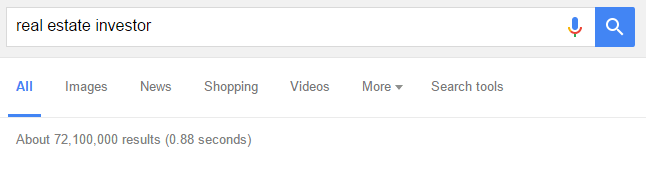
Your position among those 72-million-plus results dramatically determines how many people visit your site. Data from May of 2016 indicates that while the average clickthrough rate (CTR) of position one websites on Google’s search engine results pages (SERPs) is 23%, position ten is 2%.
And you don’t even want to know what happens to a clickthrough rate when you fall outside of positions one through ten. As the old adage goes, “The best place to hide a dead body is on page two of Google.”
All this to say, it’s vital to understand exactly what factors Google takes into account when prioritizing their search results.
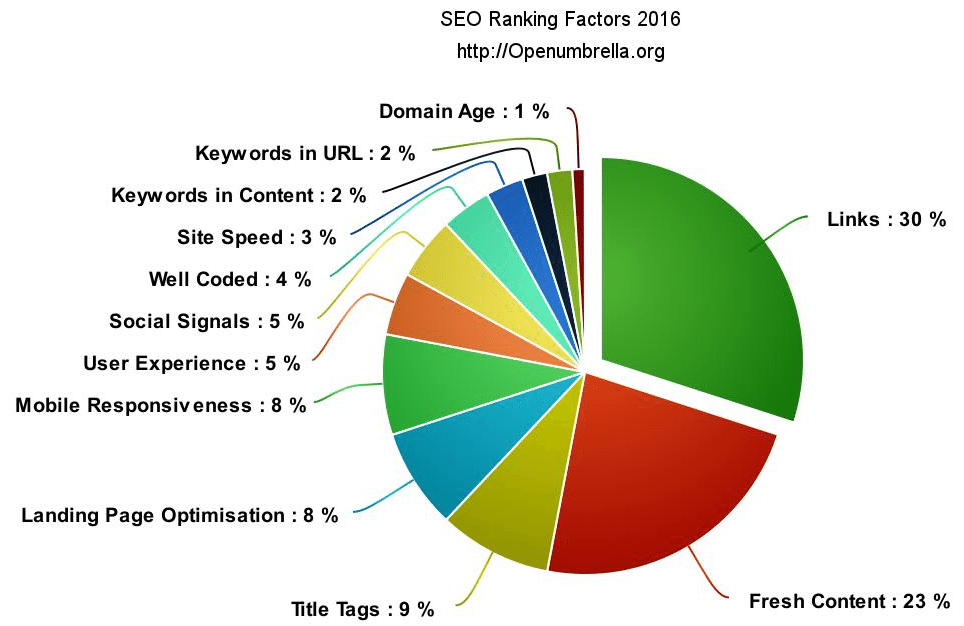
According to Open Umbrella’s analysis of 182 websites, there are at least 12 vital factors:
That can sound like a lot … but it’s nothing compared to SEO genius Brian Dean’s Google’s 200 Ranking Factors: The Complete List. (Full disclosure: the list actually contains 205 ranking factors. Geez.)
But here’s the thing … you don’t have to become an SEO genius to get your real estate investor site to rank. And — even better — you don’t have to get to page one.
Instead, SEO for real estate investors falls into three big buckets: (1) technical SEO, (2) off-page SEO, and (3) on-page SEO.
[cta offer=”seobible” color=”red”]
Technical SEO
Naturally, technical SEO involves a host of behind the scene elements, some of which include …
Indexable: can Google access and catalog all your pages?
Speed: how fast does your website load?
Responsiveness: does it appear correctly on mobile, tablet and desktop devices?
The good thing about being an Investor Carrot member is that all these factors are taken care of for you. Big sigh of relief.
If you’re not a member, have a look at the health of your website by using a tool like HubSpot’s website grader.
Off-Page SEO for Real Estate Investors
Off-page SEO is really all about the links from other websites to yours.
And when I say “all about” … I mean all about. Backlinks are the number one ranking factor all search engines use to prioritize their results.
They’re also the side of SEO you have the least control over.
That’s why — for now — we’re going to forego link building strategies and instead focus on the side of SEO you can control.
On-Page SEO for Real Estate Investors
On-page SEO for real estate investors focuses on your (1) content and your (2) keywords.
Everybody wants to “hack” Google with the second approach. And of course, optimizing your keywords is vital. But before we go through our checklist on that process, do not ignore …
SEO for Real Estate Investors: Content Matters
Sadly, one of the most neglected areas in SEO, specifically by small businesses and entrepreneurs like real estate investors, is the continuous development of quality, value-add content.
Many real estate investors who take their business online are under the false impression that adding content — any content — with the right keywords placed in the right keyword positions will do.
Easy, because valuable, and fresh content is the only kind of content that other people will link to. And remember, other people’s links are the number one factor in SEO.
3. We discovered that content rated as “topically relevant” (via MarketMuse), significantly outperformed content that didn’t cover a topic in-depth. Therefore, publishing focused content that covers a single topic may help with rankings.
4. Based on SERP data from SEMRush, we found that longer content tends to rank higher in Google’s search results. The average Google first page result contains 1,890 words.
Do not make the mistake of putting “content quantity over content quality.”
Instead, invest in long-form content — roughly 2,000 words — that valuable and relevant. If you’re looking for ideas, check out our 101 Blog Post Ideas For Real Estate. If you’re looking for a comprehensive crash course that covers the entire process, jump over to our Content Marketing Roadmap. Both are free resources … even if you’re not a Carrot Member.
Our Content Marketing Roadmap will walk you through the exact content creation process Carrot Members are using to pull in over 55,000 lead per month.
But this isn’t a post about content marketing. This is a post about SEO … so let’s turn our attention to the real meat: keywords.
SEO for Real Estate Investors: Keywords
Keywords are what help search engines match the content on your website to online searches. It’s essential that you master the art of keyword research in order to maximize your results.
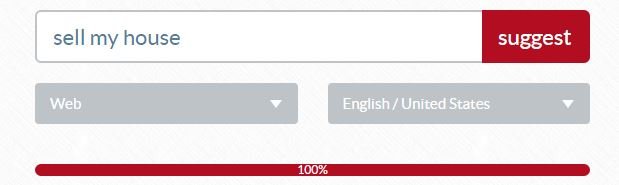
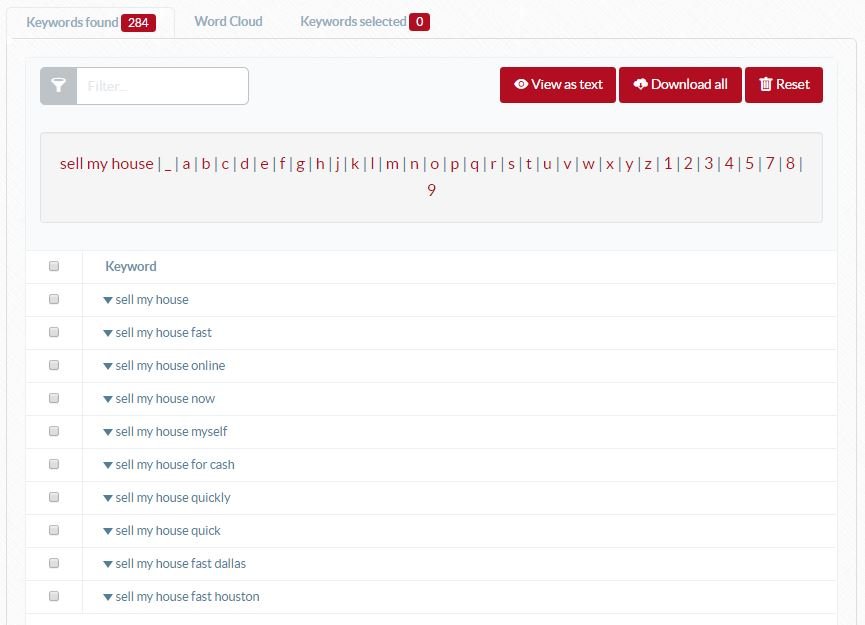
The easiest way to find your own most popular keywords is by using a free tool called Ubersuggest. Simply type in a target phrase like “sell my house”:
Ubersuggest will then automatically generate a massive list of possible long-tail keyword phrases related to that general phrase.
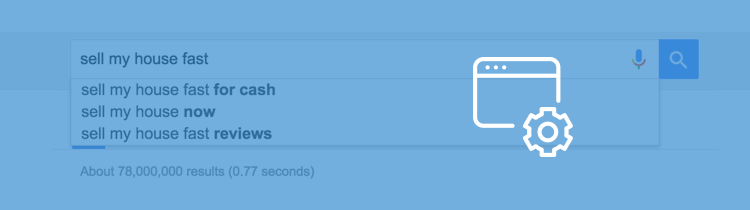
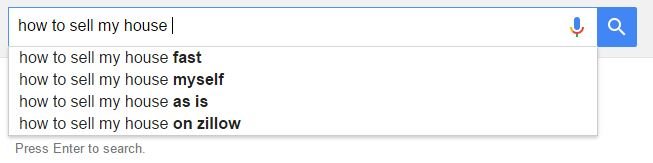
You can also use Google’s auto-complete feature as well, especially to narrow down the most popular long-tail phrases.
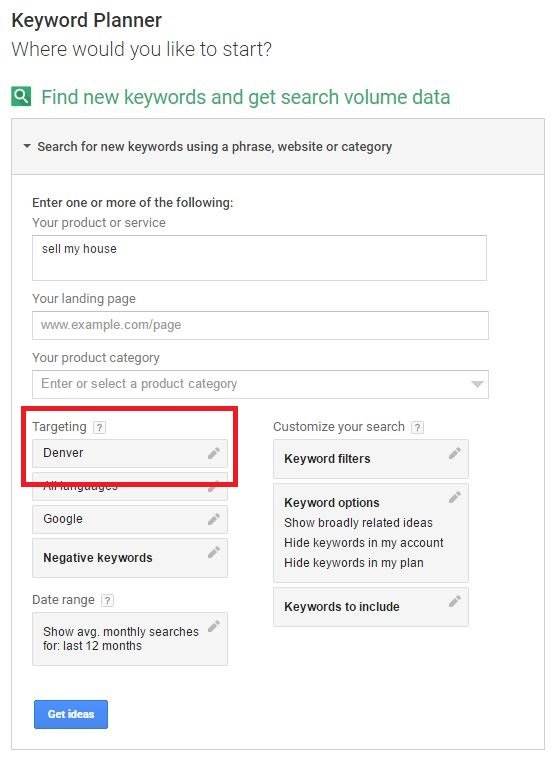
For an even more detailed examination of the keywords you should target, Google AdWord’s free Keyword Planner tool is phenomenal. Just be sure to enter the area you want results for under “Targeting”:
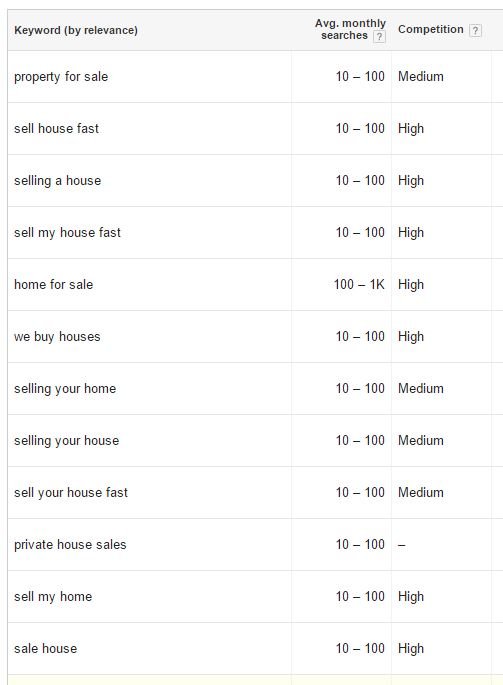
Google will then give you a list of possible long-tail keyword phrases to choose from based on the location you selected:
Whatever tool you use, simply select the long-tail keyword most relevant to what you’re offering. In this example case “sell my house fast in Denver” is hands down the winner.
Before we proceed to the next section, you should know that Investor Carrot websites come with guidance as to how to add on-page SEO to your content, but if you’re not a member, the next part should bring clarity.
SEO for Real Estate Investors: On-Page Checklist
After you’ve created your content and selected your targeted keyword, it’s time to get to work on SEO. What follows are the ten most valuable on-page elements that should include your keyword phrase.
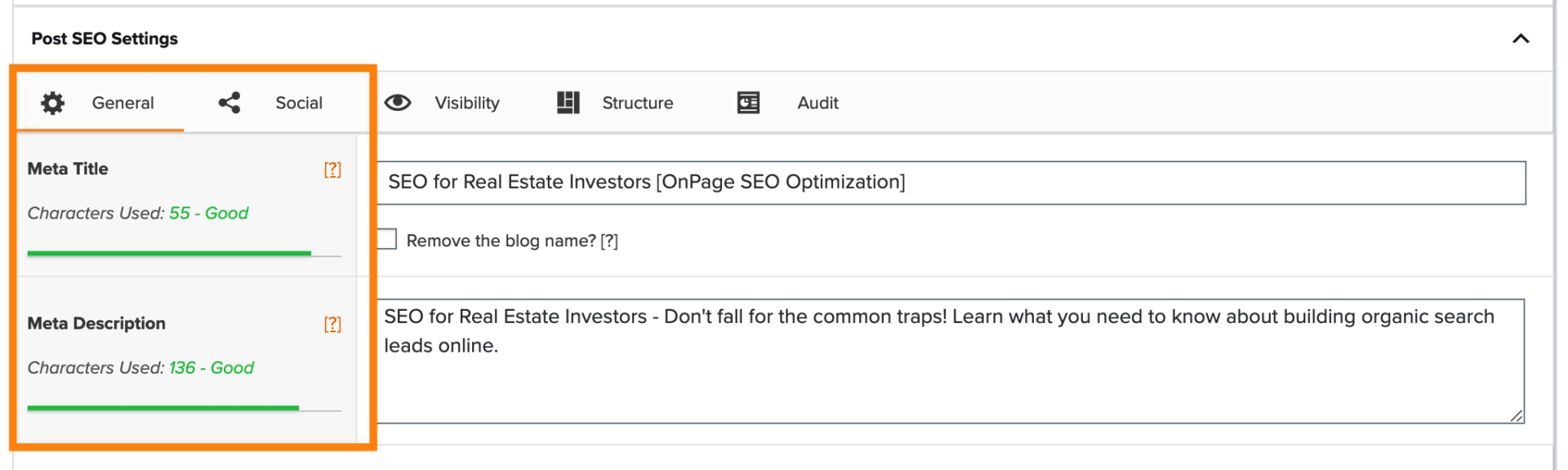
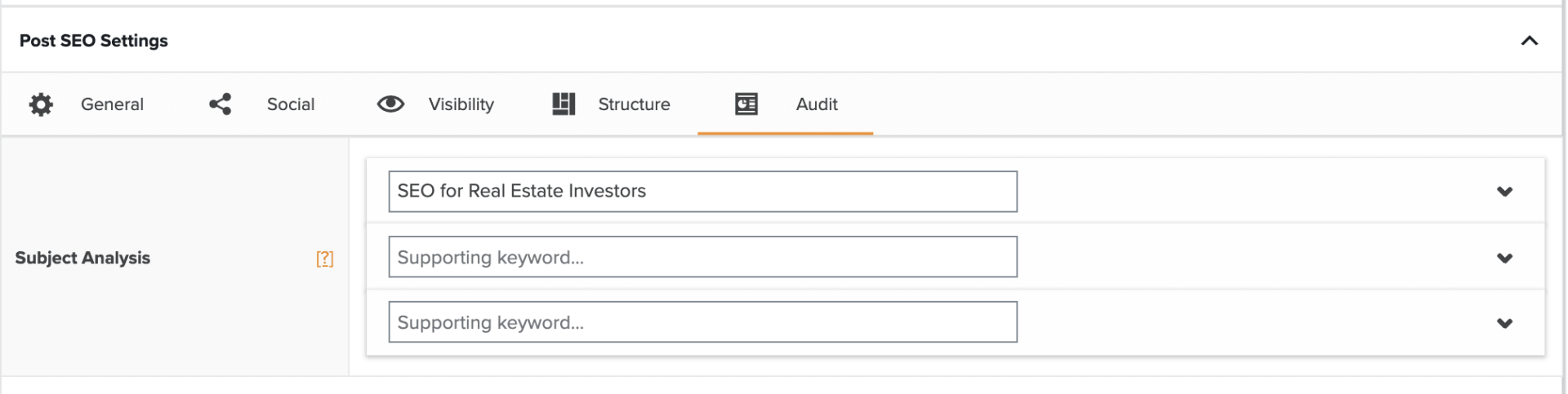
You can easily use this as a checklist, but we’ve also built a Carrot SEO tool especially for real estate websites. Our SEO goal for this page is to rank for the phrase “SEO for real-estate investors.” So this is what the tool looks like when we plug that phrase in:
Now let’s walk through the ten most important elements.
1. Title Tags
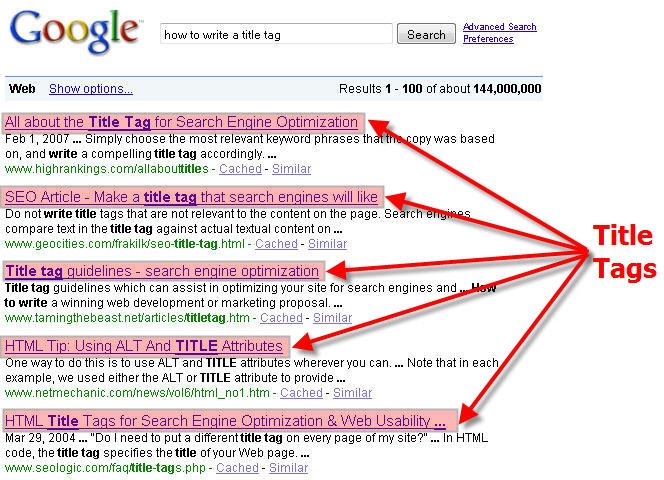
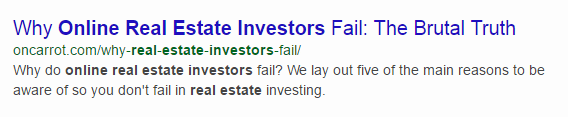
Title tags are the headings of the pages on your website. In search results, they are the main headings.
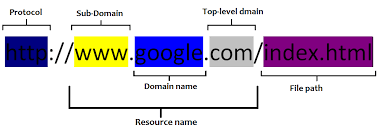
2. URLs
If you’re adding keywords to titles, and your permalinks are set up correctly, the URL will automatically include the title.
Often, however, your title will be longer than the keywords you want to rank for. That’s why you should simplify it in the URL and limit the actual web address to your targeted keywords alone.
As much as possible, try to avoid using numbers in your URL, whether that’s dates or even numbers associated with the title of your article. Why? Because if you ever want to go back and update your post, changing the URL will essentially void any SEO power the original pages had.
3. Meta Descriptions
And when you compile the meta description, make it compelling in order to attract attention. Consider it the advertisement for a page’s content. This is what the meta description looks like in searches:
4. Headline Tags
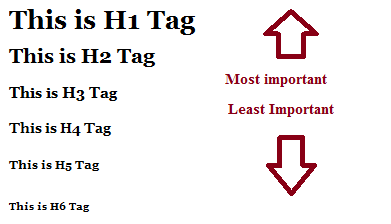
Headlines and subheadings divide your on-page content into scannable chunks making it far easier to read.
But at the same time, they also tell search engines what the content is about, and what’s most important.
Pretty self-explanatory, but make sure you add keywords naturally and don’t “stuff” your content with them. A good rule of thumb is to add the keyword phrase in the first 100 words — preferably in the very first sentence — as well as after every 150 or so words.
6. Bolded Words
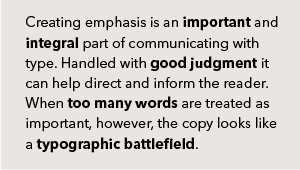
Adding bolded words for SEO is debatable, but it can’t hurt if you don’t over-bolden. When you add this technique, focus on using bold text only to make a point to the reader. In other words, focus on reader experience.
We’ve covered off-page SEO for real estate investors and the importance of links from other websites to yours.
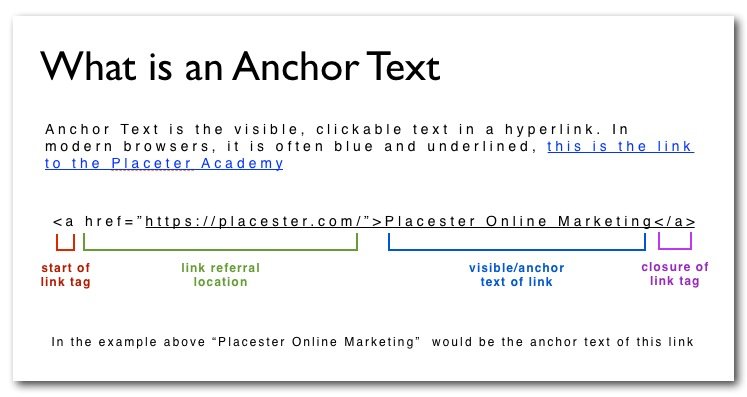
What I mean by inserting links to keywords (otherwise known as anchor text), is that when you link to a good website from a keyword, it signals to search engines what both your content and theirs is about. But there is a certain art to it and it shouldn’t be obsessed over.
While external links dramatically improve both types of authority [domain and page], linking between pages on your own site — namely, linking from high page authority URLs to low page authority URLs — pass the SEO value of the first page onto the second.
Here’s the bottom line: do not include your targeted keywords in the anchor text to other sites. Do include your targeted keywords in the anchor text to your own site.
8-9. Images
Search engines use the images on your site to further help them decipher relevancy (how relevant your content is to user searches).
First, before you upload images to your website, they should be compressed so that they don’t slow down your site. You can use a tool like Optimizilla for this.
Second, for every image you add, include your keywords in two places. Let’s take this post’s header image as an example:
(1) Image name
Instead of using a generically titled image name, get specific. Rather than “blog-post-header-image-1.jpg” or even “seoforrealestateinvestors.jpg” … use “SEO-for-real-estate-investors.jpg”
(2) Alt tags
Alt tags are the default text a browser displays if images are turned off. This time, write your alt tag with your keywords, but write them to be read: “SEO for Real Estate Investors.”
10. Local Keywords
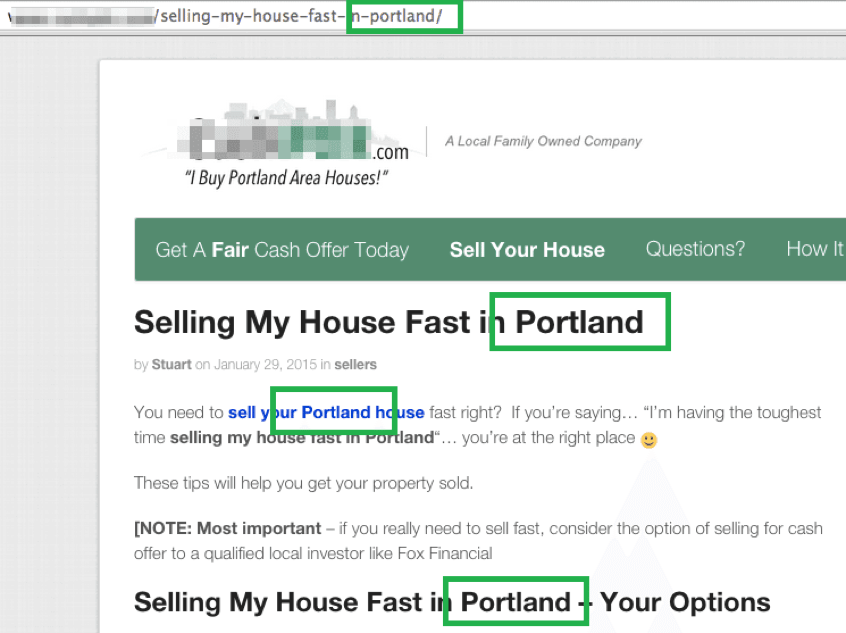
In no other industry does location matter quite as much as it does in the real estate investor SEO realm. Since your competitors are likely not fully up to speed with the location element in SEO, you could get way ahead of them with a little bit of additional work.
Local search is a lot different to international search, and the intentions are often very different too.
For example, if you wanted to order pizza for dinner tonight, Google is going to assume you want local buying options. By default, instead of serving up global results, Google will offer you local results you can actually use to order pizza.
People searching for “real estate investors” want to know about a career as a real estate investor or find someone to sell their property too. But if they were to add an area — which most do — their intention is to find a real estate investor in that area. Big difference, right?
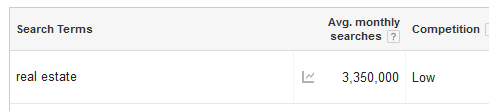
Have a look at this: for the search term “real estate,” there are a phenomenal amount of searches every month — 3,350,000 to be exact — and there’s not much competition for the phrase.
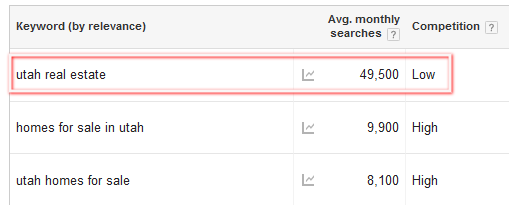
But the term is also not relevant for real people because real people who are searching for what you provide will add an area. Now watch what happens when you add an area:
The search amounts drop to 49,500 per month. Although the search amount is lower, the good news is that “Utah real estate” represents the people most interested in doing business with someone in Utah.
You can even get hyper-local in your SEO for real estate investors.
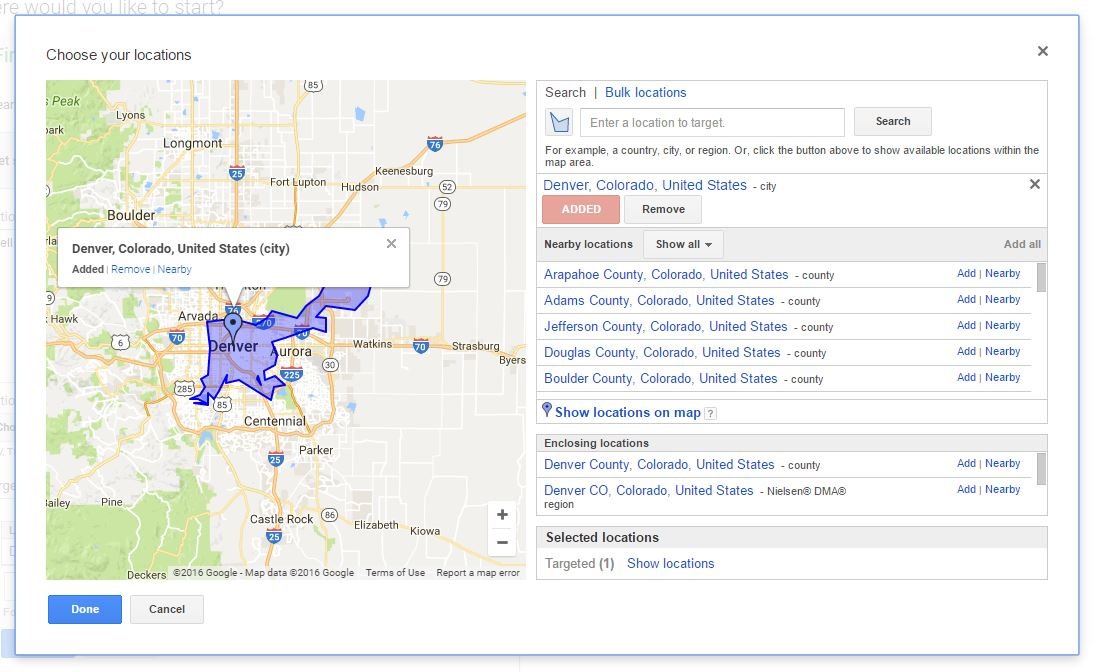
Remember Google AdWords Keyword Planner? They have the option to add nearby locations:
Of course, you probably know your area even better than Google. So if you’re creating landing pages to target specific locations within your larger geography, in those specific locations as well.
However, don’t stuff all your hyper-local keywords into one page. Instead, create 5-10 copies of your original landing page, each with the hyper-location featured in all the on-page elements mentioned above.
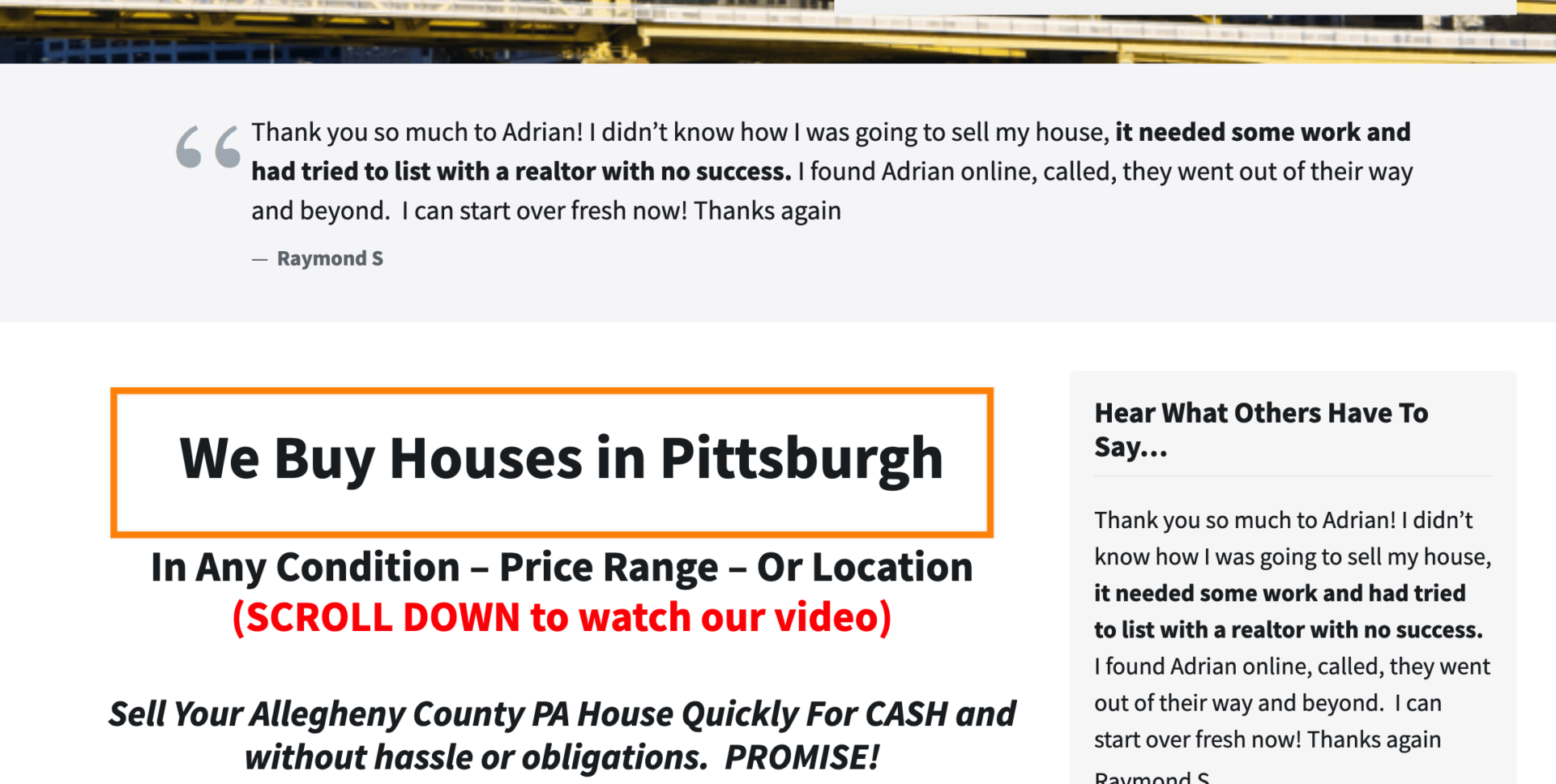
Buy My House Company — For example, is one of many Carrot members who highlight location elements on their homepage:
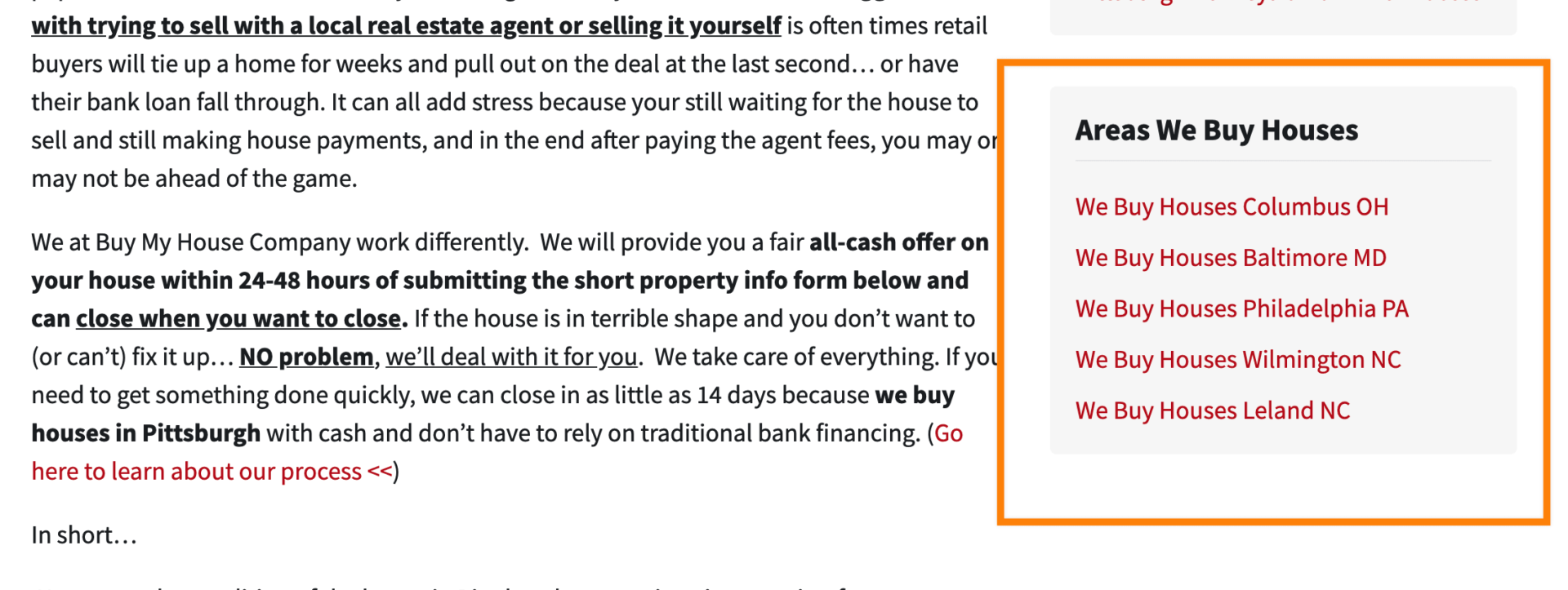
But, if you hover over the “Sell Your Home” button in the header navigation, something of SEO-brilliance occurs:
They’ve essentially created cloned versions of their homepage with hyper-local keywords for each of the areas they serve.
Another local keyword area you have control over — although it’s not technically part of on-page SEO — are business listings. When your website is submitted on business listings like Google Business Pages, Yahoo’s Aabaco small business listings, Bing places for business, etc., it tells search engines that your website is valid and dramatically increases your ranking when someone searches for a keyword associated with your side.
Moreover, search engines would rather list a website that’s registered as a local business, than one that is not. Be sure that the format of your NAP (name of the business, address, and phone number) is consistent throughout the Internet.
[BONUS] 11. SEO for Real Estate Investors: Reviews
How relevant your website content is according to what people are searching for in your niche.
Where the business is situated, also for the purpose of “area relevance.”
How prominent your business is and it’s objective reputation.
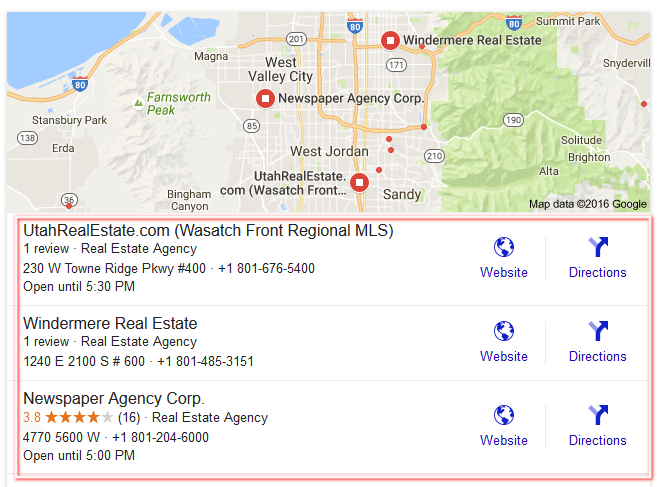
Pushing for reviews is one substantial SEO technique to use to beat competitors in the world of real estate investment. Have a look at a Google search I did for “real estate Utah.” This is what was on the first results page, immediately under the ads, which means it gets the ultimate place of prominence:
Can you see how every single one of these websites has reviews? None of the other results below these contained reviews.
SEO for Real Estate Investors Isn’t Dark Magic
We’ve covered a lot of information in this post.
But don’t get overwhelmed.
Instead of getting obsessed with backlinks, focus on what you can control: your on-page keywords. Select the right keywords and add them — like a human — to each of these ten areas:
Title tags
URLs
Meta descriptions
Headline tags
The first 100 words
Bolded words
Links
Image Names
Image Alt Tags
Local keywords
SEO for real estate investors may seem daunting at first, but it’s what will set you apart from your competition who won’t bother learning the ropes.
And if you want to make life a lot easier, you may want to consider becoming an Investor Carrot member, so that most of the hard work is already done for you or to get help as you go.
“I’m a big believer that marketing is 90% of this business. Marketing for the deals and obviously marketing for private money together. 10% is important but if we’re not marketing for deals, you really don’t have a business.” Michael Borger, Oahu Home Buyers
Want To Learn More About Michael’s Approach to Success? Listen In To Find Out How To Avoid The #1 Most Fatal Marketing Mistake When Starting A Real Estate Investing Career
Michael is an expert at remote rehabbing and wholesaling in the Aloha state of Hawaii from his home location in San Diego.
He values marketing and shares one of the biggest mistakes he sees others make: not marketing enough.Marketing should be 90% of your real estate investing business. He also touches on having an understanding to how to scale your budget and marketing effort.
And…a little lesson in Psychology… learn how to think with your good investor brain and not your emotional investor brain. Make good deal decisions like a veteran investor, not a newbie!
We had a great CarrotCast conversation with Michael about…
Flipping houses in a high priced market.
Dabbling in marketing …Don’t Do It!
Developing a marketing plan and why 90% of your real estate business is marketing.
How to implement quickly but with quality always on your mind.
Deciding when to back away from a deal. And …being okay with that.
Watch the Video Version
Start – Remote rehabbing, exploring different markets and adopting a new business life as a parent. 7:30 – Price point and deal flow differences in markets. 10:20 – Don’t dabble in your marketing. Take charge and scale your effort so you can grow your business exponentially. 13:30 – Creating a plan to implement and execute the things you need to get done to have a successful business. 17:20 – How to handle leads that give off the feeling of desperation or “nail-biting”. If the deal doesn’t feel right, don’t be afraid to walk away. 20:50 – What type of guideline Michael sets when approaching a deal. And… why traditional formulas don’t work well in expensive markets. 22:30 – Constant and never ending incremental improvement and how Michael is always trying to improve himself and his business.
I’m going to own this energy of my business …and it’s going to be awesome!
How many times have you heard someone say they are tired of working the same job? I bet it’s a lot. But…how many of those actually push themselves to a different life?
That’s what this week’s CarrotCast guest, Ryan Berry, did.
He was a successful CPA turned marketer, generating millions of dollars in revenue selling Amish fireplaces. Sounds fantastic! But…it wasn’t making him happy.
So, 3 years ago he decided to control his own destiny. He gave two weeks notice and dove into real estate investing and flipping properties head first.
Right now Ryan’s real estate investing business is…on fire!
Find out why Ryan has been so successful and how he uses his past marketing knowledge in the real estate industry.
We had a chance to sit down with Ryan and have a CarrotCast conversation about…
Leaving a very good, high paying career and building his real estate company.
Shifting his marketing mindset from Amish fireplaces to real estate wholesaling.
Following your passions and driving towards dreams.
What other real estate marketing options he uses besides yellow letters.
Watch the Video Version
Start – Leaving a very successful career and taking the leap to a happier more fulfilling life. 11:12 – What his overall strategy is, mistakes he has made, and getting off the active income path and moving into more of a passive income. 15:47 – Taking the same marketing mindset he used while generating millions of dollars in revenue from Amish fireplaces and shifting it into real estate. 24:15 – The marketing mix that is working for Ryan right now. He has 37 leads under contract! 35:46 – How Ryan ties his Carrot website into his plan to dominate his local market. 40:52 – Building credibility and having another way for his leads to respond. 42:56 – Getting out of your own way. Everyone deserves to have the life of your dreams. Just go for it.
“You know the mindset stuff is everything. Most people don’t have the skin or the mindset to pursue their dreams that they think they’re after. You’ve got to accept at some point you gotta jump” – Brian Evans
How Do You Build Massive Credibility With House Sellers? Find Out In This Episode…
In this CarrotCast episode, (have you Subscribed yet on iTunes??? If not, do it and rate us, we’ll love you forever!) … Trevor is joined by Brian Evans, real estate investor, and owner of The First Deal. The First Deal focuses on helping new investors close their first deal or their first 100 deals.
Brian’s real estate journey started from a spot where not many other real estate investors find themselves, working on Wall Street in the Trump building.
One day he came home to find a book from his Father waiting for him. There was a post-it note on it that read “Son, read this, take notes, let’s talk. Dad”. That book changed his life, his way of thinking, and drove him into the excitement of real estate.
From there, he practically forced two real estate investing brothers to hire him as an apprentice. WITHOUT PAY. He learned the industry and closed his first deal with them in 2004 for $42,000. He hasn’t looked back since.
Mindset shifts for new investors and why they are so important.
Tips to find motivated house sellers.
The exact words you should say to house sellers to close more deals
How new investors can build credibility.
And …so much more! Enjoy :-)
Or, Watch the Video Version
Start –9:00 – Brian’s path to real estate investing. From working in the Trump Tower on Wall Street to now running his very successful business. 9:30 – Why he chose to basically work for “free” to learn the real estate industry. 10:45 – Being an entrepreneur is hard. Follow your gut. 15:12 – The difference between the people who succeed vs. the ones who don’t. 18:20 – The #1 hardest thing for new investors to do. 19:46 – How to build credibility if you are a new investor. 23:40 – Building relationships with realtors to generate a referral pipeline. 24:08 – For a new investor, how many sellers do you need to talk to before getting your first deal closed? 30:35 – Why Brian teaches building confidence in order to hurdle any obstacle. 34:55 – What he does when something goes wacky in the middle of a transaction. And, a couple of good and bad stories. 46:25 – What legacy Brian wants to leave and how his business fuels that.
I’ve got my butterfly wings, now it’s time to fly.
Are you frustrated by website visitors who browse and never contact you? You’re not alone. Turning lookers into motivated sellers requires a website that works as hard as you do.
This guide isn’t your typical SEO or CRO jargon fest. We’re revisiting one of our most popular blog posts and injecting it with fresh strategies. We’ll cover data-driven tactics you can use right now to turn your website into a lead generation machine for motivated sellers.
The CRO-Optimized Homepage Blueprint
Let’s break down the essential elements of a high-converting real estate investor homepage:
Hero Section: A Benefit-Driven Powerhouse for Maximum Conversions
The hero section is your website’s prime real estate, acting as the first impression that grabs visitors and compels them to take action. Here’s a deeper dive into each element, incorporating data-backed reasoning and specific examples:
1. Headline: Craft a Compelling Hook That Speaks Their Language
Data-driven Reason: Studies by Copyblogger show that strong headlines can increase conversion rates by up to 10%.
The Secret Sauce: Focus on benefits, not features. Instead of saying, “We Buy Houses,” a better option is “Sell Your House Fast: Hassle-Free Cash Offer Today.” Speak directly to their pain points (selling a house quickly, avoiding a lengthy process) and highlight the solution you provide (fast cash offer).
Specificity is Key: Get even more specific by targeting a particular niche of motivated sellers. For example, “Need to Sell Your Inherited Property Quickly? We Can Help!”
2. Visual Appeal: Images that Matter
The Power of Local: High-quality, local imagery builds trust and establishes a connection with potential leads. Use photos reflecting your service area or showcasing successful deals you’ve closed.
Data on Visuals: According to our data, including relevant images in your content can increase views by an average of 82%.
Beyond Stock Photos: While professional stock photos can work, consider using genuine images of yourself or your team. This humanizes your brand and fosters trust.
3. Eye-Catching CTA: The Call to Conversion
Color Psychology: Utilize contrasting colors for your CTA button. Studies suggest that red, blue, orange, and green are particularly effective in driving clicks.
Action-Oriented Text: Ditch generic CTAs like “Submit.” Instead, use clear, action-oriented text like “Get Your Free Cash Offer” or “Schedule a No-Obligation Consultation.”
Button Size Matters: Don’t make them miss it! Make your CTA button prominent and large enough for easy tapping on mobile devices.
4. Mobile-First Design: Prioritize the Dominant Viewport
The Mobile Majority: Our Carrot data proves over 60% of all web traffic now comes from mobile devices.
Seamless Shrinking: Ensure your hero section shrinks and adapts seamlessly for mobile viewing. Text should be easy to read, and buttons should be large enough for easy tapping.
Phone Number Visibility: Prioritize phone number visibility in the hero section. Ideally, it should be clickable for one-tap dialing on mobile devices. This removes friction and allows motivated sellers to connect with you instantly.
Bonus Tip: A/B Testing is Your Friend
Don’t settle for assumptions! Utilize A/B testing tools to compare different versions of your hero section elements (headline variations, CTA button colors, etc.). This data-driven approach helps you identify what resonates best with your target audience and maximizes conversions.
Content that Educates and Converts: Building Trust and Inspiring Action
The content beneath your hero section serves a crucial role in nurturing leads and guiding them toward conversion. Here’s how to craft compelling content that educates, builds trust, and ultimately converts visitors into motivated seller leads:
1. Problem-Solution Focus: Speak to Their Needs, Not Just Your Services
Understand Your Audience: Conduct thorough market research and identify the specific challenges faced by motivated sellers in your area. Are they facing financial hardship, a looming relocation, or a complicated inheritance?
Data on Empathy: According to research, ads that use human emotion are 31% more effective than ads that use traditional tactics, which are only 16% effective.
Speak Their Language: Don’t just list your services. Address their pain points directly and use language they understand. For example, instead of saying, “We Offer Fast Cash Closings,” explain how a fast cash closing benefits them: “Get Cash in Your Hand Quickly and Avoid Months of Uncertainty.”
2. Benefit-Oriented Text: Highlight the Value You Deliver
Focus on Outcomes: People are primarily motivated by the benefits they’ll receive. Go beyond simply explaining what you do; showcase how it solves their problems and improves their lives.
Data on Benefits Focus: Studies by MarketingSherpa indicate that benefit-oriented content can generate up to 5x more leads than features-focused content.
Examples: Instead of saying, “We Buy Houses As-Is,” emphasize the benefits: “Avoid Expensive Repairs: We Buy Your House in Any Condition!” Another example: “Skip the Stressful Listing Process: Sell Your House Quickly and Easily with Our Cash Offer.”
3. Social Proof: Leverage the Power of Testimonials and Case Studies
Building Trust: Positive testimonials and case studies act as social proof, demonstrating the value you deliver to past clients. This builds trust with potential leads who are still considering their options.
Data on Social Proof: According to Nielsen, 92% of consumers trust recommendations from strangers more than advertising.
Showcase Success Stories: Feature success stories with quotes from satisfied clients. Briefly explain their situation, the challenges they faced, and how your services provided the solution.
Data-Driven Results: When possible, quantify the benefits you delivered. Include details like how quickly a house was sold or the amount of money saved by avoiding repairs.
Remember:
Keep it Concise: People are busy, so keep your content concise and easy to read. Bullet points, subheadings, and visuals can improve readability.
Maintain a Conversational Tone: Write in a friendly and approachable manner, fostering a connection with your audience.
Call to Action: Throughout your content, strategically include CTAs that encourage visitors to take the next step, like contacting you for a free consultation or downloading a valuable guide.
Strategic Navigation & Essential Pages: Guiding Visitors and Building Trust
A well-structured website with straightforward navigation allows visitors to find the information they need quickly and efficiently. Here’s how to create a user-friendly experience that fosters trust and guides them toward conversion:
1. Clear Navigation: A Roadmap for Your Website
User Experience (UX) Focus: A clear and intuitive navigation bar is crucial for a positive user experience. Visitors shouldn’t have to hunt for the information they need.
Data on Navigation: According to Crazy Egg, 40% of visitors will leave a website if they can’t find the information they’re looking for within the first few seconds.
Essential Links: Include a clear navigation bar at the top of every page with easy access to key pages like:
Home: This should always be the first link, allowing visitors to return to the hero section quickly.
About Us: Build trust and connect with visitors by showcasing your expertise and experience.
Services: Clearly explain the services you offer and how they benefit motivated sellers.
FAQs: Address common questions and concerns potential leads might have.
Contact: Provide multiple ways for visitors to get in touch with you, including phone number, email address, and a contact form.
Mega Menus (Optional): For websites with extensive information, consider well-organized mega menus that categorize sub-pages for easy navigation.
2. Compelling “About Us” Page: Unveiling the Human Touch
Building Trust: A well-crafted “About Us” page humanizes your brand and builds trust with potential leads. It allows visitors to connect with you personally and understand your expertise.
Content Elements: Include the following elements on your “About Us” page:
Your Story: Share the story behind your business, your motivations for helping motivated sellers, and what sets you apart.
Team Bios: Showcase your team member’s expertise and experience. Include photos and brief bios highlighting their qualifications.
Testimonials: Integrate positive testimonials from satisfied clients to build trust and social proof.
Awards & Recognition: If you’ve received any industry awards or recognition, highlight them on your “About Us” page to demonstrate credibility.
Bonus Tip: Consider incorporating video content on your “About Us” page. This allows visitors to connect with you on a more personal level and see your passion for helping motivated sellers.
SEO Optimization for Search Visibility: Attract Qualified Leads Organically
In today’s competitive online landscape, search engine optimization (SEO) is crucial for driving organic traffic to your real estate investor website. By strategically incorporating relevant keywords, you can ensure your website shows up in search results when motivated sellers in your area are looking for solutions.
1. Keyword Research: Uncovering the Language of Your Audience
Understanding Search Intent: Conduct thorough keyword research to identify the specific search terms motivated sellers in your location are using. Tools like Google Keyword Planner, Carrot’s Keyword Explorer Tool, and SEMrush can be helpful for this.
Data on Keyword Research: According to a Backlinko study, websites with strong SEO strategies can generate over 1000% more organic traffic than those without.
Target Long-Tail Keywords: Don’t just focus on broad keywords with high competition. Target long-tail keywords that are more specific and have lower competition. For example, instead of targeting “sell my house,” target “sell my inherited house fast in [your city].”
Location Matters: Integrate local SEO keywords throughout your website copy to improve local search ranking. For example, include your city and state in your page titles, meta descriptions, and headers.
2. On-Page Optimization: Weaving Keywords with Care
Strategic Keyword Placement: Once you’ve identified your target keywords, integrate them naturally throughout your website copy. This includes:
Page Titles: Every page should have a unique and keyword-rich page title that accurately reflects the content.
Meta Descriptions: Meta descriptions are short summaries displayed in search results. Optimize them with relevant keywords to entice users to click on your website.
Headers: Use H1, H2, and H3 headers throughout your content, incorporating your target keywords in a natural and informative way.
Body Copy: While keyword density is important, prioritize natural language and avoid keyword stuffing. Focus on creating valuable and informative content for your audience.
Bonus Tip: Go beyond traditional keyword research. Explore “People Also Ask” (PAA) or Frequently Asked Questions (FAQ) sections and answer box content on relevant search terms. This allows you to target specific questions motivated sellers might have and position your website as a trusted resource.
By implementing these SEO best practices, you’ll increase your website’s visibility for relevant search queries. This translates to attracting more qualified leads who are actively searching for solutions you can provide. Remember, SEO is an ongoing process. Regularly monitor your website’s performance, analyze keyword rankings, and adjust your strategy as needed.
Conclusion: Cultivating a Conversion Powerhouse
By implementing the data-driven CRO best practices and SEO strategies outlined above, you can transform your real estate investor website from a passive online presence into a powerful lead generation machine. Remember, a successful website is a living entity that requires ongoing optimization and nurturing. Here’s how to ensure your website continues to thrive:
1. Embrace A/B Testing for Continuous Improvement
The Power of Iteration: Don’t settle for assumptions! Utilize A/B testing tools to compare different versions of your website elements. This could include testing variations of your hero section headline, CTA button color, or “About Us” page layout.
Data-Driven Decisions: Track key metrics like conversion rates, bounce rates, and time on page. Analyze A/B test results to identify what resonates best with your target audience and make data-driven decisions for future website improvements.
2. Content Marketing: A Magnet for Motivated Sellers
Become a Trusted Resource: Don’t just focus on selling; establish yourself as a trusted resource in your community.
Data on Content Marketing: According to the Content Marketing Institute, content marketing generates over 3 times the leads compared to traditional advertising and costs 62% less.
Content Ideas:
Create informative blog posts that address common challenges faced by motivated sellers in your area.
Develop downloadable guides or e-books offering valuable insights on the real estate selling process.
Consider video content, hosting webinars, or creating infographics to diversify your content offerings.
3. Leverage the Power of Online Reviews
Building Trust and Credibility: Positive online reviews from satisfied clients act as social proof and build trust with potential leads.
Data on Reviews: According to BrightLocal, 84% of consumers trust online reviews as much as personal recommendations.
Encourage Reviews: Make it easy for satisfied clients to leave positive reviews on platforms like Google My Business, Yelp, and Facebook.
Respond to All Reviews: Take the time to respond to all reviews, both positive and negative. Thank satisfied clients for their feedback and address any concerns raised in negative reviews promptly and professionally.
Incorporating these ongoing strategies will cultivate a website that not only attracts motivated sellers but also fosters trust, establishes you as a valuable resource, and ultimately converts visitors into leads.
Remember, a successful website is a journey, not a destination. By consistently applying these strategies and staying informed about the latest trends, you can ensure your real estate investor website remains a powerful Evergreen lead-generation machine for years to come.
“I knew that my blood, sweat, and tears was for the greater good. Not only was it to build the lifestyle I want but to also provide for my family. I knew that it was going to help and impact others.” Alex Pardo
Have A Sense Of Purpose To Make A Bigger Impact Every Day
In this CarrotCast episode, Trevor is joined by Alex Pardo, wholesaler, and entrepreneur in Miami, Florida. He originally wanted to be a corporate CEO and was accepted into GE’s Financial Management Program, but found that 70-80 hour work weeks wasn’t going to be his future.
He chose to backpack around Europe for a period of time until he had that “ah-ha” moment…to venture into real estate wholesaling.
He found that by getting away from the corporate “structure” he was able to drive a personal mindset shift, create the lifestyle he wants and continue to make the lives of others around him better.
Since that mindset shift in 2005, his real estate business has gone through many phases. He now has a team of employees that allows him the freedom to work on other real estate and entrepreneur projects that fuel his passions.
Check out this inspirational conversation with Alex about…
Where his wholesaling business currently is and where he wants to take it in the future.
How he hires his employees and how the process has changed.
Why mindset shifts are important and why he had to make a change.
His desire in life to inspire others to reach their dreams and goals.
His process for tackling challenges head on.
Watch the Video Version
Start – Alex’s journey from corporate stranglehold to having freedom and creativity to run his own business. 21:03 – What his current role is in his company. 21:45 – Using Podio as a wholesaling CRM tool. 22:50 – Mindset shift – marketing to agents. 23:40 – Focus on hiring. How to start building your wholesaling team. 26:48 – Having employees take the Kolbe personality test. 33:30 – What impact Alex wants to make. Being an inspiration for the 9-5 worker. It’s not just about money…it’s about helping people. Finding your passion and what you truly love doing.
As a CEO, if a task you’re doing isn’t making you money…outsource it.