“What I’ll do is schedule a time for my handyman to come through and bid out the house for me. That way I have a good idea of what repairs I need to do.” Adam Justiniano – CEO of Quick Home Offers in California and InvestorCarrot customers for the past 3 years.
How To Build A Virtual Wholesaling Strategy And Get Those Motivated Seller Leads Closed
Can you really run a successful real estate business with virtual wholesaling? Adam and Josh Justiniano can tell you, it’s not a myth.
These two, young, investors coming out of Southern California are currently killing it using virtual wholesaling in different Central California markets.
Since 2013, they have been able to close over 50 deals and are continuing to expand their reach.
In this full-length CarrotCast video, Josh and Adam discuss their virtual wholesaling strategy. From hiring a handyman to scout the property – to how they get the contracts finalize with their clients.
We had a chance to sit down with Adam and Josh recently and have a CarrotCast conversation with them about…
The type of deals that are currently driving their wholesaling business.
Why they started their company and some goals moving forward in 2016.
What they look for in the type of population before entering a market.
How they use virtual wholesaling to enter different markets.
Watch the Video Version
Start – 6:47 – Josh and Adam open up about getting their first deal in November 2013 and being able to close on over 50 transactions since. 6:47 – 10:04 – How they determine what cities they focus to virtual wholesale in. 10:05 – 15:37 – How the Justiniano brothers wholesale or flip without visiting the client in person. 15:39 – 18:36– Their approach to making the offering and putting it under contract as virtual wholesalers.
“The reason I got into real estate or any other business, was so I could completely operation the whole thing in my bathrobe from the kitchen table” Daniel DiGiacomo – CEO of one of the most active real estate investment firms in Baltimore and a Carrot customer for the past 2 years.
He’s built a very successful wholesaling company in Baltimore Maryland. In 2015 they closed 117 deals and through the first quarter of 2016, they’ve closed 40 deals.
To generate deals, he uses a marketing mix of around 50% from direct mail, 40% from the web, and 10% from text message marketing. That is one of the main conversations in this CarrotCast podcast. Daniel discusses how he utilizes text message marketing and what potential pitfalls to avoid.
Also, for business owners, there can be a “trust” mental block when allowing employees to have the freedom to do their jobs. Daniel dives into how he struggled with trust and how he has been able to change his mindset when he hires and delegates employees.
We had a chance to sit down with Daniel recently and have a CarrotCast conversation with him about…
The types of deals that are currently driving his business.
Why he started his company and some goals moving forward in 2016.
Using text message marketing and what to be aware of.
How to create a mindset shift when hiring and delegating employees.
Who he is currently following in the real estate industry.
Watch the Video Version
Start – 6:00 – Daniel discusses the types of deals that are currently driving his business, how he’s generating leads, and what he projects his 2016 year will look like. 6:18 – 14:37 – Diving into the strategy behind his text message marketing. 14:40 – 25:24 – Dealing with trust and how his mindset has changed to delegating employees in order to free up his time to be able to focus on bigger projects. 25:25 – 34:30– Mindset of managing your own real estate investment company and designing a set of rules that you can carve into stone. 34:30 – Why he has been following Kevin Plank; CEO of Under Armor and Baltimore Investor.
“We haven’t had a lot of deals go sideways as a result of rules. But, we have built a stronger buyers list because of them.”
But what do the experts, the people who do PPC marketing every single day… for active investors around the country… do to get the highest ROI out of their campaigns?
What tips and tricks have they learned as they’ve driven hundreds of thousands (or millions) of clicks and hundreds of thousands of leads to squeeze more return on investment out of their PPC?
Well, that’s what our guest today, Dan Barrett, and I chat about.
Not only is Dan a superhero fan, as his office shows, but he’s a huge fan of data (like I am). Data is pretty nerdy, but it’s what pays the bills here at Carrot for our high achieving investor clients because when you have the data you have the advantage over those who don’t.
So enjoy this conversation I have with Dan, CEO of AdwordsNerds, and get a glimpse into his world as an entrepreneur, what he’s passionate about, his story, but also his tips to ramp up the effectiveness of your Google PPC marketing for motivated house sellers.
What he looks for in ROI in his client’s accounts.
Watch the Video Version
Start – 12:22 – Dan and Trevor talk about their work environments and why their offices are set up the way they are
12:25 – What the heck “AdwordsNerds” is.
20:25 – How specializing in a niche real estate PPC marketing creates higher ROI.
26:41-33:00 – Is there a need to create specified landing pages for targeted search terms such as “sell a house in divorce”
34:30-48:55 – Why does AdWords Nerds compile such exhausting levels of date when creating campaigns?
47:00 – Understanding PPC ROI and the difference between targeted campaigns and broad 1000+ keyword campaigns.
“If you’re willing to take a high cost per lead, you can get all the leads in the world as long as you’re willing to pay $10,000 per lead… If you want a lead for 50 cents, I can get that too… For everybody, it’s about finding that right place.”
We’re pretty darn excited today. Why? Today we officially launch our own podcast on LIFE, INCOME, and REAL ESTATE called the CarrotCast.
I’m not sure about you, but I’m not passionate about real estate.
I’m not passionate about software.
I’m not passionate about lead generation.
They’re all amazing tools to make a big difference, grow wealth, and make your impact… but they’re not the things that get me out of bed in the morning.
Finding ways to amplify your life, income, happiness, purpose… all of the things that can help you go out and crush it in life.
Entrepreneurs are the change agents in this world.
And this podcast, the CarrotCast, is meant to be my outlet to do just that.
Yes, I’m going to keep on doing great articles and us here at Carrot we’re going to be ramping up our content game and building even more value for you over the rest of this year.
But I’m the most excited about getting amazing leaders on to join me in candid conversations about what makes them tick.
You’ll get behind the scenes tips and insights on how to grow your income in massive ways, blast through mental roadblocks that hold you back, elevate your performance in life, tap into your inner happiness, and more.
So hold tight and we hope you enjoy the first few episodes.
We’re starting off the CarrotCast with some of our own Carrot customers… then later this summer we’re going to be bringing on guests that have nothing to do with real estate but everything to do with helping you live an amazing, passion filled, impactful, and prosperous life.
Ready?
Let’s dive into the first CarrotCast episode with guest Tom Krol. Tom is one of the most engaging, passionate, genuine, and just flat out awesome and inspiring fella. If you’re wanting to learn how to blast through those roadblocks to get to your first deal, this call is for you.
If you want to learn how to scale things up to 5+ deals a month and gain freedom, this is also for you. Last, if you want to flat out get energized and inspired today, this episode is for you.
Let’s dive in!
Trevor
PS – If you enjoy this first episode, give us a review on iTunes and Subscribe. It helps us get our message out there even more and impact more people with the Carrot goodness.
I think it’s safe to say… everybody wants more traffic.
In fact, every time you hear about a new real estate agency crushing it online, I know exactly how you feel: envious, resentful … discouraged.
Why?
Because over the last decade, the internet has become a universal part of the home buying process.
Did you know? A full 92% of all home buyers — across every geographic region and age range — use the internet during their search.
What’s more, for 42% of those buyers, the internet is their very first step.
Of course, you already know all that.
Here’s the problem …
Most real estate agents and investors simply don’t know
how to generate enough online traffic to meet their lead generation needs.
As a result, we often turn to paid traffic as an answer.
But with the average cost of a single click for a location-specific phrase like “purchasing a home” sitting at $24 … paying for that life-sustaining traffic doesn’t come cheap.
The good news is paid traffic — whether from Google AdWords or social media — doesn’t have to be the cornerstone of your online marketing strategy.
In fact, it shouldn’t be.
Last year, of the 200,000+ leads our clients pulled in online, pay-per-click accounted for less than 20%.
Eighty percent of our clients’ leads — roughly 160,000 from all over the nation — came from free and organic search.
How?
Through an approach we call conversation marketing.
However, before we jump into our three-phase approach to generating more traffic and leads, let’s start with a few foundational principles.
Why You Shouldn’t Pay for Traffic If You Don’t Have To
With a subtitle like that, you might think I’m advising against using paid advertising in total.
But to generate traffic, leads, and revenue over the long term, you need to create content based on your target audience’s real needs and concerns.
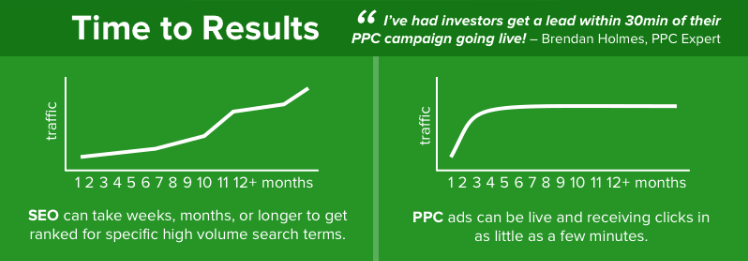
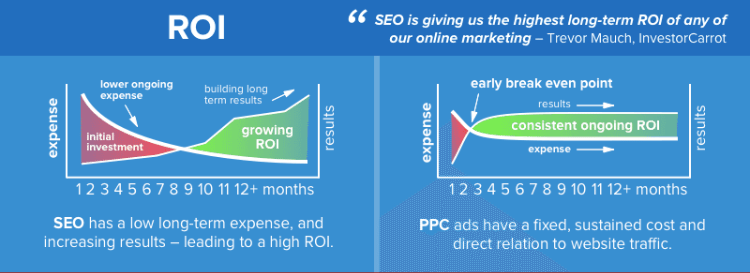
The difference between the two approaches comes down to separating your traffic-driving goals into two clear groups: (1) search-engine optimization (SEO) tactics to increase organic visitors — what we’ve termed conversation marketing — and (2) PPC tactics to increase paid visitors.
Knowing the differences is vital.
Why You Should Use Both SEO and PPC In Your Marketing
Efforts For Best Short And Long-Term ROI And Consistency
Why you should use both SEO and PPC in your marketing efforts Image Credit: Investor Carrot
While it may sound technical, SEO really just comes down to creating search friendly content that your target audience will find helpful. We’ll get into the details of how to do this in just a minute. For now, it’s important to be aware that SEO takes a larger upfront investment of time and resources and its results don’t materialize overnight.
Leads come to you. You don’t have to chase them down.
You position yourself as a helper versus a “bottom feeder.”
Higher search ranking doesn’t just mean more traffic, it also means more trust.
In turn, that trust turns a higher ratio of traffic into leads into deals.
You’re not forced into competing for the same lead everyone else is after.
Over time, lead cost dramatically decreases. Best of all, the more search-friendly, organic content you create, the easier generating traffic and leads becomes in the future.
Content Marketing Versus Conversation Marketing
All of the benefits listed above come directly from an approach to online marketing known as content marketing.
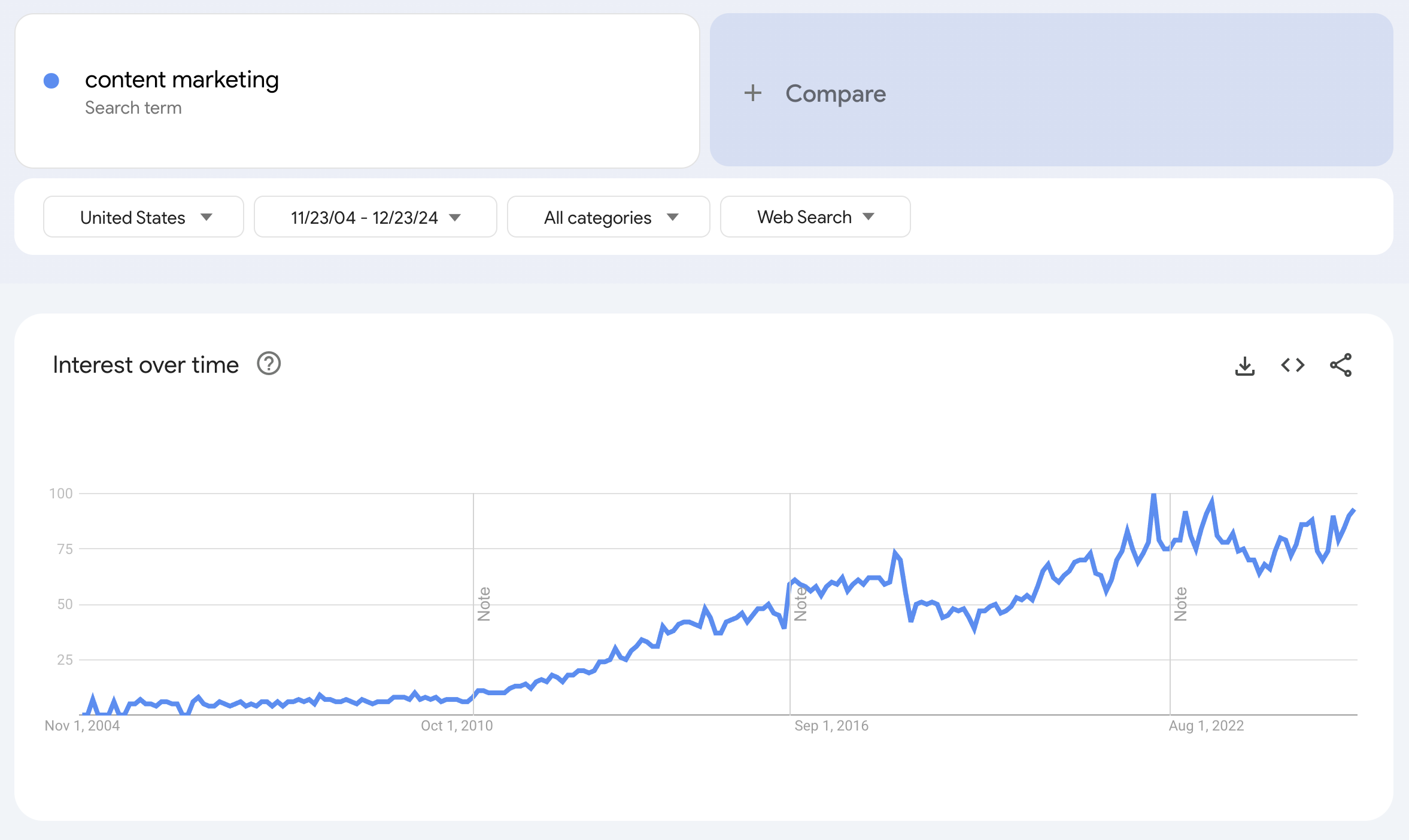
Since 2012, the phrase “content marketing” has exploded. Google Trends officially dubs it a “breakout,” meaning the number of global searches for the term has increased by over 5,000%.
The explosion of all things “content” is rooted in a simple principle: add value … and add it for free.
Whether it’s in the form of blog posts, buyer’s guides, checklists, podcasts, ebooks, webinars, or email campaigns, content marketing is the leading way to provide valuable information to your target audience and increase your traffic.
However, at Carrot we’ve learned to take a slightly different approach. Instead of content marketing, our goal is to create “Conversation Marketing.”
Why?
Because ultimately, all business — online or off — revolves around human connections.
This is exactly why conversation marketing works so well. It educates and builds trust with your prospect. It gives them what they need to enter the real estate buying or selling process and complete their due diligence efforts before biting the bait.
And best of all, it connects them directly to you as their go-to source for guidance.
This sector [real estate] revolves around people and relationships, you can benefit by working with integrity.
Trust and relationships are the most valuable assets in real estate whether you’re an investor or an agent.
Couldn’t have said it better.
At Carrot, we use the term “Conversation Marketing” to define our approach to talking with both visitors and customers. Our primary aim is to talk “with” instead of taking “at”; meaning, the content we create avoids the more traditional marketing missteps of creating a one-sided conversation. This is especially important at the beginning.
What Real-Estate Conversation Marketing Is
You’re in a busy restaurant. You overhear a conversation about someone trying to sell their house they just inherited and they weren’t sure if there were other ways to sell it besides working with an agent… they wanted it to get done quickly.
Scenario one, you go over and say,
“Hi Mike. We buy houses. Lemme buy your house!”
Uh. Say what? Why are you butting into my conversation?
Scenario two, you approach it as,
“Hi Mike, it’s nice to meet you. Couldn’t help but overhear you’re thinking about selling a house you inherited. Tough process sometimes. I’ve been through that too. When did you inherit the house?
Mike: Ah, it was my dads. He passed away last year but ownership was just passed to me this month and now I’m figuring out what to do next. Was thinking about renting it but I think I’d rather have less hassle and just sell. You: Yep I feel you. In the right situations, I actually buy houses like that and have bought several that people inherited. I’d be happy as heck to show you some of the pros and cons and just help you make sure you pick the route that’s best for you. I’ll send you a short article I wrote on selling a house you inherited actually… it’ll clear things up for you I think”
Scenario one is called interruption marketing. It doesn’t provide any human connection. It “butts in” rudely. While this would never be acceptable human behavior in the real world, sadly, it’s exactly how the vast majority of real estate website present themselves.
Scenario two is conversation marketing. It’s engaging, focuses on listening, and builds itself on questions. Helps them solve a problem by delivering value and content.
Three Phases to Get More Traffic through Conversation Marketing
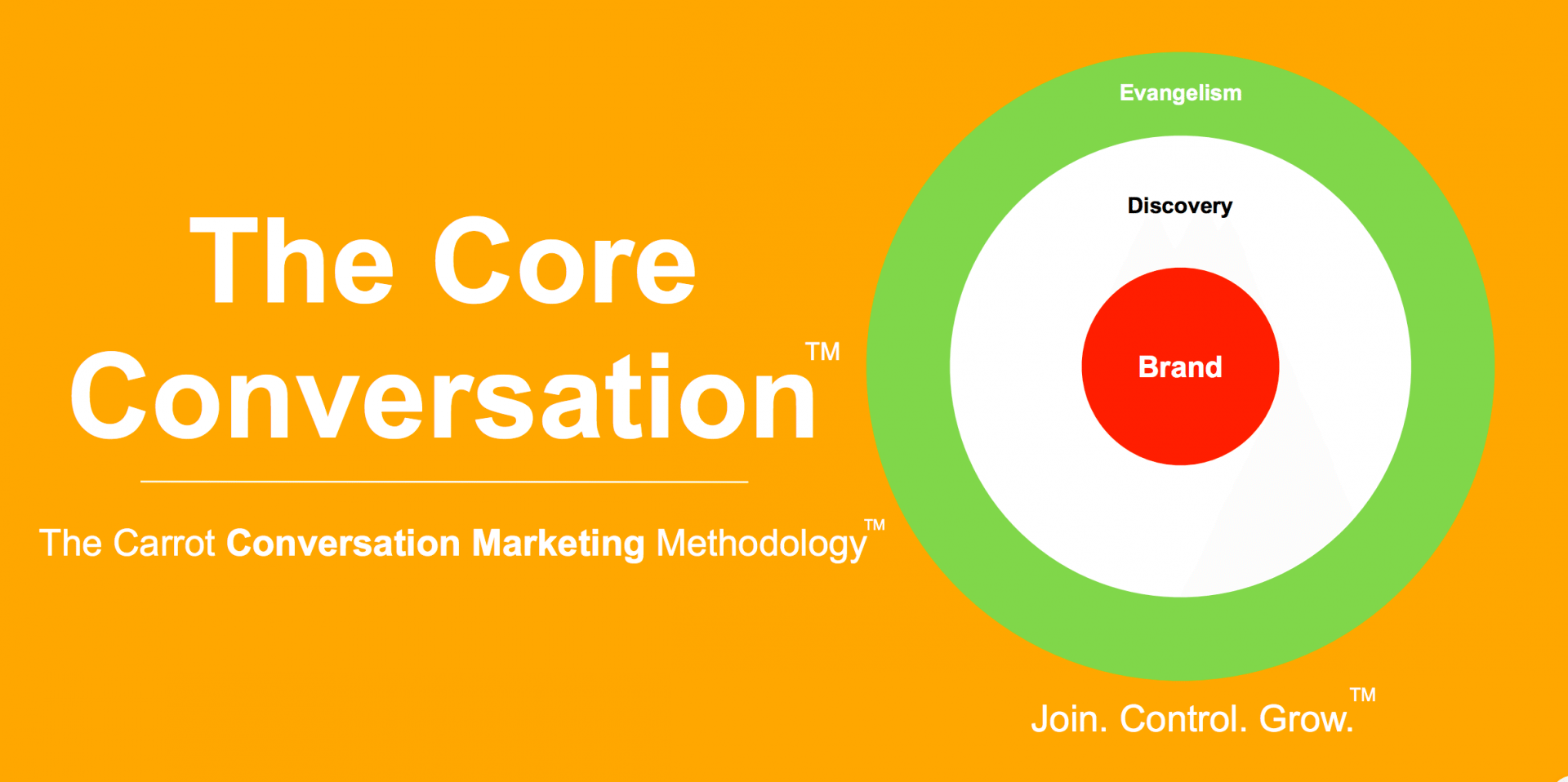
Over the years we’ve created and perfected a 3 part process to not just get a ranking or two… but really control the conversation around your marketplace in a big way. That’s how you dominate in SEO and content marketing.
It’s basically 3 simple steps… and in this order.
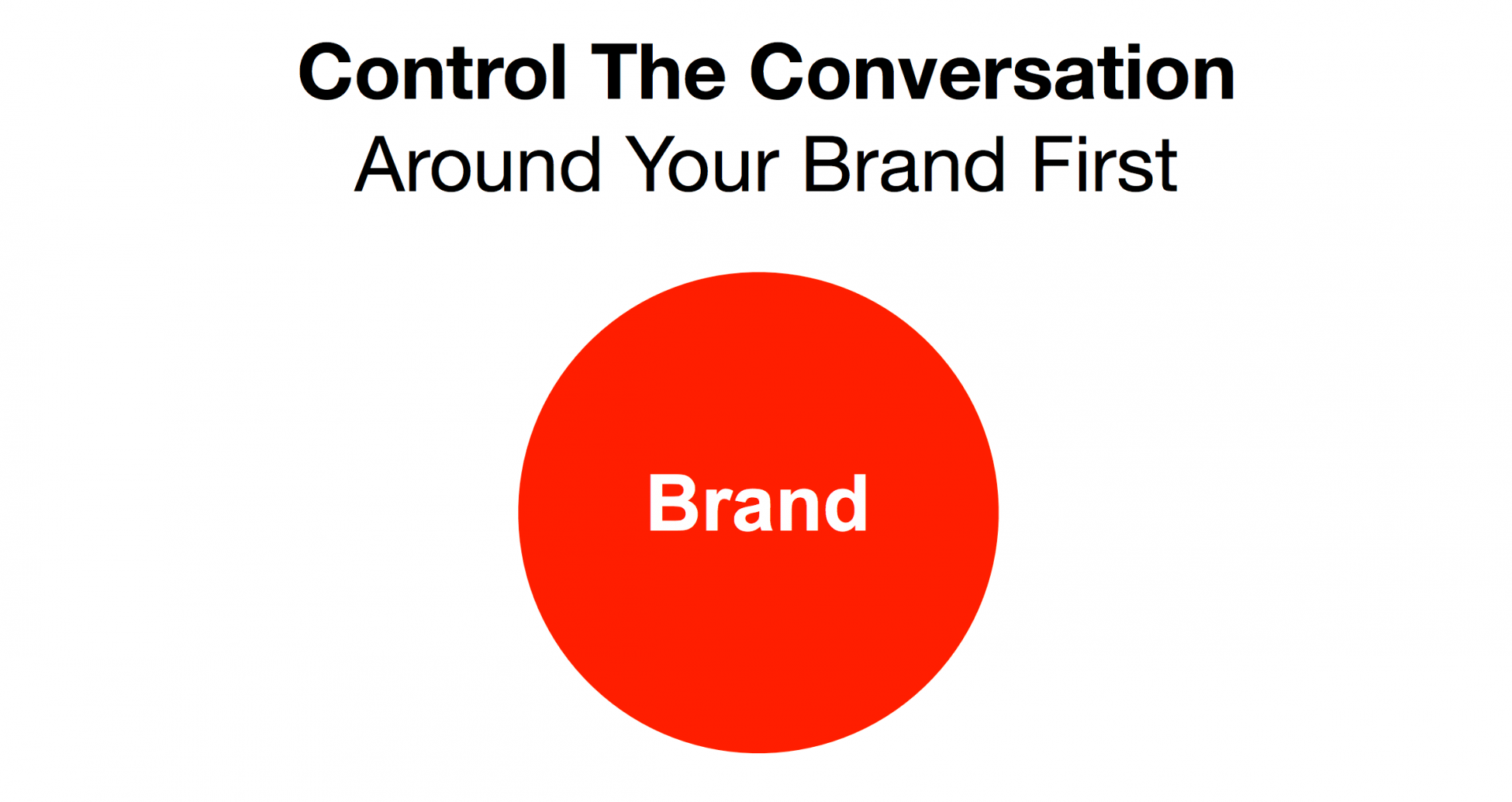
Your Brand – Control the convo so people see what you want them to see when they search for you
Discovery – Join and control the convo around questions or problems your market is hitting the web to “ask” (type into Google)
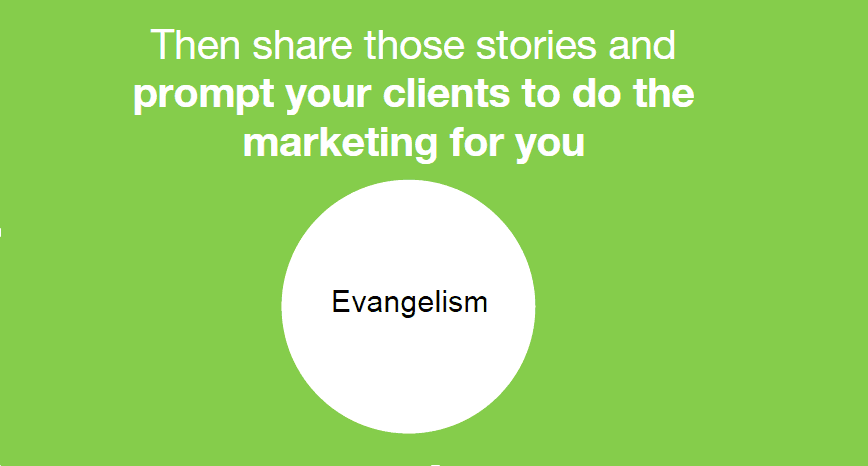
Create Evangelists – Helping your clients do your selling and content for you.
Let’s dive in!
Phase 1: Your Brand – What Are People Seeing?
The first thing most people do when they make a big financial decision is hit the web to research the company they’re about to work with.
Real estate is no different.
So when you’re sending out your direct mail pieces, or doing PPC or SEO, or even your bandit signs… people are hitting the web searching for your business name or phone number to do some research on you.
What do they see when they search your business name?
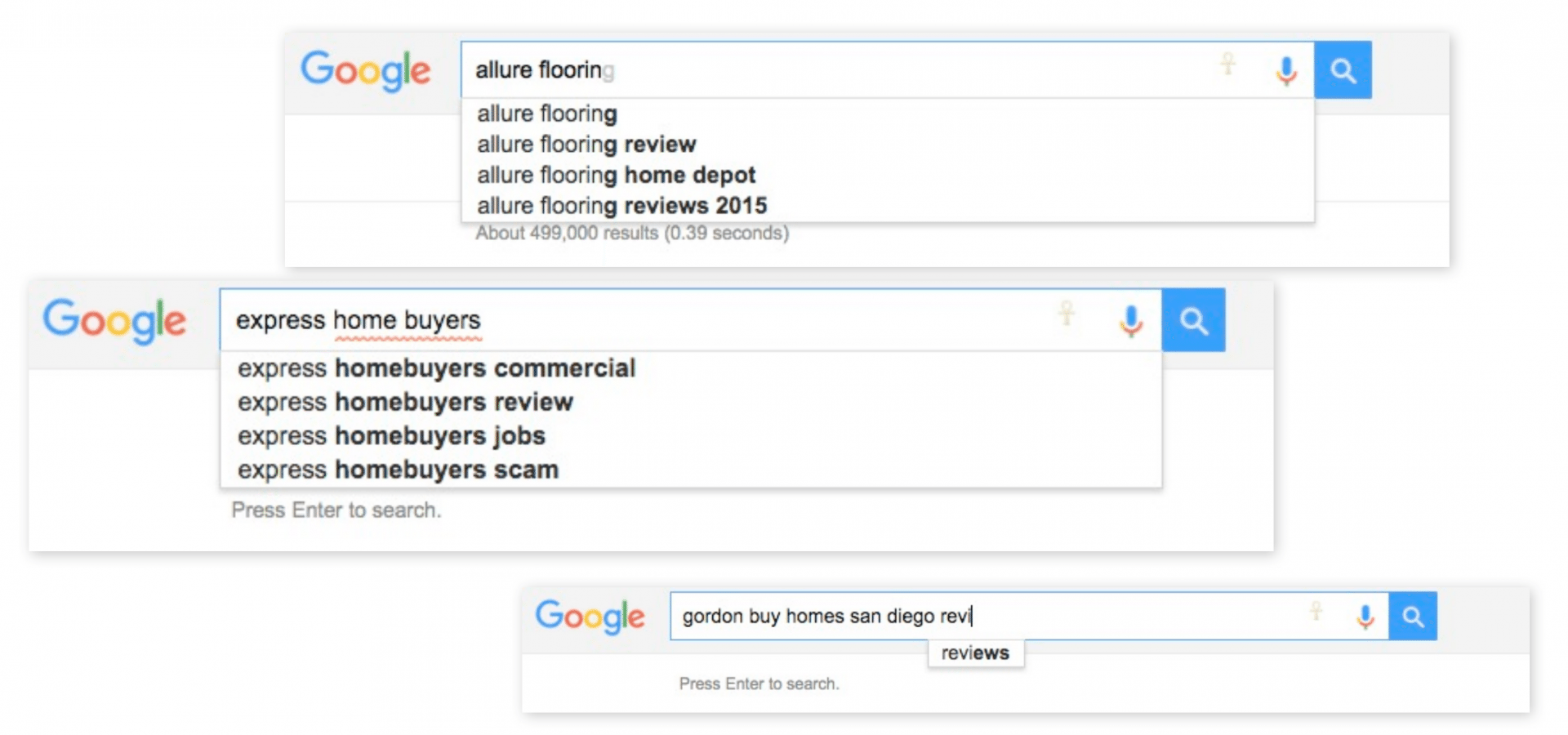
Here Are A Few Examples Of Brands Or Companies When I Google Their Name…
Notice the suggested searches Google is giving me… people are actively typing those phrases in consistently, so you should create content that ranks well and controls the conversation around those keywords.
Test it yourself…
Go ahead… Google your company name + your city and see what comes up. That’s what your prospects are seeing before they decide to work with you.
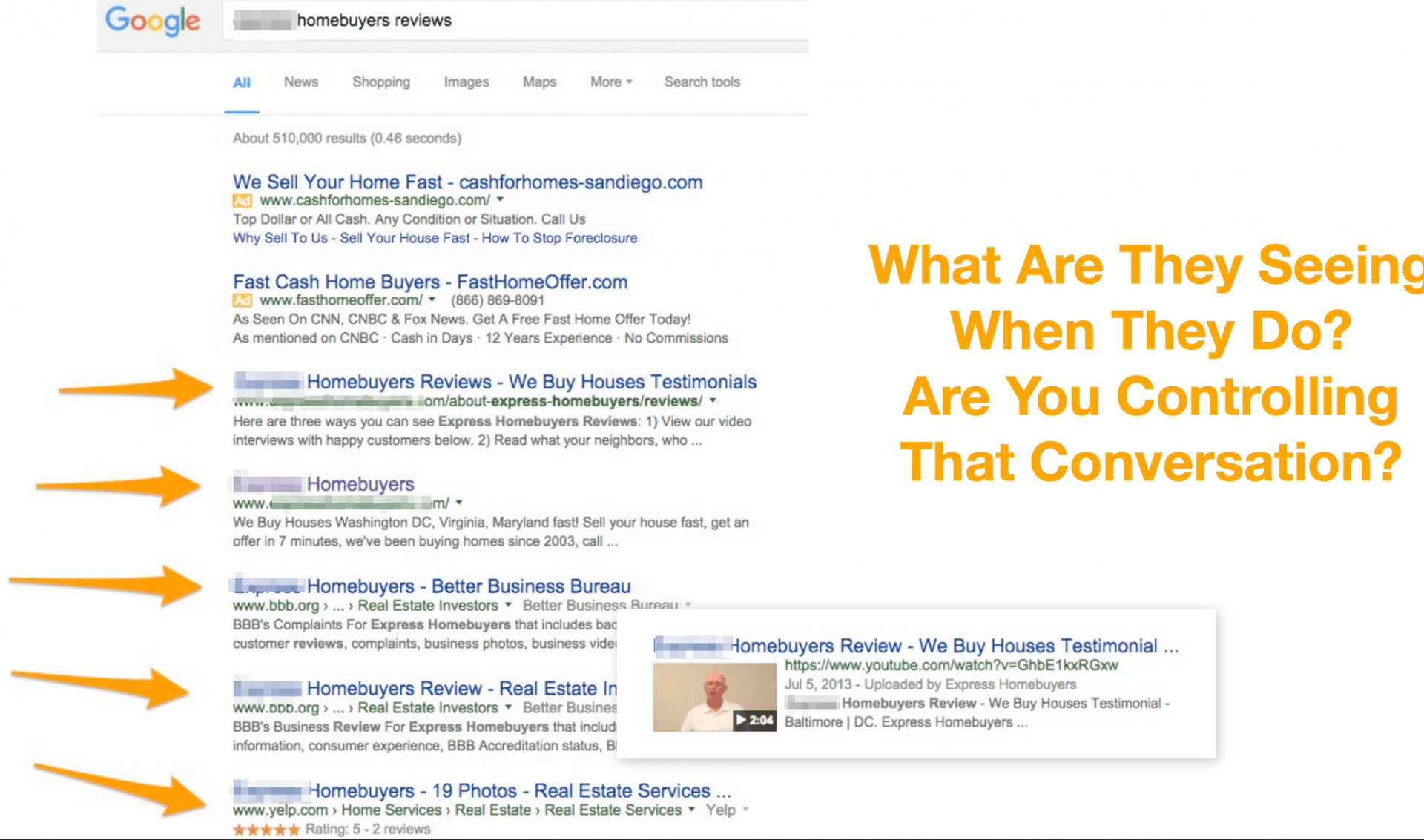
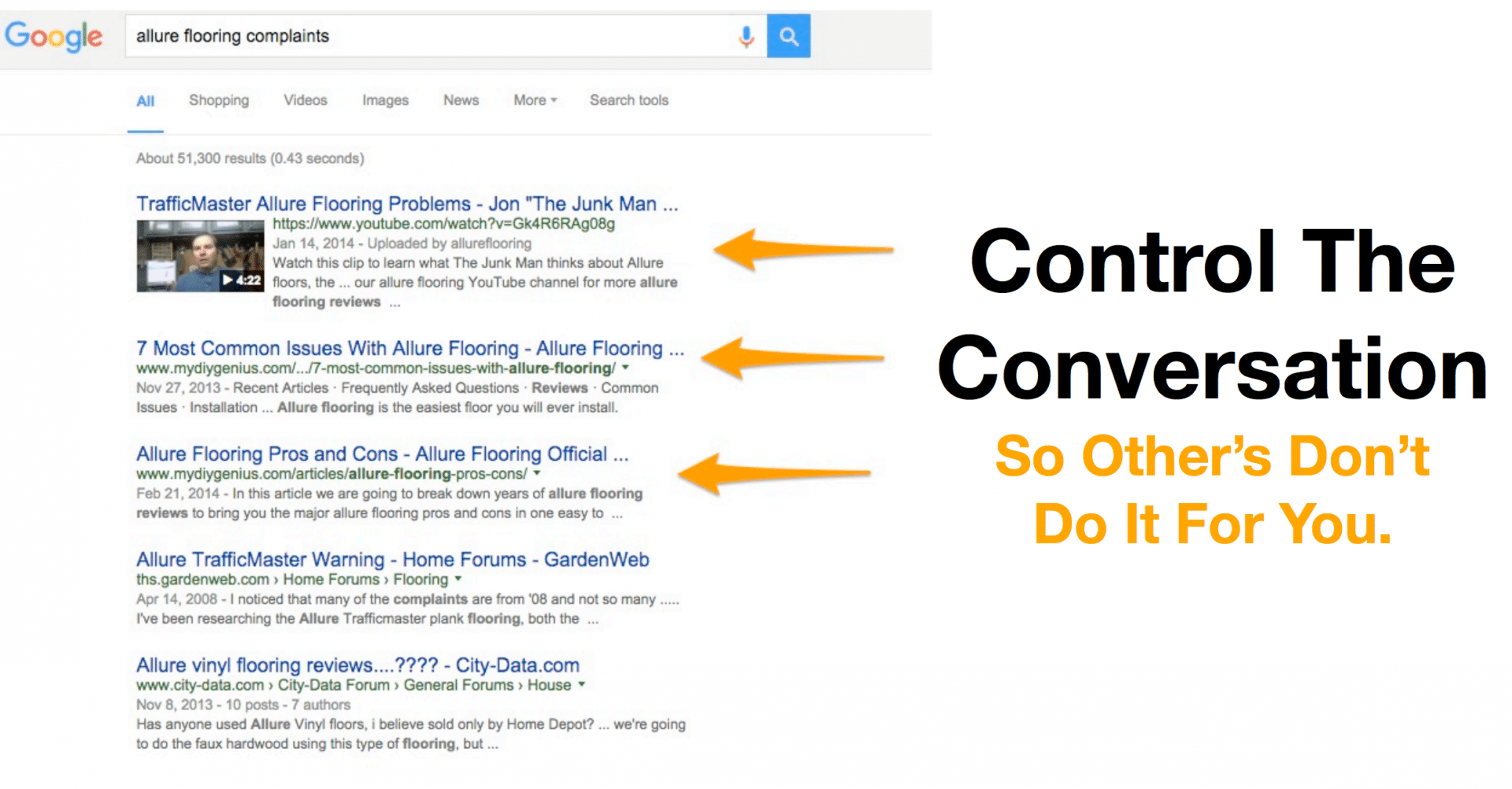
Here’s what it looks like when you’re controlling the conversation around your brand vs. letting your competitors control it for you or the internet decide who you are to your prospects when they search you.
This Company Purposefully Controls The Top 5 Spots When You Google Their Name With Very Credible And Positive Content
Here’s a company that my consulting business works with that sells $600mm/yr in flooring and we helped them control the conversation around their brand in a big way.
Notice The Videos We Created And 2 Articles That Are Ranked 1-3 For This Brand Related Search?
Before, when you searched that phrase it was nothing but a few sites where those few negative nancy’s posted a bad review on their personal blog bashing the product. When in actuality on Home Depot.com the product rating was stellar and reviewed by tens of thousands of happy customers. Those couple bad apples raise to the top in Google.
So we wrote down all of the keyword phrases that came up in Googles suggested search box around our company and created videos and articles optimized to rank well for each on.
We teach you how to optimize your posts and videos to rank well in Google in our 3 Lead Per Day Training for Carrot members.
Action Items:
Google your own company name + the name of your primary city. i.e. – “ABC House Buyers Charlotte”. Then write down all of the Google suggested searches that come up as you’re typing in your search that are related to your brand. If you’re brand new or not a big investor, you likely won’t have any suggested searches pop up quite yet that are related to your business.But common ones house sellers type in when they’re researching a house buying company are…
reviews
scam
bbb
[your main city]Type those into Google and see what comes up. Are you ranking well for any of the top 5 results? If not, you need to create content on your site that optimizes for that keyword. At Carrot, we automatically optimize your “About” page for your company name and location, so that’s done for you. But to really control the conversation you may want to create more content.
Create content and a video or two to rank for that content. Then launch it on your website and put it up on YouTube. Basically title the YouTube video the exact keyword phrase you’re going after. If you’re going after the keyword phrase “ABC House Buyers reviews” you should upload a testimonial video from a client of yours and name the video title that in YouTube.
Easy eh? Then every month search the phrases around your company name and see where you stand.
Even 1 lost deal because your client sees something online about you that makes them at all uneasy (including not finding anything about you at all) could cost you tens of thousands of dollars.
Phase 2: Discovery – What Are People Searching To Solve Their Real Estate Problems?
The best way to increase your traffic — without being forced to pay for it — is through content creation and getting that content ranked well in Google.
That content will be the backbone of your conversations.
This phase is joining the conversations and hopefully eventually controlling those online conversations as people are going online to “discover” the solutions to their problems and the answers to their questions.
The need for content is universal online is because search engines like Google will only consider your website to be an authority if the content you create (1) revolves around the keywords your ideal customers are already using and (2) that content itself is valuable enough to be shared and linked to by sites and businesses other than your own.
However, never forget the aim of conversation marketing: getting more visitors to your website by actually helping them.
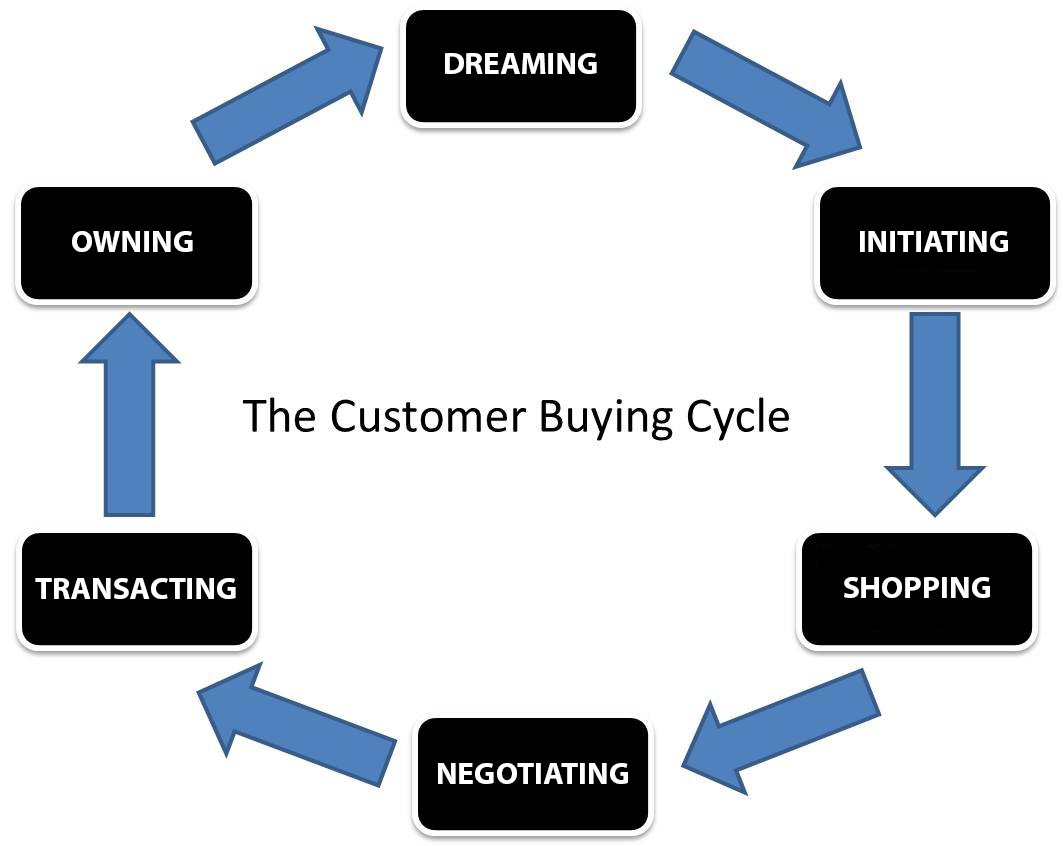
This means understanding your prospect’s buying cycle in addition to your valuable keywords so that you know what type of content to create. Here’s an overview from InMan of what the typical real-estate buying cycle looks like:
The first three phases are where you need to educate and start conversations for maximum impact and traffic:
Dreaming:
This is the earliest stage of the “buying” process when the prospect has an initial thought to buy or sell a property (or note, or land, etc.).
Initiating:
The initial thought has dug in a little deeper and the prospect tentatively starts exploring online. This is where your real estate investing business can address a need, by providing content using search terms the prospect uses to search for information. Like “How to sell a house I inherited in Dallas”. They’re starting that conversation online… will you engage with them or let your competitors?
Shopping:
If you’ve already “nabbed” your prospect with value-add content in the first two phases and have their email address on your list, this is where you start reaping your rewards. Only when your company has helped educate and build trust with a prospect they are likely to turn to you when they’re ready to officially engage.
Small and large businesses alike often make the fatal marketing mistake of trying to be all things to all people.
Kind of like trying to cram everything on one site for house buyers, house sellers, renters… etc. And you shouldn’t use the same site for motivated house sellers and cash buyers for your content either (like we teach here in this article).
Instead, it’s vital to get focused on the handful of brand-defining specialties that make you stand out.
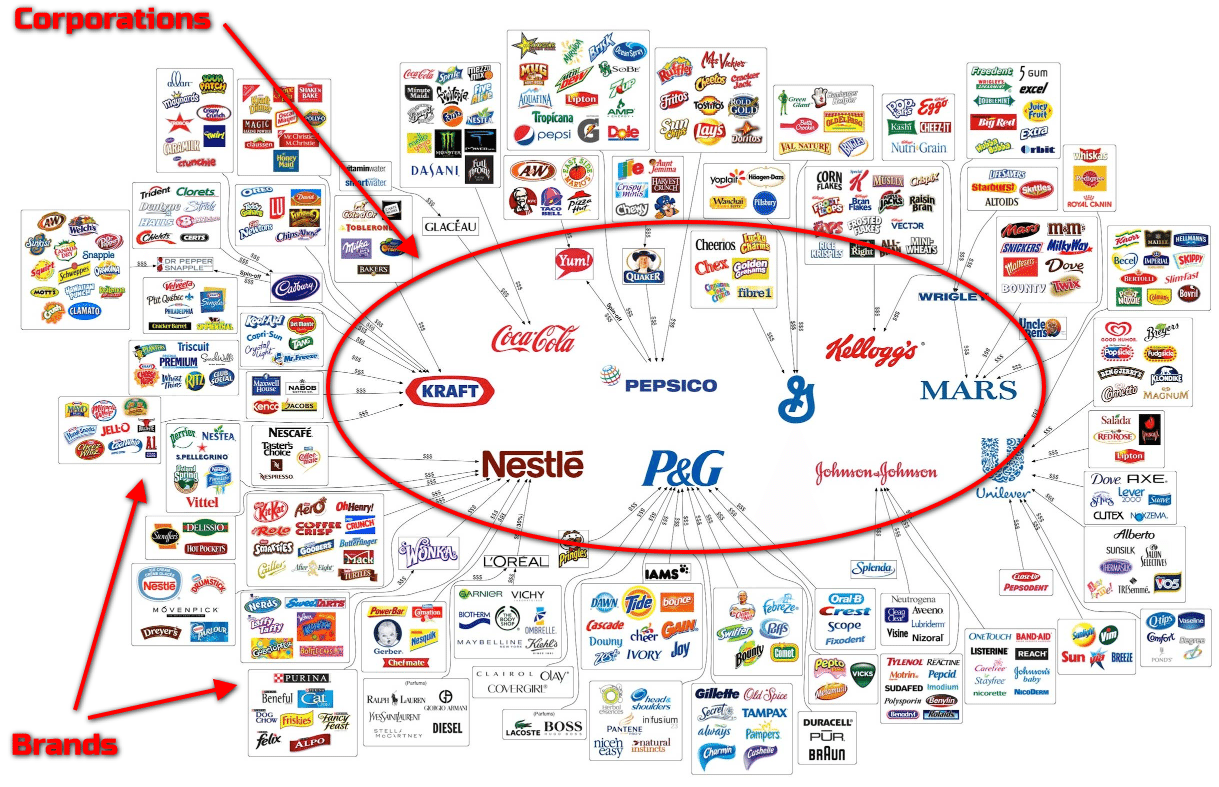
Take Business Insider’s graphics These 10 Corporations Control Almost Everything You Buy as an example. Notice that in the middle of the image are the 10 corporations that own most of the goods we buy.
However, when it comes to what you actually purchase, their subsidiaries are responsible for doing the work:
The point is obvious: while there are only about 10 corporations in the driver’s seat, each has created distinct brands to actually sell their various goods and services.
Why?
Because if they didn’t separate their brands into specific niches, they’d struggle to market themselves effectively.
Regardless of your size, the same principle is true for you as a real estate investor or agent.
Who is someone going to pick if they’re trying to sell a house they inherited?
The company where the website says they “specialize in buying inherited properties for top dollar” and where they have content that talks about selling an inherited property…
… or the company that just says “We buy any house”?
I know I’d probably pick the company that seems like it has a specialty in the situation I’m in.
That’s why the this phase of conversational marketing doesn’t involve asking yourself, “Who do I want to be?”
Instead, it focuses on the far more conversational question: “Who do I want to reach?”
In other words … your audience.
Thankfully, deciding who you want to reach and digging into what they like, love, and hate, doesn’t take divination, a crystal ball, or even brainstorming.
There are a host of online tools that can help you get to know the people you want to reach.
Where should you look?
Go after the low-hanging fruit first:
Social media sites
Question and answer sites like Quora
Forums your target audience belong to
Popular blogs in your niche
In addition to the usual suspects, Placester provides a detailed list of online resources to try out.
The benefits of identifying a single-target market — e.g., “first time home buyers with less-than-perfect credit in the Portland area” — versus trying to be all things to all people — e.g., plain vanilla “home buyers” — are enormous.
And this is true not only from a marketing point of view, but also from a service perspective.
For instance, more and more people are turning to social media channels to share their home-buying experience and provide feedback, whether good or bad.
By paying attention to what real-life people are saying within your chosen niche you can discover things like:
What are their struggles, fears, and anxieties?
What reasons motivated them to want to sell a property or buy one?
What are their dreams and expectations?
What is it that they’re really looking for in a house buying / selling service?
What do people who’ve completed their first purchase or sold their house wish they’d known at the start?
Again, the important thing with conversation marketing in the real estate investment and agent business is not to think long and hard about you and the words you want use, but rather, to pay attention to your ideal customers and the words they themselves are already using.
That point about “the words they’re already using” is massive.
Conversation marketing aims at generating organic traffic not paid traffic.
This means you have to organize your approach around specific keywords that are optimized to improve your search engine rankings for phrases your prospects are actually searching online. Conversations they’re starting.
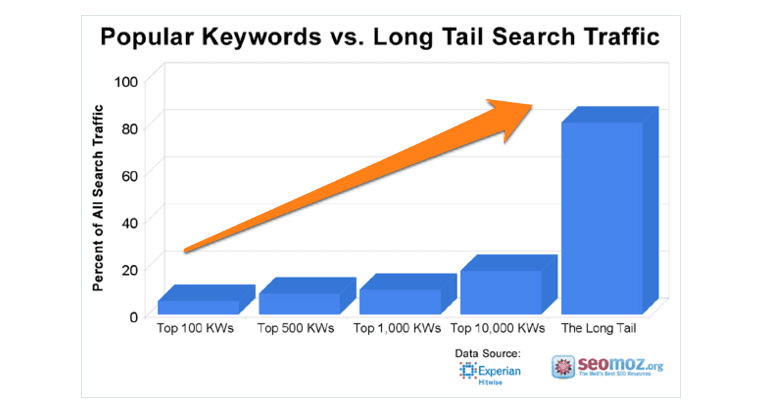
The search phrases that drive more traffic to your website — and are easiest to rank for (i.e. less competition) — are the ones that are more specific. These are called “long-tail keywords” because they contain more than one or two words.
This graph shows that the most effective keywords for search engine purposes are long-tail
For example, rather than casting your keyword-net wide with a phrase like “selling a house,” use long-term keyword phrases that your audience is actively talking about:
“selling an inherited house”
“selling a house after a divorce”
“selling rundown house without making improvements”
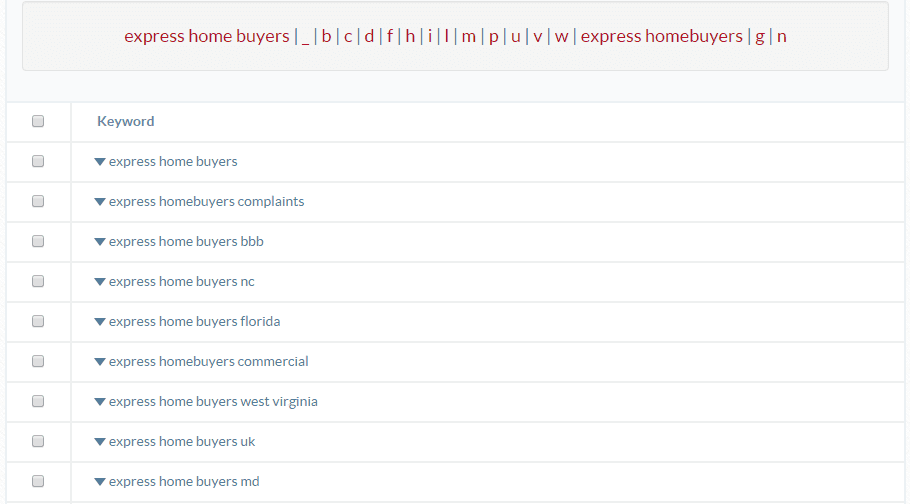
Ubersuggest is another fantastic tool you can also try to spark off ideas for long-tail keyword phrases.
Example Of Using Ubersuggest To Find Topics To Write About
This was a search I did on Ubersuggest for the term “express home buyers”
Now that you’re armed with the best keyword phrases that your target audience are already using to find solutions to their real estate needs, you’re ready for the next step: creating amazing content around the keyword phrase of your choice.
However, simply having amazing content isn’t enough.
You also have to ensure that content works on a technical front. This is even more important today because search engines now judge the value of a site based on its design as well as its speed.
My suggestion is that you look for a designer or a proven website system like Carrot who is familiar with websites that perform well in the real-estate industry specifically.
This option may be slightly more expensive than the “get a website for $90” deals, but will save you from going to the trouble of setting up a website — content and all — only to discover months later that technical issues are holding you back from bringing in traffic.
Once you’ve created a base of content to address the first three stages of the buying cycle do not simply let it sit there.
Instead, repurpose it.
Repurposing your existing content is hands down the best way to create new content … without having to create new content.
As soon as a particular piece of content (like an article) show signs of performing well — i.e., generating traffic or even things as simple as comments or social shares — turn that article into a video or a SlideShare presentation. Make it the topic of a video. Pick one specific point in the article to expand on it in an entirely new post. Or even bundle together your best articles into an ebook on a landing page.
After you’ve created and repurposed your content, don’t make the mistake of thinking your conversations will take care of themselves.
Our third and final phase is the real key.
Phase 3: Evangelism – Helping Customers Do Your Selling For You
Evangelism is the last phase of the conversation marketing model you’ll need to lock down.
Simply put: creating evangelists means turning your best clients into your best salespeople.
This involves being intentional not just about sharing your content directly with your best customers — in the hopes that they’ll go forth and do likewise — but including them in that content itself.
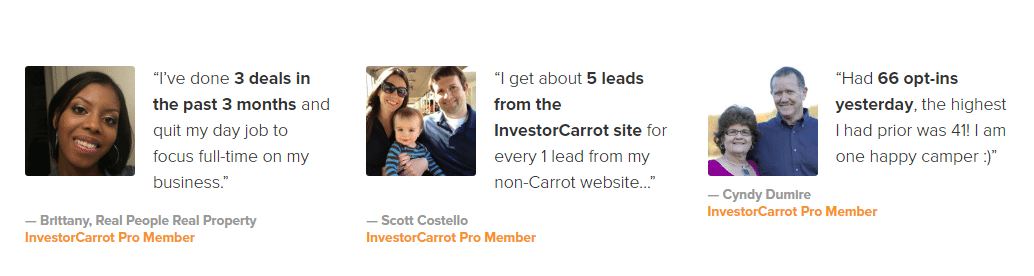
For instance, if you spend any time at all on our website, you’ll notice there’s hardly a single page that doesn’t include a customer testimonial or case study.
On our homepage, we include three glowing recommendations front and center, right under our hero image:
On our
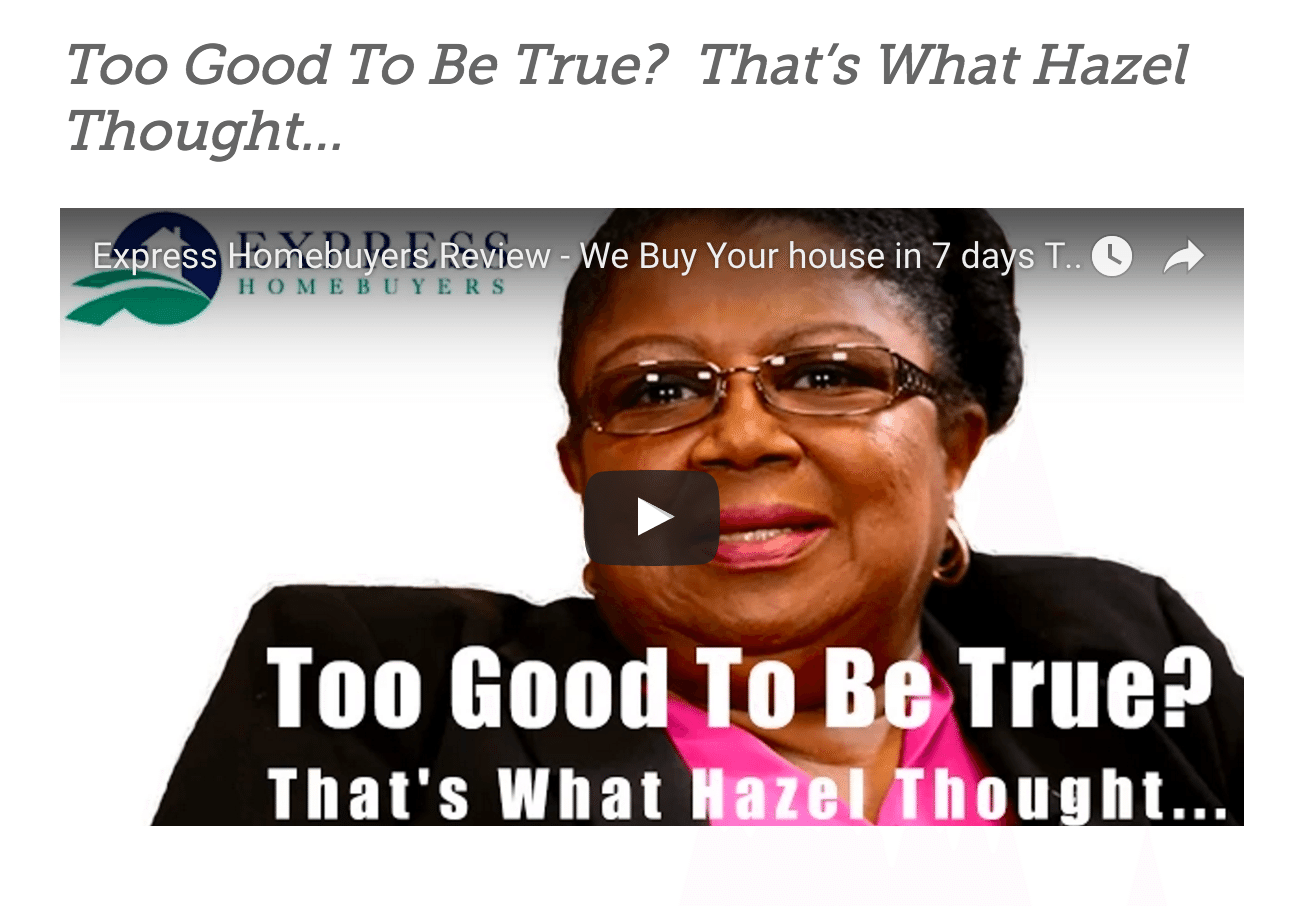
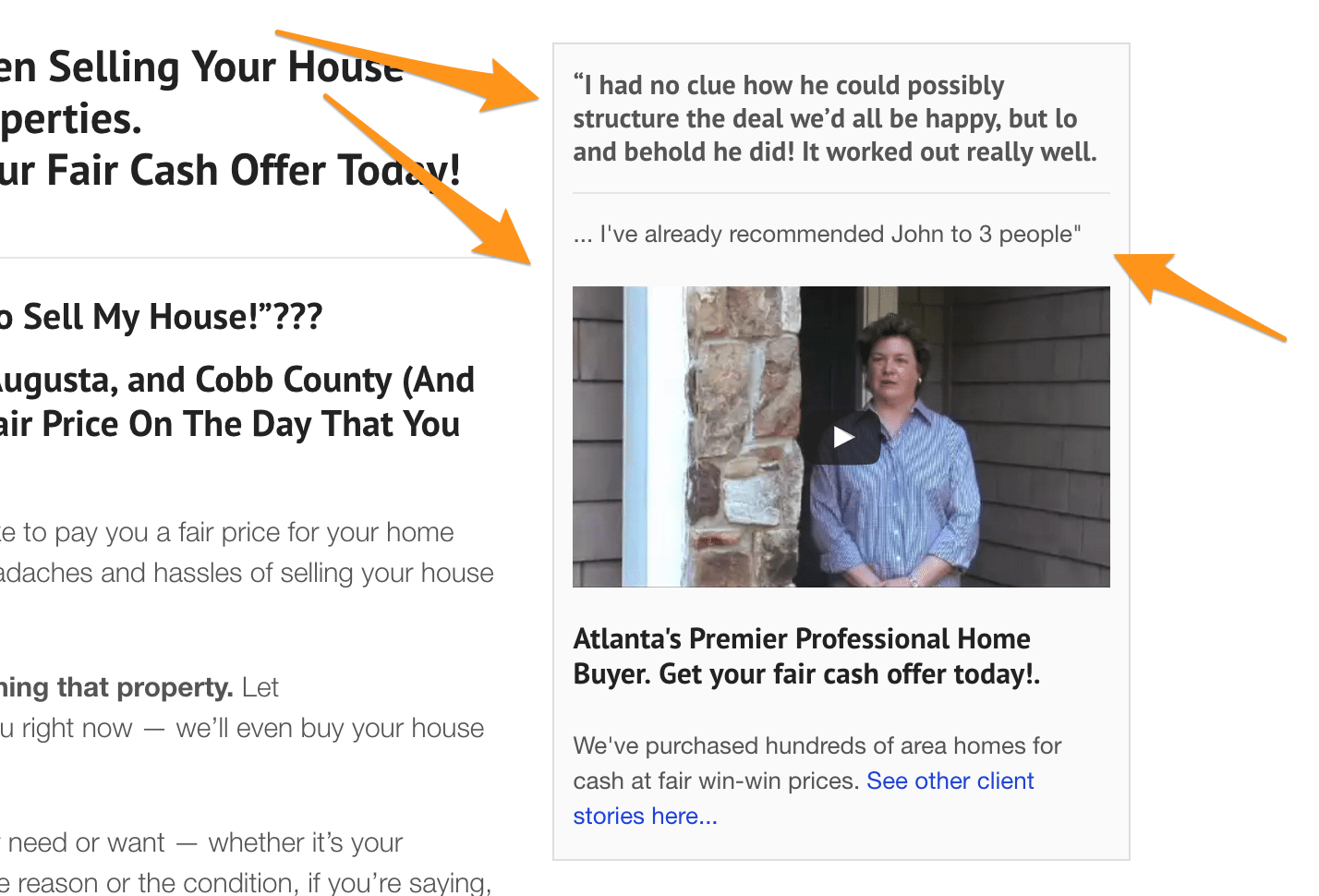
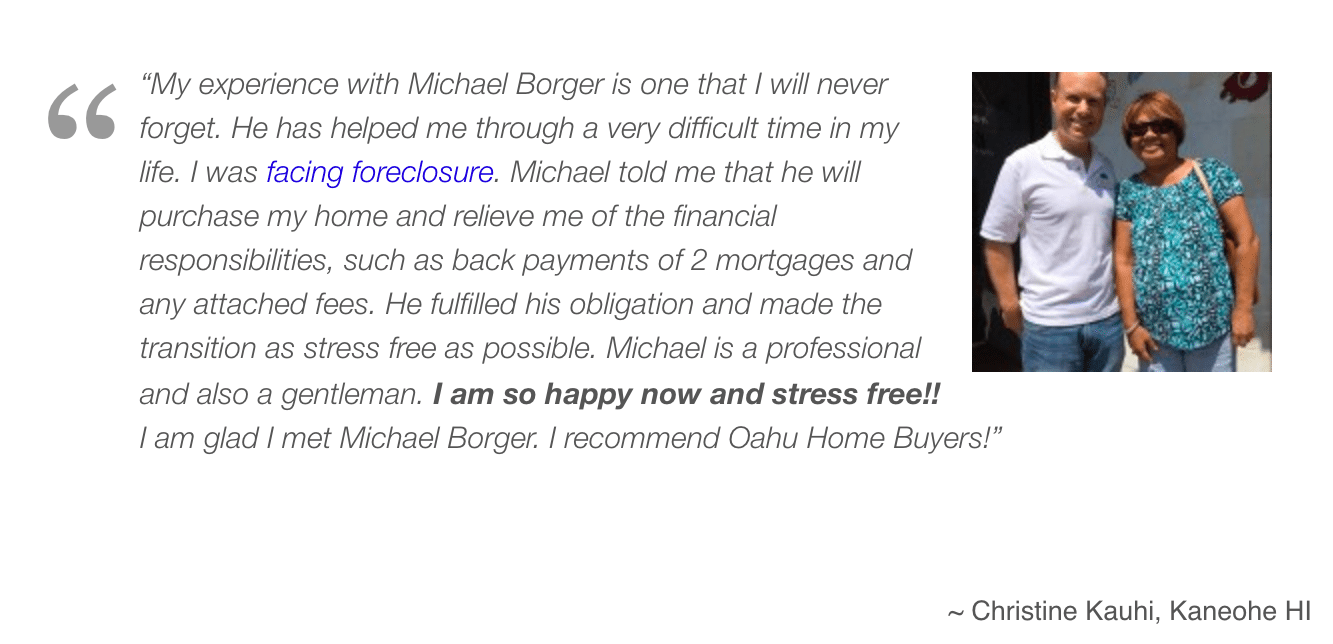
See how this top investor uses one of his client stories to squash the “too good to be true” thoughts going through some sellers minds. It empowers your clients to be evangelists for your brand and your company.
Here’s what happens when you help your clients spread the word about your company and service. They do the selling for you!
This happy house seller has already referred 3 people to this Carrot client
You could even make a nice “Stories” page like we have on our site and have built into Carrot websites:
And… One Of Many Client Testimonials On This Investors Site
Why all this focus on our customers?
Because we know the cold, hard truth: selling yourself is hard. Letting the people who’re already wildly delighted with your service sell you … is easy.
Ironically, selling yourself means engaging in the very marketing behaviors that inhibit genuine conversations.
Letting the people who’re already on your side sell you, that’s how you start a genuine conversation.
Video is the most powerful form of evangelistic content, so make a real effort to get your content — especially repurposed content — into video format.
If creating video content sounds daunting, it shouldn’t.
Here at InvestorCarrot we’ve produced a host of “Customer Stories,” all of which boil down to little more than webcam-recorded conversations with some of our greatest success stories:
Example Of A Simple, Low Production Video We Shot To Help Tell A Customer Story (in their words)
And you know why they work?
Because the format of those stories grows directly out of our overall approach itself: conversations not selling.
You can do the exact same thing as a real estate investor or agent.
It’s all about the conversations…
Most entrepreneurs and small business leaders are overwhelmed by online marketing tactics meant to increase traffic.
Why?
Because there are so many opinions, so many tools, and so many methods.
On top of that, your prospects are equally overwhelmed. They’ve been exposed to scammers and self-centered agents alike, both of which make it clear that they’re only interested in one thing: making a quick buck.
Conversation marketing won’t make you an overnight internet celebrity.
It takes investment, insight, patentice, and a bit of creativity.
But by following our proven three-phase method … you can dramatically increase your traffic without having to pay for it. Remember, of the over 200,000 leads our clients generated last year, less than 20% came from paid traffic… the majority of them came from Conversation Marketing.
Best of all, you’ll position yourself as a genuinely helpful resource and the expert in your area which makes it so you’re not a commodity anymore. After all, people are people and every great relationship — business or otherwise — always starts with a conversation.
So you’ve heard people say you can’t generate consistent deals with SEO? Tell that to Jack of Jack Buys Houses in Orlando, FL… he closes 3-5 deals a month in Florida almost exclusively through his search engine optimization efforts. See how…
Are those results typical? They’re not… but Jack worked his butt off and continually hounded us on our weekly coaching calls (we say that lovingly because we love it when customers do that!) for months with questions and advice that helped him crack his Carrot website from page 2, to page 1… to the top spot in his market.
We had a chance to sit down with Jack recently and have a conversation with him about…
How he got started in real estate investing
How he closed his first deals and why he dove into wholesaling in his market when others were heading the other direction
What makes his online marketing strategy so effective for him in his market
Hear Jack’s Story + Learn How He Incrementally Grew His Google Rankings To Turn 3-5 Deals A Month
This case study is a full-length deep dive into Jack’s story and how he’s built a very successful wholesaling and investing company over the past 2-5 years and his exact strategies on how he cuts through the clutter online in a sea of other competitors trying to find active cash buyers in his market too. Click play and dive in!
Start – 4 mins talks about how he went from a Target executive to doing short sales and now 4-5 wholesale deals a month
3:40 – What he learned from Warren Buffet that helped him leave his day job in 2009
8:25 – Why he dove into short sales first + his business strategy that helped him crush it (personally did over 350 short sales)
12:20 – How he took the leap into rehabbing and wholesaling in 2012 and why most wholesalers are doing it wrong
12:45 – Currently do approx 5 wholesale deals a month (over 100 deals so far!)
17:15 – What 1 DEAD SIMPLE thing gives him an edge on deals (that most wholesalers drop the ball at)
21:00 – Started marketing w/ direct mail first, didn’t get solid results then decided to get a website up. Found Carrot and “Just did what you guys said to do and the rest is history. I haven’t done direct mail in a year. Every one of my leads come from Carrot”.
“I found you guys, and I’ll be honest w/ you. All I did was this Trevor. I just did what you guys said to do. Because everything is pretty much done. You just pull it out of the box. A few things you have to do on the backend. I just did what you told me to do. And the rest was history. I’ll be honest w/ you… I haven’t done direct mail on over a year. All of my leads come from Carrot. I don’t do bandit signs, I don’t do direct mail, I don’t do postcards, I just do Carrot (closes 4-5 deals a month)”
24:10 – How he generates his leads online (and more importantly, what he doesn’t do and why)
28:30 – Trevor walks Jack through a couple ways to ramp up his leads even further in his market in a big way (“PPC Stacking”, City Specific Landing Pages, and swiping more Google real estate, and retargeting)
35:20 – Jacks biggest surprise working w/ Carrot was the results. He assumed he’d get a certain amount of leads but he didn’t think he could build his business and do the deals they’ve done just through Carrot.
“My biggest surprise is that I didn’t think that I could build my business and do the deals we’ve done just through carrot and not do anything else. But that’s been the biggest surprise. The amount of results our sites get. Our selling site gets hundreds of visitors a month and we sell a lot properties” – Jack
37:15 – His “Big Why”… why he does what he does
40:00 – What 2 powerful pieces of advice Jack would to give someone just getting into real estate
42:40 – Our average wholesale profit right now is $13,700 per deal and we do 4-5 deals per month.
43:15 – Jacks advice to wholesalers about using InvestorCarrot for your own business.
43:36 –“The decision to use investor carrot is one of the best decisions I’ve ever made to be honest with you.. and I’m not just saying this because you’re a good guy. it’s the truth. it’s the best thing that I’ve done. you have to use carrot. there’s nothing else like it.”
Here Are Some Related SEO Resources Here On Our Website
Looking to ramp up your SEO for your real estate flipping / wholesaling / agent business too? Well we know a thing or two about that :-). Just dive into some of the free resources here on this website today!
We call them “doses of awesomeness” in our company whenever someone does awesome things and reports back to us. So let’s throw Jack some awesomeness below to congratulate him on his successes! Pop a comment below in the comments section on your SEO questions (or what your goal is) and some encouragement for Jack on his goals!
So, you already know your website needs to be “mobile optimized”… right? In fact, 64% of our motivated house sellers, cash buyers, and rent to own tenant leads were from mobile devices last month. But what the heck does that mean and why is your “mobile optimized” website likely losing you tens of thousands of dollars per year in lost leads and lost deals without you even knowing it?
If you have the choice of a higher-performing website vs. one that loses leads… which would you choose?
You may be asking the question…
Does A Higher Conversion Rate On Your Cell Phone Visitors Really Matter?
Even if your mobile website for real estate investors is not responsive, it may still not be geared to convert visitors into qualified leads at a high rate. That’s a whole different ballgame.
You’re investing a lot of time, energy and money with PPC, Facebook, and SEO. You want to get qualified leads to your websites without any technical deficiencies. No mobile deficiencies.
Your Website On Mobile Is Perhaps More Important Than Your Desktop. Here’s Why…
Through Quarter 1 and Quarter 2, 2020, our Carrot members pulled in over 142,136 buyers, sellers, and tenant leads all through mobile devices (cell phones and tablets).
That number doesn’t include any leads that came through on desktop computers or any phone call leads (which according to our surveys is as much as 2x more than the online opt-in leads).
A full 64% of our member’s leads came from mobile devices last month. That’s a lot.
This is why internally we started making it a point to make it an everyday practice to spend as much time using our cell phones on our customer’s sites so we can continually improve the mobile experience and conversion rate.
Here’s an interesting stat for you…
The visitor to lead conversion rate on our Carrot websites is a full 3 percentage points higher on mobile devices than on desktop computers.
Why?
Because most real estate investor websites look really bad on mobile and aren’t set up to perform well on mobile… so a web searcher bounced off of those sites… back to Google… finds a Carrot site (which is streamlined to generate leads on mobile devices) and engages in the Carrot site… becoming a lead.
We feel right now anyone with a really well-optimized mobile responsive website design has a big edge on those who don’t.
As we’ve really shifted a lot of our focus over to mobile (we believe in getting ahead of the curve vs. following it) we’ve seen some really interesting patterns in the way people use their different devices to find information online.
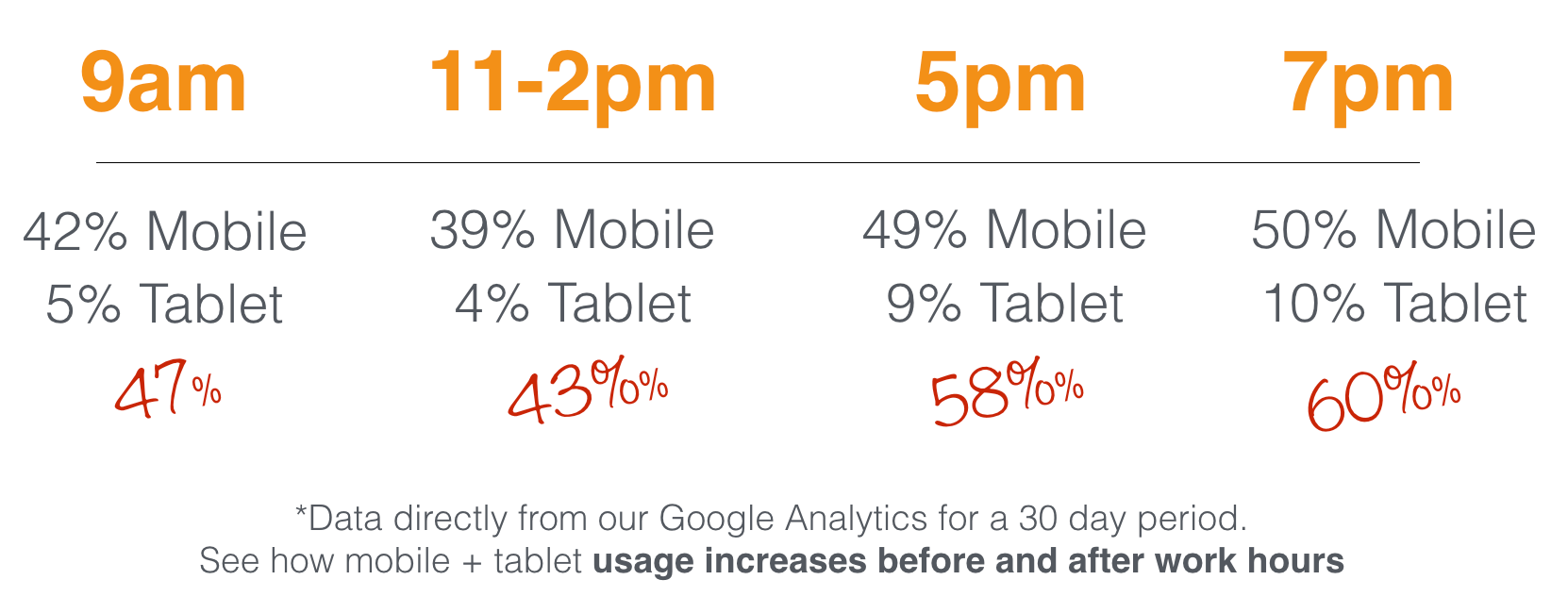
Here’s a graph below that shows when people are using different devices during the day.
Basically, people are using mobile devices the vast majority of the time in non-work hours. And these tend to be the times that more leads come in on mobile devices by far.
In fact, digging into our own data… we found the same exact trend in fact.
Percent Of Leads By Time Of The Day From Mobile And Tablet
Notice how the mobile leads on our system correlates in a big way with the mobile usage patterns… but also see the importance that mobile plays when people are at home.
It’s a big deal.
So We Know That Mobile ISN’T The Future, It’s The Dominant Force Already…
Below we’ll dive into how your real estate investing website or agent website should be designed to maximize your chance at converting your visitors into qualified leads.
In fact, I’m going to go out on a limb here and say… if you don’t nail the mobile experience and focus a lot of energy into it… in 12-24 months your website will be left in the dust (it’s already happening).
Will you catch up or be left behind?
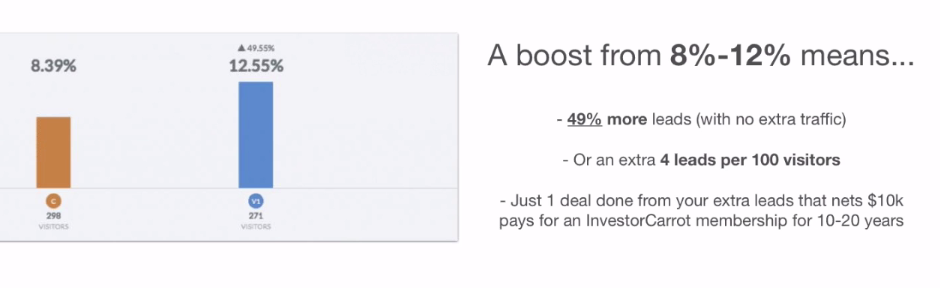
If you lose just 1 deal a year because of lost leads from a suboptimal mobile experience and you average 10k in profits, is that money you’d rather figure out how to keep?
If you’re driving traffic to your website right now, and not implementing proper mobile techniques, then you most likely have a leaky bucket. Phantom expenses stacking up and taking money out of your bank account.
If you don’t stay ahead of the curve searching in mobile, you’ll end up getting trampled by your competitors. Attract mobile customers and turn them to lead. Save yourself at least one deal a year. That’s way worth it for the time it takes to get mobile optimized.
Here are some tips to help you better optimize your website for those mobile visitors.
1. Get Your Real Estate Investor Website Google “Mobile Friendly” + Responsive
Google’s stance on mobile is to create a responsive website. It’s likely that responsive sites get an edge in searches from a mobile device. Google also started penalizing sites in mobile search that aren’t mobile-friendly.
What do you need to do to make sure your website mobile friendly?
Basically Google is looking for things that make it easy for your web visitor to read and engage with your website. Things like…
Font sizes big enough to see on a mobile device
Tap targets that are big enough for your fingers to use
Making the website just the width of the mobile screen so you don’t have to pinch pan and zoom (responsive)
… and more
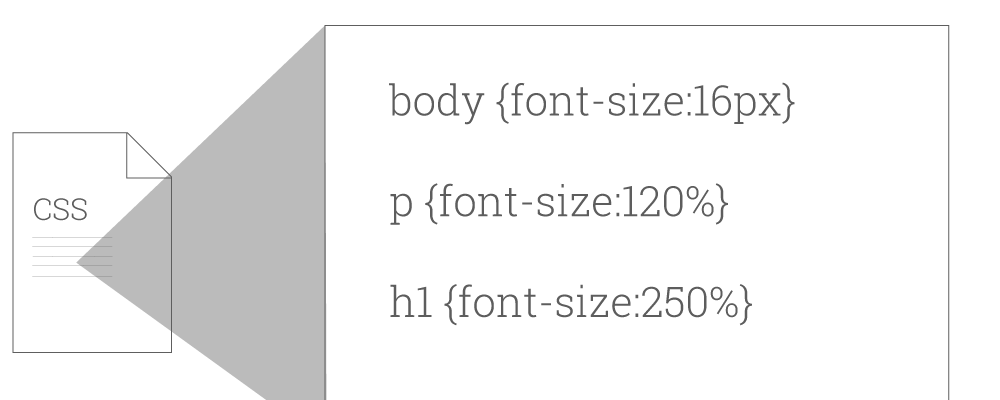
Here is what Google recommends your font sizes to be for your mobile responsive version of your website.
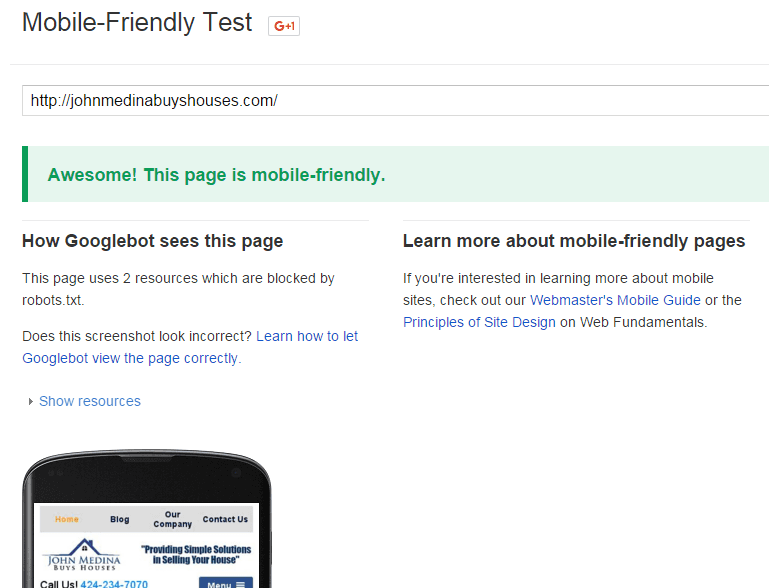
You’ll See Something Like This If You Pass The Test!
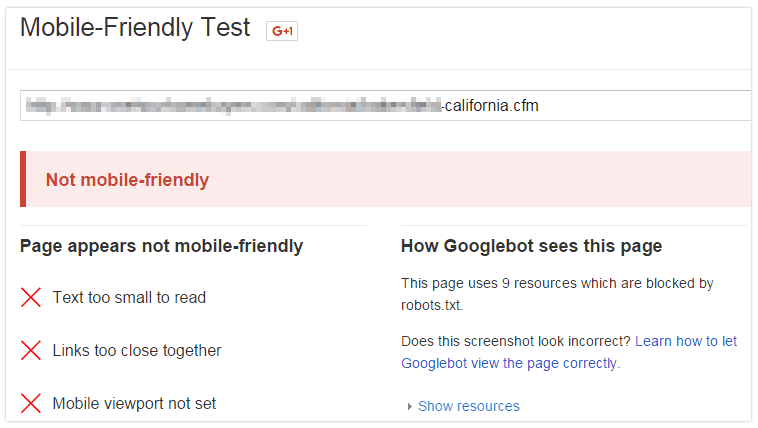
What You See If Your Website Doesn’t Pass The Mobile Friendly Test
Once you get your site “Google mobile friendly”… don’t stop there like most of your competitors are.
Now we need to make sure your website is also set up to convert mobile visitors into leads at a high rate as well (which 9 out of 10 investors aren’t doing).
Next, Consider Moving To A Mobile Website For Real Estate Investors vs. A “Mobile” Website
If you have “mobile” website (usually indicated by your URL being “m.[yoururlhere].com”… consider switching over to a mobile responsive design instead (which Google prefers).
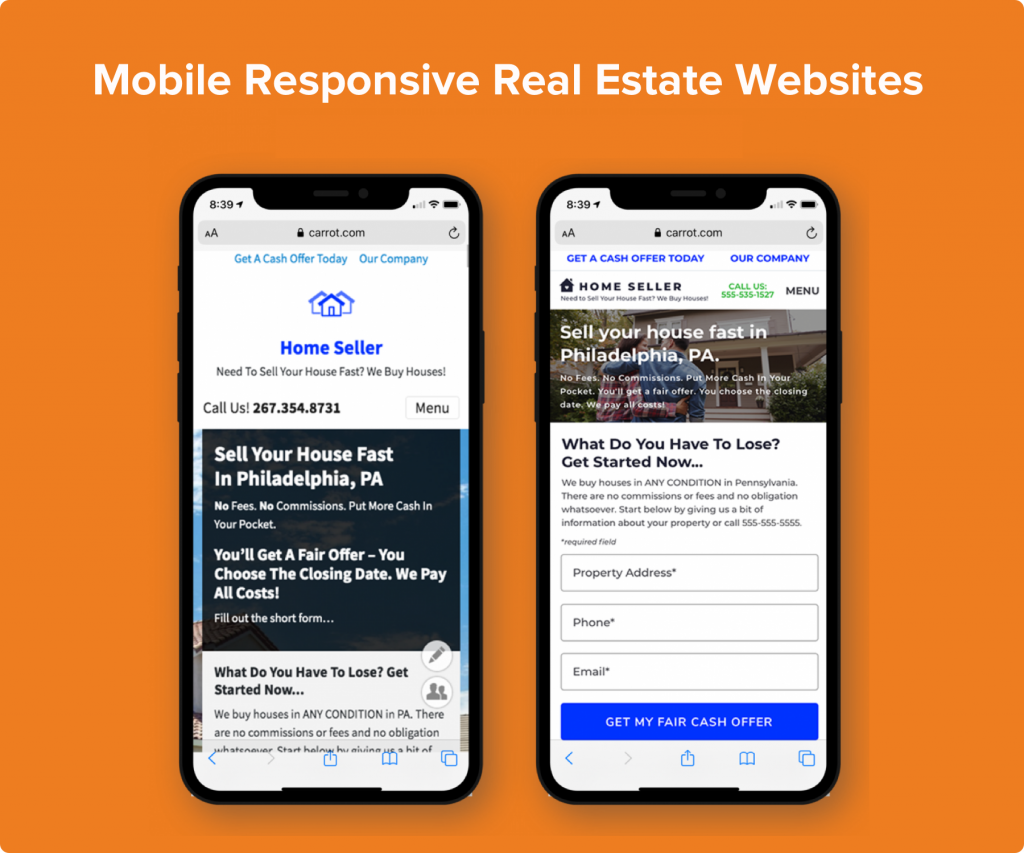
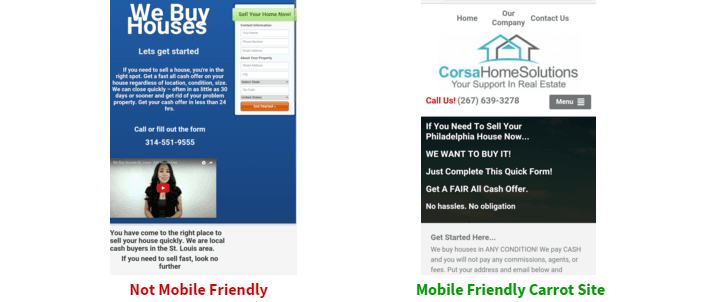
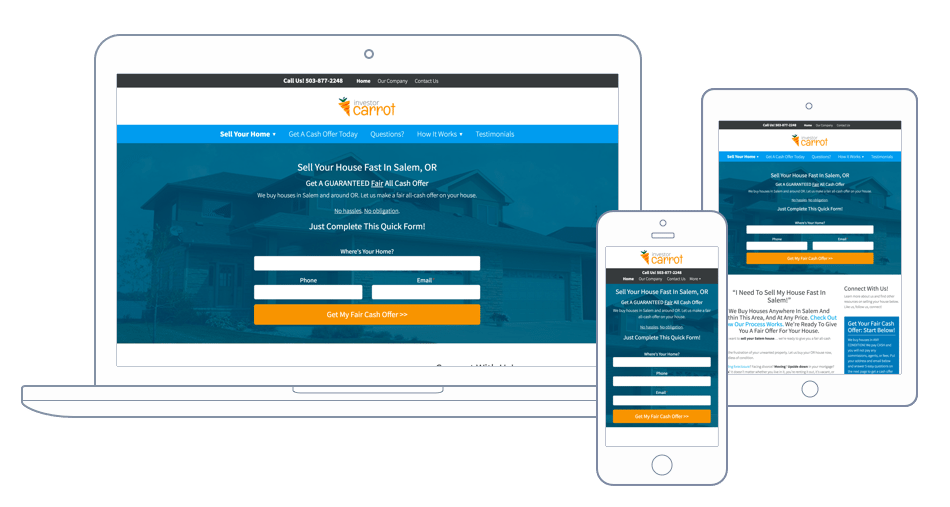
A responsive website is basically where you don’t take people to a separate URL if they visit with a cell phone (like mentioned above) but your website adjusts to look great on any screen size or device. Like this.
Here’s a real-world comparison of a website that isn’t mobile responsive and one that is.
See How This Carrot Site Reshapes Based On The Device It’s Being Viewed On
You can test your own web page for responsiveness. Just grab the side of your browser and move it to the side. A responsive page will adjust and shrink down. If the page is not mobile responsive, the shrink will hide parts of the page and force the visitor to pinch, pan, and zoom around. Which will most likely cause them to exit the page.
Want to see what your site looks like on mobile? GO TO the InvestorCarrot built mobile tester. Just type in your URL and press enter. It’s that simple!
If your website is not responsive, you’re probably a year and a half behind the curve.
Here’s A Short Video Showing The Difference Between a Mobile Responsive Investor Site And One That’s Not
2. Design For The Touch, Not The Click
Most web guys, do it yourselfers, and low-end website builders design their websites for the click on desktop computers.
But we have to remember that we usually use our THUMBS on our cell phones to “tap” parts of the screen rather than clicking.
It’s really easy to tap the wrong thing with your thumb on a cell phone screen… so we need to really design our pages with that in mind.
How do we design for the “touch”?
Look Where It’s Easy And Hard To Engage With… And Design Accordingly
The higher up the screen the harder it is to tap with our thumbs.
Not saying people won’t do it… I know I do… but whenever we can put the parts on our website we want people to engage in right below where their thumb already is… we make it easier for them and performance goes up.
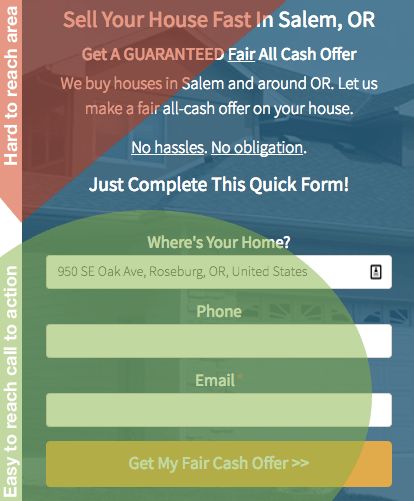
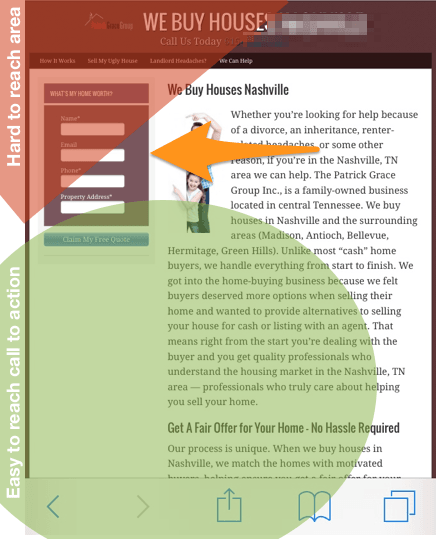
We took that concept and overlayed a “tap map” over the top of some websites.
Check them out.
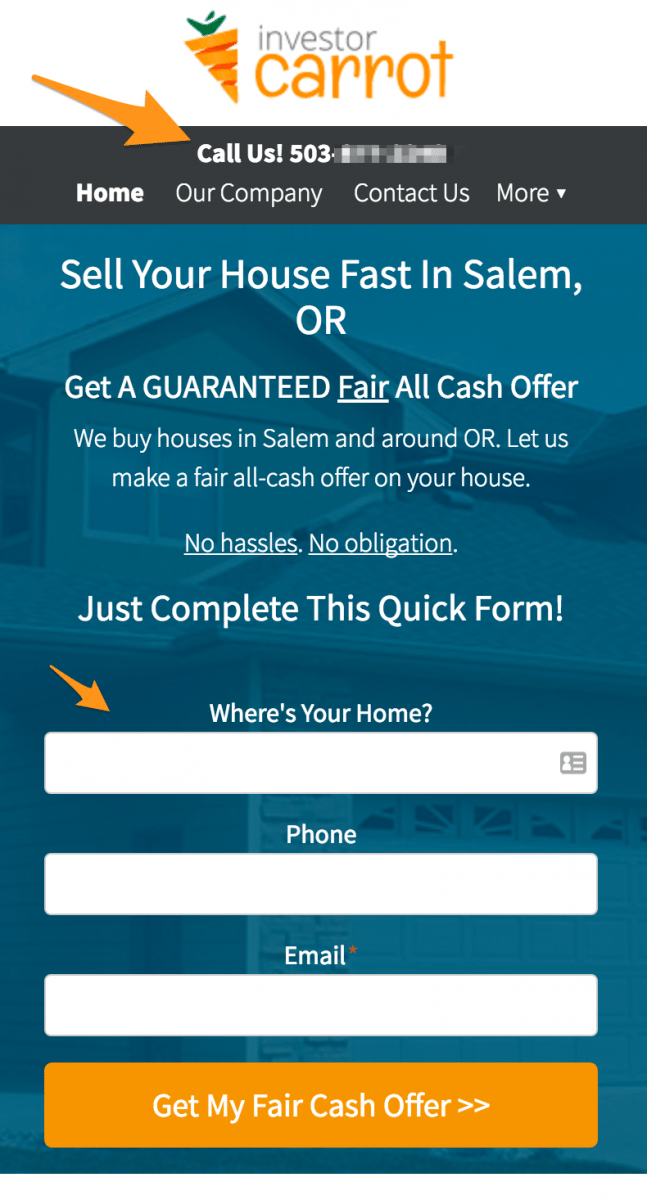
Notice The Important “tap” Elements On This Carrot Site In The Green Zone
That site above makes it really easy for the person to tap the form fields (they’re HUGE) and the orange opt-in button (it’s the full width of the screen and large).
On the flipside…
Notice The Very Small Form And It’s Trapped In The Red “tap” Zone
Also… it’s not just your calls to action and forms that you need to design for the “tap” to make it easier for people to engage with using their thumbs.
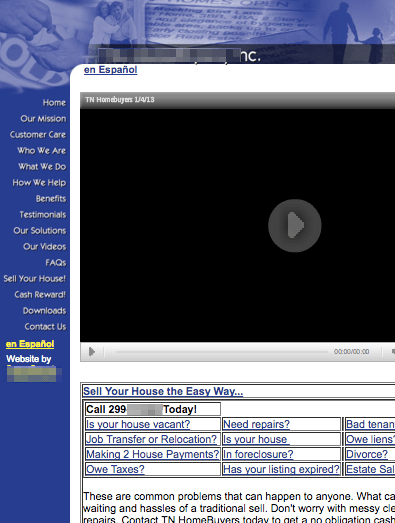
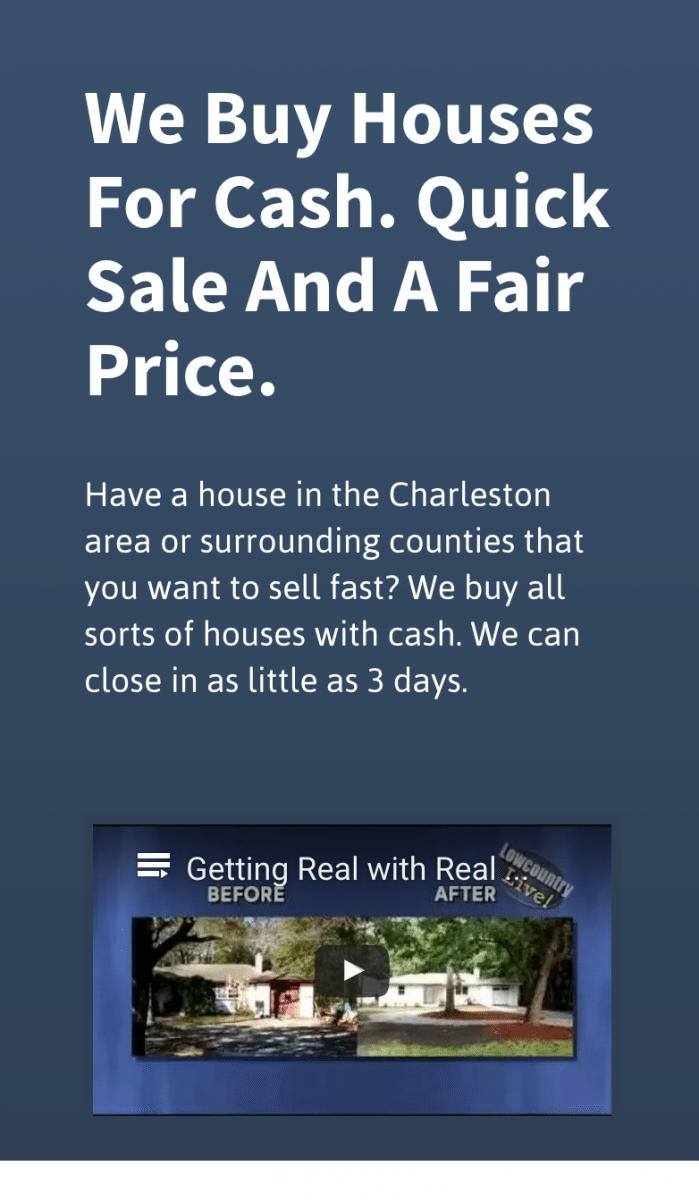
Look at this website below at how small the text is (not Google mobile friendly per tip #1 above) just to navigate the website. Tons of small links all crammed next to each other are a sure bet to sending your mobile visitors on a wild goose chase.
So what do you want to make sure you’re doing on your website for your mobile visitors?
Make your form fields large and the width of the screen
Make your opt-in buttons large, clear to read, and the width of the screen
Add space between your form fields so people don’t accidentally tap the wrong one
Don’t cram a bunch of links close together. Give them space and the thumb room to roam
Keep important “tap” elements out of the upper left of the screen if possible
Alrighty? Always remember we’re working with thumbs here… so design for the thumb.
3. Make It Easy For People To Engage With You (both opt-in and phone)
The main reason you have a website for your real estate investing business is to attract and convert prospects into leads.
So we want to make it as easy as possible for people to engage with you on your website.
If you’re making people hunt for your phone number or making them scroll down the page too far, you have likely lost them to that funny cat video in that other tab on their cell phone.
Here are some simple tips to help people engage with your website better on their mobile devices.
Make sure the phone number is at the top of the page on mobile.
Don’t make it hard for the visitor to find and click to call your number. Visitors should immediately see the “call us” hyperlink. Don’t put your phone number in an image. Cell phones can’t recognize that the number is in an image, so it won’t be a clickable link. Make it really, really easy for your mobile visitors to call you. With Carrot websites, this is already built-in.
Make It Crazy Easy For Them To Contact You… And Put It At The Top Of Your Site
“Calls are the natural conversion path from smartphones and the single most effective vehicle for driving engagement and revenue across marketing channels. Inbound callers are almost always the best lead: studies show that phone calls can convert to revenue 10 times more frequently than web leads, and that calls are the lead type most preferred by sales managers” (BIA/Kelsey, 2015)
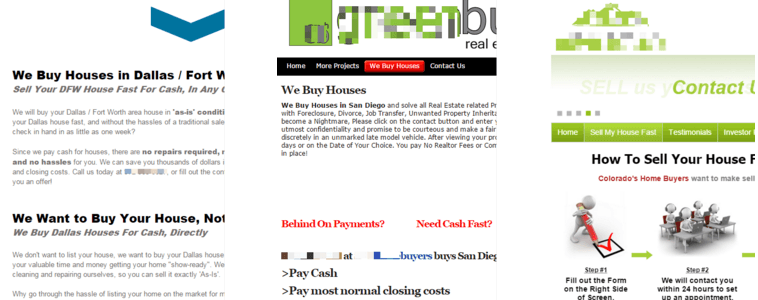
Where Do I Easily Contact You? Hmmm… Let Me Search… Ahhhhhh! I’m Out
If a mobile visitor lands on those sites above, they’re making it really hard to engage with you. So they back out of the page and find the next one down the Google rankings.
4. Get To The Call To Action Quickly
Just because you have WordPress doesn’t mean your website is going to perform.
You might have a mobile responsive that was quickly created, trying to save money, but that website might be under-performing. How many lost deals does it take?
Do yourself a favor and add a call-to-action and phone number to the top, and take the picture out – it’s wasting valuable space.
Don’t force the visitor to scroll down the page and risk losing to the competitor.
Let’s take a look at it done right.
With this InvestorCarrot site (this is a sample website of one of our designs coming out) you can see how quickly we get into the call to action. Phone number right up top and we immediately get into the very simple and quick form. No scrolling to get there. But if they’re not ready to opt-in… they can always scroll down to learn more and engage in the site further down the page.
Getting To The CTA Quickly
Getting To The CTA Slowly (making the visitor hunt and scroll)
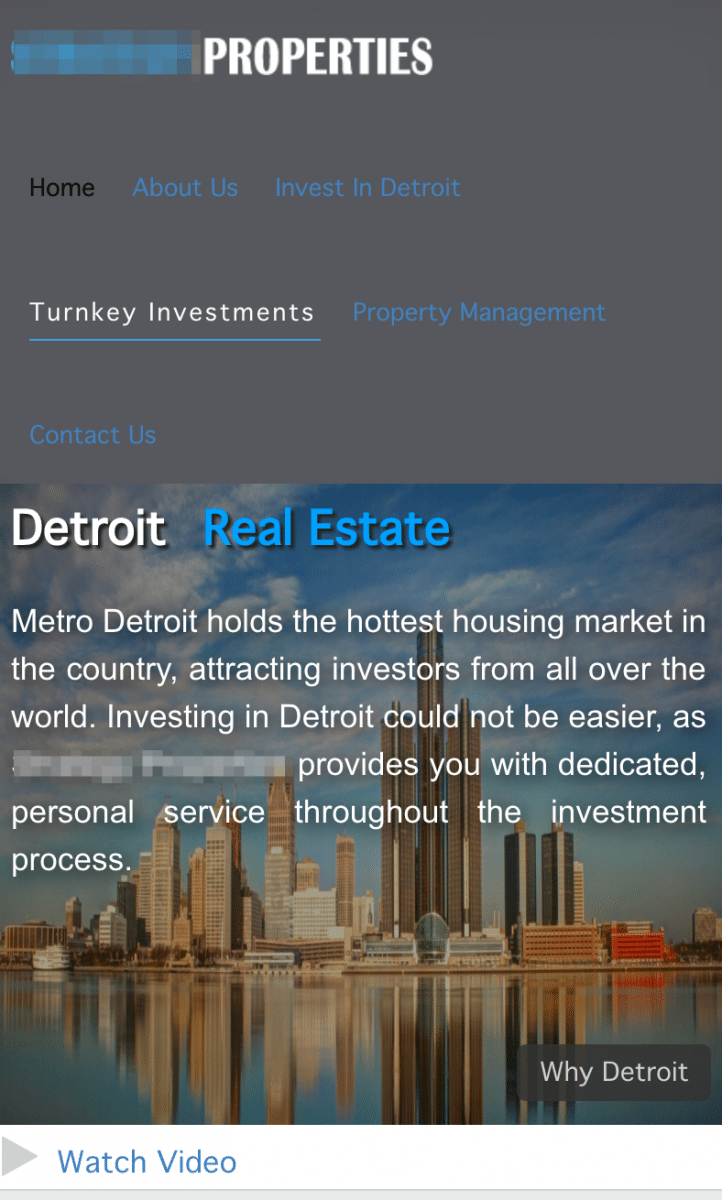
And here’s a website selling investment properties that really makes the visitor hunt for a clear call to action…
The more efficiently we can get the mobile visitor to your call to action the better. Don’t make them hunt and click through a few links to get to the spot where you can best help them.
5. Don’t Use Too Many Form Fields
We’ve run many tests on the number of form fields and how it impacts the number and quality of leads you generate through your real estate investing websites.
And we’ve found that between 3-4 form fields are the ideal number for motivated sellers, cash buyers, tenants, etc. Then we pass the lead through to our “Step 2” page next to further qualify them (which works insanely well as we published on this blog post). Having fewer form fields has also been tested tons of times and verified by others as well.
But this is important especially on mobile devices. The more form fields on a cell phone the more likely you are to say “I’m not gonna fill that out!”.
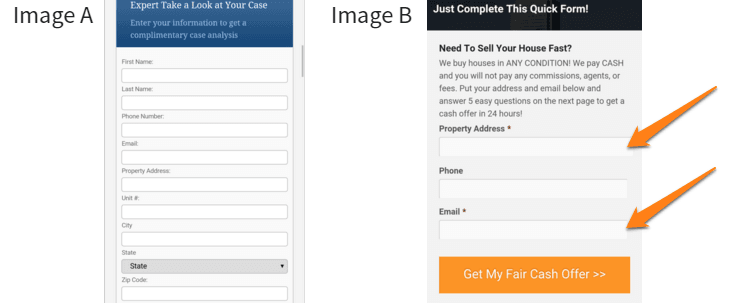
See this example below… which would you be more likely to spend the time to fill out on your cell phone?
Long vs. Short Opt In Form
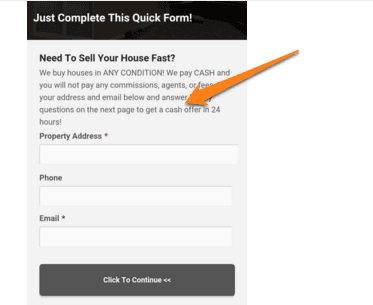
It’s easy to see Image A has too many form fields. Resulting in potential lead loss and a phantom expense. Image B (an InvestorCarrot site) keeps it simple with only 2 required fields.
A lot of the time the biggest thing real estate investors can do to make their website perform better on mobile is just making it easier for people to use their contact forms.
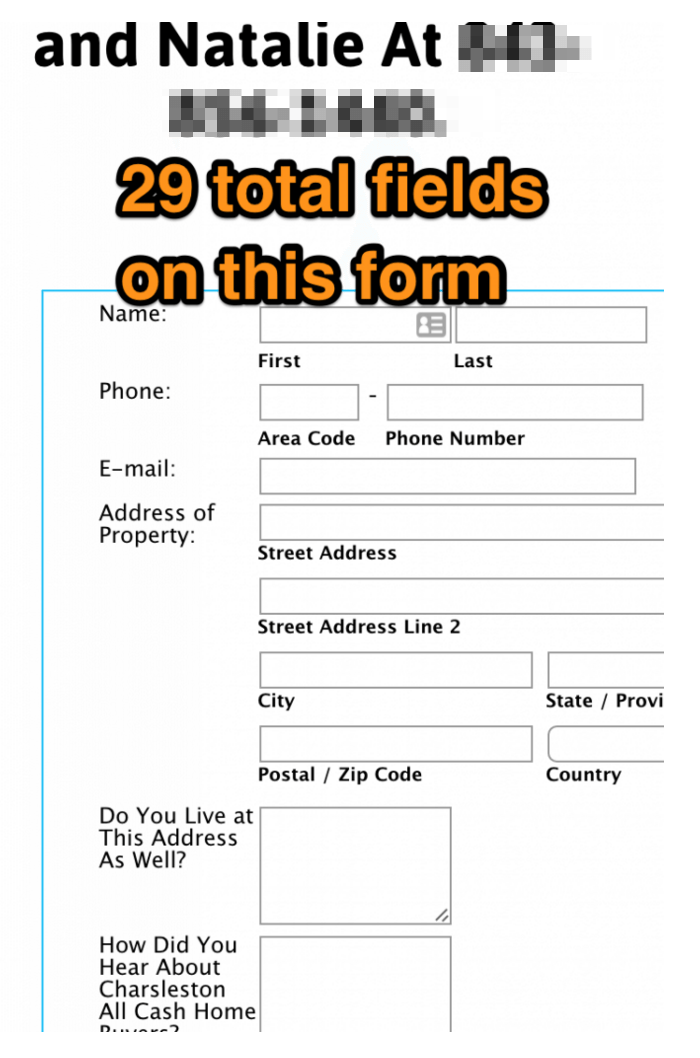
This one below we found on a motivated seller website is making it almost impossible for a house seller to engage on the form on their cell phone (possibly losing this investor 20-30% of his lead generation potential).
Ouch! 29 Form Fields :-(
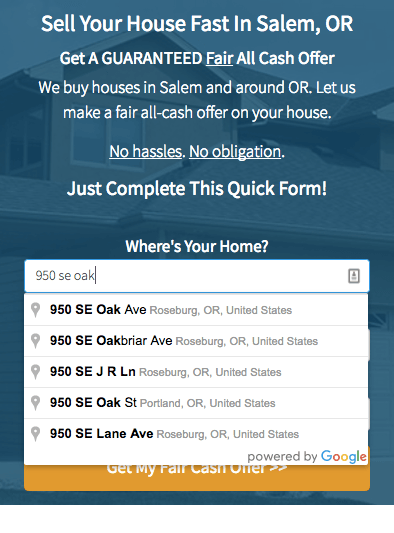
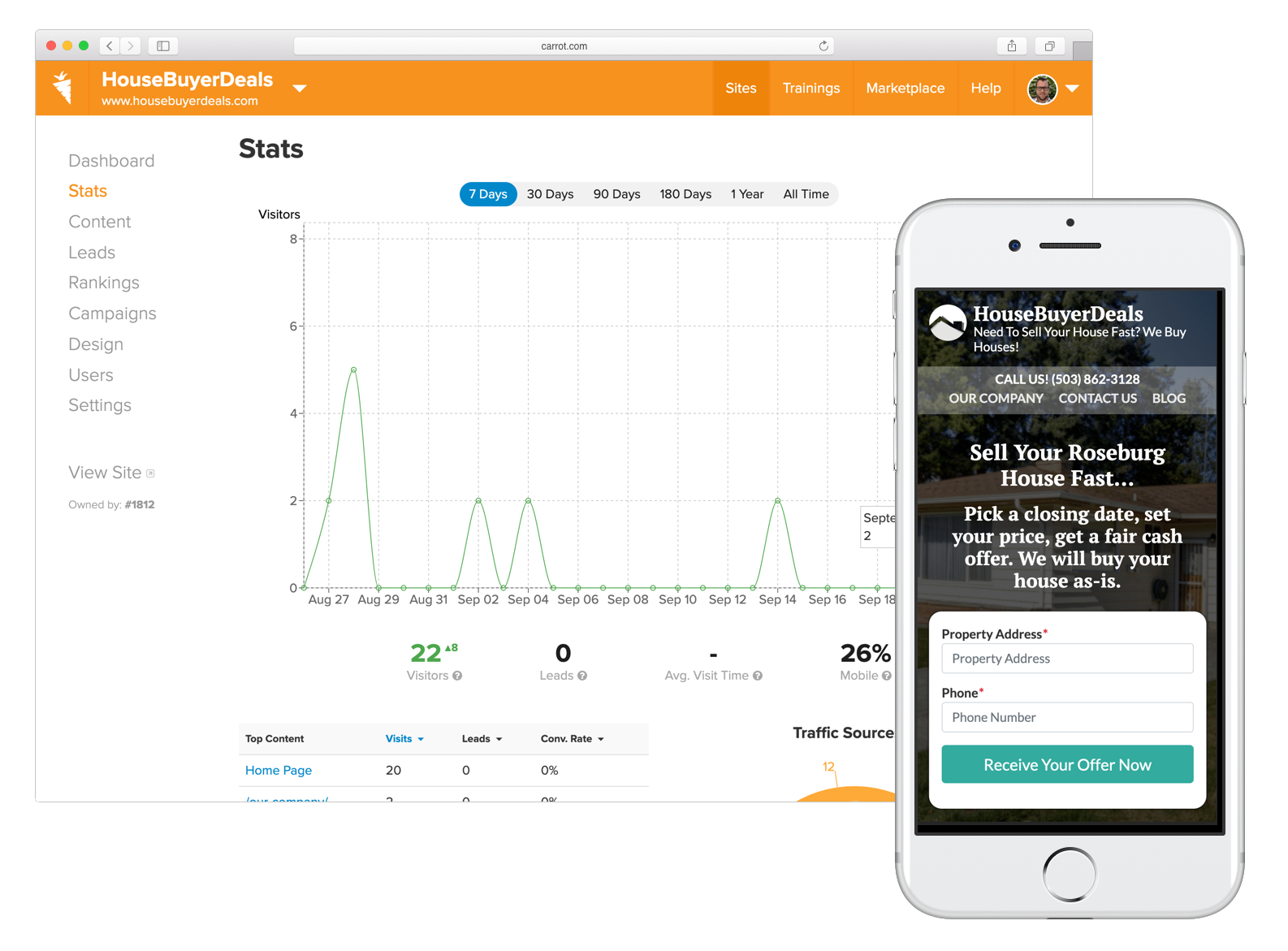
Here’s a way that we borrowed from the big sites like Trulia and Zillow to reduce the number of form fields we ask on motivated house seller websites and make it easier for someone to give us their full address on a cell phone (this feature was just released last week).
Autofill Address Fields On Motivated Seller Sites… Like This
(we grab the data directly from Google’s address database. It’s a feature built into every Carrot website that you can turn on if you want)
A new built-in feature to our InvestorCarrot sites.
Make it easy to opt-in!
Visualize a form that looks like this screenshot. It takes 14 different items to get an offer from this company. Huh! Can you imagine your sellers filling out that many fields? Nope, they’ll say no thank you and move on to search for a different buyer.
A 2-3 form field is ideal for the first form. Then, pass the visitor to longer step-2 form AFTER the initial 2-3 questions, to further qualify the lead.
Also, make your call to action button LARGE and very clear. Don’t make the searcher struggle to tap it.
6. Sandwich Your Call To Action Areas… One On Top And One On Bottom
Visualize you’re on a web page to reading information, you get to the bottom of the page on your phone and all it does is put you into the footer links. Optimize your page by adding a phone number and a second form to the bottom of the page.
Don’t make the visitor have to scroll back to the top of their screen to opt-in or call you.
Always keep a call to action very close to their browsing path (mobile users have a short attention span so don’t make them work for it.)
7. Don’t Rely On Video To Be The Primary Call-To-Action
A common misconception is that video makes your website perform better.
In the real estate investor industry that isn’t necessarily true. Video is amazing on mobile, but not always when you’re trying to convert a visitor into a lead.
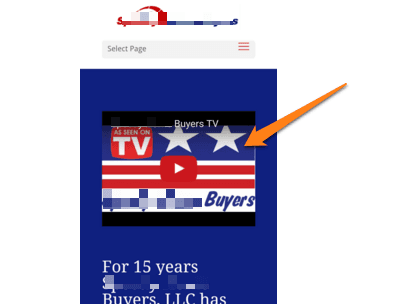
When you launch a video on mobile, it opens up into a full-screen view, and some mobile devices still don’t play certain video players well. Put video further down the page, not at the main call to action area.
What happens when you tap a video on your cell phone?
Up pops the video into a full-screen player and takes them away from their web browsing app
There is no “tap to call” function inside a video if you put your phone number in there but not on your site
Once the video is done most people forget to turn off the “related videos”... and you may be displaying your competitor’s videos. At Carrot all YouTube videos you add to your Carrot site we automatically strip out the related videos for you
To get back to your website they have to exit the YouTube app, go back to the browsing app, and re-engage back in your website
Every step we take our visitors away from our site the more easily they can be distracted and not give you a call or opt-in as a lead.
This applies to cash buyers, motivated sellers, tenants… you name it.
What happens if they don’t watch the video? They don’t get the call to action and when the video is done it goes to the YouTube app. The searcher will have to go back to your site to convert. They’ll most likely leave. Not saying don’t use video, just make sure it’s down the page and use that valuable top page real estate for your hook.
Always Do A Final Run Through With Your Own Thumbs On Your Site
A final piece of advice is to start using your cell phone to look at your website and navigate it as much as possible.
Get your thumbs on your site and see how it works. You just may find some things that aren’t as simple or smooth as they could be.
As we walked through… mobile is crazy important these days.
And getting more important every day.
Don’t fall behind the mobile curve.
Ideally, take advantage of the different forms of content. For example, if you find that your visitors don’t engage, make sure you put your phone number at the top of the page. Don’t hide it in the content or in an image. Switch to 2 or 3 field opt-in forms, quickly get to your call-to-action, and don’t use videos for the main call-to-action areas.
You can implement all of these yourself or simplify your life and let Carrot start leveraging technology to grow your business.
If you’re not a Carrot member yet… see how we’ll take 100% of all of the mobile worries off of your lap forever.We focus on keeping you ahead of the mobile performance curve so you can focus more on what you are great at.
Check out our “mobile” feature page to see how we have built-in everything (and more) on this page to your Carrot websites automatically.
How important are cash buyers to a house wholesaling or flipping business? If you ask Daniel DiGiacomo of Baltimore Wholesale Property… he’ll say pretty darn important (to the tune of over $180,000 of extra business in 12 months).
Are those results typical? Not really… because Daniel was hustling on a daily basis and showing up to our coaching calls weekly… and worked his butt off hitting the streets building great relationships in Baltimore. Those results are his results and they rock!
Daniel is the CEO of one of the most active real estate investment firms in Baltimore and an InvestorCarrot customer for the past 2 years.
We had a chance to sit down with Daniel recently and have a conversation with him about…
How he got started in real estate investing (from a background as a financial analyst)
Why he didn’t start off wholesaling like everyone else… but how he now does 6 figures per year just with the wholesaling side of their business (this doesn’t count their rental portfolio or other investments)
The opportunity that “note investing” poses for investors and why it’s almost exclusively his primary way to acquire discounted properties
What Daniel did to build a powerful cash buyers list of over 1,700 names using Carrot and why after months of research and testing he found that Carrot helps yield him the highest ROI on his money and best results at the end of the day vs. building a custom website
Hear Daniel’s Story + Learn How He Has Built Such A Powerful Cash Buyers List Online
This case study is a full-length deep dive into Daniel’s story and how he’s built a very successful wholesaling and investing company over the past 2-5 years and his exact strategies on how he cuts through the clutter online in a sea of other competitors trying to find active cash buyers in his market too. Click play and dive in!
Start – 7 mins talks about how he got started in real estate (apartments to wholesaling to tax lien investing)
8:30 talks about his tax lien investing
HUGE tip on listing his properties w/ Carrot on how he gets more traffic and leads through Google w/ his property listings
18:00 Discusses why he chose InvestorCarrot vs. a $10k custom built website…
“It took less than 90 days for me to be super impressed” (18m). After a couple of failed attempts with other website alternatives, I finally landed on Carrot.My alternative was to pay someone to build a custom website and platform… I had seriously considered paying somebody tens of thousands of dollars to build a pretty robust platform.
I walked into this thing saying alrighty I’ll work on it as much as I want to work on it long-term and if I get the results I want to get with the work I want to put into it within 90 days I’ll stick with it. And I got those results, I got much more than expected in that 90 day time frame with the amount of work I wanted to do. After that 90 days, I decided to really explode it and ramp up my focus and work on my Carrot site”
19:50 tip on building your cash buyers list through targeting online conversations on google
22:10 what he’s doing w/ Facebook to grow his cash buyers list and business
24:00 what he’s done to customize his sites and time commitment
25:28 talks about power of Content Pro.. “It’s great having the content pro articles so I have a framework to go from, then we’ll tweak them up a bit and it’s been very helpful. You don’t have to edit every post but it can be a powerful booster, and saves time and money from writing your own”
29:35 on why he’s launching into other markets such as Florida in 2016
35:17 – why he loves carrot (yay!) :-)
“The short answer is that Carrot makes all of the decisions for me. The framework exists… and all I have to do is sort of tweak some things and I don’t have to put a whole lot of energy into building that framework. I’m not just talking about the code and pages… I’m talking about the strategy, ideas, and content based on performance… and the follow-up… is incredible support.”
Like this Case Study Episode? Check out our CarrotCast Episode with Daniel DiGiacomo and learn more about real estate marketing and how to build a successful business.
Here Are Some Related Cash Buyer Resources Here On Our Website
Looking to build your cash buyers list for wholesale properties too? There are many ways you can do it… but we’re finding some crazy effective ways leveraging the web. No matter what you hear in those online forums, there are plenty of amazing cash buyers online when you know how to attract them to your website… and convert them into a lead.
In the case study above Daniel goes over how he’s generating his cash buyers each and every day on autopilot (through SEO and Facebook mainly)… but here are a few other articles that’ll help you.
Let’s Congratulate Daniel For His Successes Below!
We call them “doses of awesomeness” in our company whenever someone does awesome things and reports back to us. So let’s throw Daniel some awesomeness below to congratulate him on his successes! Pop a comment below in the comments section on how you’re generating cash buyers (or what your goal is) and some encouragement for Daniel on his goals!
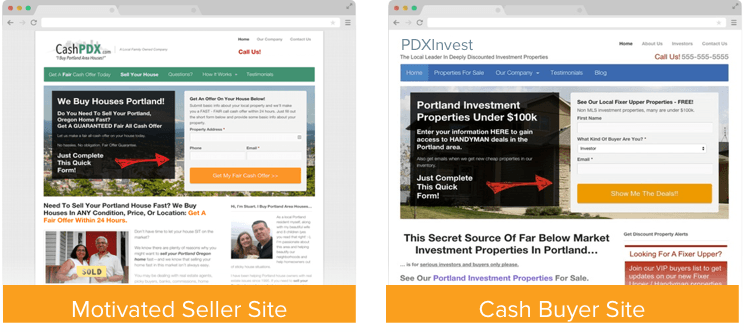
“Mark” tried to cram everything into one website. A page for motivated sellers, a section for buyers, private lenders… even rent to own. He said he was trying to “simplify” and save some money. But little did he know he was actually losing money every year by confusing his motivated house sellers on a website that was also pitching “discount properties”.
We’ll dive into that in a clear and simple way in today’s blog post and answer that question based on data with the answer to this… “Whatever makes it easier and gets your ideal prospects to their desired result as quickly and as smoothly as possible in as few steps required to make the sale.”
So, You’re Flipping Houses Or Wholesaling? What Types Of Leads Do You Need Right Now?
You might be wondering how having more than one real estate investing website would even help.
And that is a really valid question!
Because, for instance, if you own a plumbing business in your local town… one website for your company is all that you need. Right?
So, the main thing to remember with your online marketing efforts when it comes to your website strategy is this…
… the more focused you can make the message to the target prospectyou’re going after, the better the results you’ll get.
As the famous copywriter, Robert Collier once said…
If you’re not joining that conversation in your prospect’s mind immediately… and you’re cluttering the message with things on your website not related to their problem and how you can help them… your results WILL go down.
So going back to the local plumber scenario… if you did plumbing services and you were also an electrician and did electrical work… you have two totally different services that require a completely different marketing message to effectively sell them your services (and ideally two separate websites).
You wouldn’t want to have the person looking for electrical work to have to wade through tons of content on your site about plumbing (a service that they don’t need).
Make sense?
To say it again… the more focused you can make the message on the website specific to your target prospect (and what they need), the more engaged the visitor will be on your website and the more leads you’ll convert.
Why Is A Targeted Website Message Important?
Now that we understand that targeting your message on your website as much to your primary prospect as possible is important… let’s dive into why having that targeted message is important and works.
In short, we humans get distracted easily (especially online), and removing any chance of guiding your website visitor on the wrong path always improves your chances of making sure the website visitor gets your message and hopefully engages in it by becoming a lead for you.
According to a study, 55% of visitors spend 15 seconds or less on your website. The more you can engage them and speak to them and their specific problems and needs… the longer you can keep them.
But our targeted websites at InvestorCarrot show a different story…
Why is that?
Because we’re not sending a motivated seller to a website filled with content that doesn’t help them a darn bit… like stuff about your cash buyer program, or rent to own houses, or private lender program. That kind of stuff doesn’t matter to them and it just serves as a distraction to knock them off of the path of engaging them and converting them as a lead.
We’ll get into the “why” below here in a sec.
How Many Websites Do I Need If I’m A Real Estate Wholesaler Or Flipper?
The general rule once again is this: How many completely different services are you offering and completely different prospects are you going after?
If you are a local house buyer (going after motivated house sellers) and you also wholesale those properties to cash buyers… those are two completely different prospects for two completely different services you offer.
If you have lease option houses available and are looking for tenant buyers… and are also looking for private lenders… those are completely different services and different prospects.
In both of those cases, we’ve found that it’s much more effective to split those messages into separate websites.
So, if you’re a wholesaler and are looking for properties and looking for cash buyers, those websites should be separate websites.
So a minimum of two websites as a wholesaler in my opinion.
You would for sure want a website dedicated to helping motivated house sellers… then your second website could pull double duty as your cash buyer website and main company credibility website (which our “Main Company” websites in Carrot do quite well).
I know there are lots of people out there who will argue with this and will say “You can put it all on one website for sure!“.
And they’re 100% correct.
You can.
But if on every page, the prospect is 1 click away from content that has nothing to do with them… and can even throw them off from the actual message on how you can help them… why would you want to take the chance of muddying the water?
If a motivated seller saw a link that says “Investment Properties 30-50% Discounts”… what do you think will pop up in their mind?
“Wow, if they can sell properties that cheap… I can’t imagine what they’re going to offer me. Darn bottom feeders”
Haha, maybe not those exact words… but even presenting a motivated seller with that content definitely doesn’t help your sale.
The “Across The Table” Test
One simple test I always run through mentally with my marketing messages is this…
… I imagine myself sitting across the table from my ideal prospect and run through in my mind what I’d say to that prospect.
How I’d find out what their main problem is, their motivations, and what they really need help with.
And then mentally run through how I can help them reach those goals.
In the case of a motivated seller… if you use this “Across The Table” test… would you hand them a brochure that talked about buying their property on one page and on the very next page it tried to sell them a discount property?
Or would you ever in the process of talking with a seller fit in… “Oh, and by the way… if you’re looking for an investment property you can get on our cash buyers list!”.
Of course not.
Why?
Because it has nothing to do with how you can help them in their situation and the only thing doing that does is potentially throw off your actual message of how you can help them with THEIR CURRENT situation… selling their house.
If it doesn’t pass the “Across The Table” test… my rule of thumb is that I try to separate those messages in my marketing as well.
On the other hand… if I’m talking to a potential cash buyer… it is very believable that I may find a way to mention our private lender program, because they may also be interested in being an investor with us as well. So those could work very well on the same website.
Make sense?
With that said, in no way am I saying that you can’t pull in online leads with an “all-in-one” site that is for motivated sellers, cash buyers, lenders, tenants, etc.
I’m just making the case for how much more effective it can be to target your messaging to eliminate the chance that a prospect would choose to not work with you because of a muddied message.
If you lost just 1 deal over a 5 year period because your website spoke to too many different prospects at once… that would cost you a minimum $10,000.
So How Many Websites Do You Need If You Do You Need?
If you’re a real estate wholesaler or house flipper…
… we suggest 2.
One for motivated sellers and one that pulls double duty for cash buyers/main company credibility (even helps out with private lenders).
Then if you want to attract other types of leads like rent to own or note sellers… those may be great as separate sites.
The one rule of thumb is definitely don’t cram all of those “focuses” onto one site. It’ll kill your performance and confuse your motivated house sellers.
If you are a note buyer/seller…
… we suggest just 1.
A person selling a note tends to be a person experienced in the process. So sellers expect to go to a “broker” and won’t be confused by seeing notes for sale on the site.
If you’re a buy and hold investor or multi-family investor…
… one total website for all of your properties works great. Your focusing on attracting tenants. But if you want to attract private lenders as well to partner on your deals… then set up a 2nd website that is a main company credibility site.
Keep it simple. As few sites as possible without confusing the message on your important prospects.
And as always… shoot any questions our way!
See Carrot in Action
Grow Your Real Estate Website’s Traffic, Leads, & Results With Carrot’s Online Marketing Software
















 So you’ve heard people say you can’t generate consistent deals with SEO? Tell that to Jack of Jack Buys Houses in Orlando, FL… he closes 3-5 deals a month in Florida almost exclusively through his search engine optimization efforts. See how…